
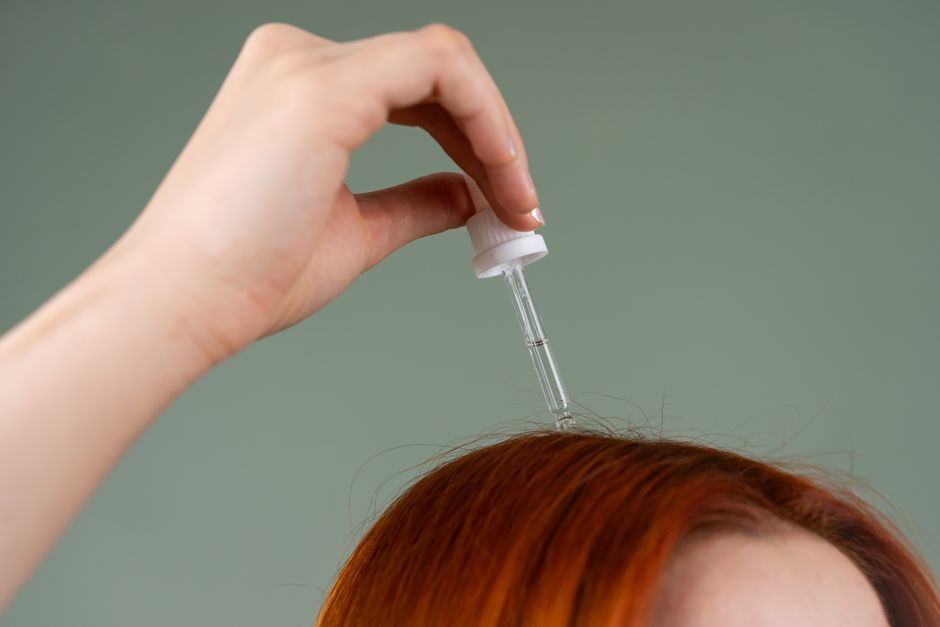
Anabolic-androgenic steroids can accelerate hair loss in people who are genetically predisposed to it. The mechanism is well understood: these synthetic hormones mimic testosterone, and testosterone derivatives can convert into dihydrotestosterone (DHT), the same androgen that drives male-pattern and female-pattern hair thinning. If you carry the genetic variants that make your hair follicles sensitive to DHT, steroid use can speed up a process that was already written into your DNA. If you do not carry those variants, steroids are unlikely to cause scalp hair loss on their own.
How Do Steroids Cause Hair Loss The Science Explained?
The pathway from steroid use to hair loss runs through a normal enzyme and a normal hormone. It is not a toxic side effect. It is your own biology working exactly as designed, just at higher intensity.
Here is the sequence:
- Anabolic steroids enter the bloodstream. Many are either testosterone itself or synthetic molecules built to act like it.
- An enzyme called 5-alpha-reductase converts some of that testosterone into DHT. This enzyme already exists in your body. Steroids simply give it more raw material to work with.
- DHT binds to androgen receptors in hair follicles. In susceptible follicles — typically on the scalp — this binding triggers a process called follicular miniaturization.
- Over time, the growth phase of the hair cycle shortens. Each new hair grows back thinner and shorter until the follicle stops producing visible hair.
The key word is “susceptible.” DHT does not damage all hair follicles equally. Follicles on the sides and back of the scalp are usually resistant. It is the follicles on the top of the head and along the hairline that tend to be sensitive — and only in people who inherited that sensitivity.
This is the same mechanism behind ordinary male-pattern baldness. Steroids do not create a new pathway. They pour fuel on one that already exists.
Why Do Some People Lose Hair on Steroids and Others Do Not?
Genetics decide the outcome. Two men can take the same compound at the same dose for the same length of time. One loses hair rapidly. The other loses none.
The difference comes down to inherited traits that affect how sensitive your hair follicles are to androgens. The most studied genetic factor involves variations in the androgen receptor gene on the X chromosome. A man inherits that X chromosome from his mother, which is why looking at the maternal side of the family can sometimes offer a clue about baldness risk. It is not a perfect predictor. Pattern baldness is polygenic, meaning many genes contribute, and the inheritance pattern is not simple.
Other factors that influence whether steroids trigger noticeable shedding include:
- Which steroid is used. Compounds that convert readily to DHT are more likely to accelerate loss in susceptible people.
- Dose and duration. Higher doses over longer periods give DHT more opportunity to act on sensitive follicles.
- Pre-existing hair loss. If thinning has already started, steroids can make it visibly worse faster.
- Age. Pattern hair loss becomes more common with age regardless of steroid use, so the two can overlap and be hard to separate.
One clarification worth making: DHT is often described as the “bad” androgen for hair. That framing is misleading. DHT is essential for male sexual development before birth and during puberty. Its effect on scalp hair is a side effect of normal biology in genetically susceptible individuals, not evidence that DHT is inherently harmful.
Which Steroids Are Most Associated With Hair Loss?
Steroids differ in how easily they convert to DHT and how strongly they bind androgen receptors. Those two properties largely determine hair-loss risk.
Compounds that convert to DHT are called androgenic. Testosterone itself, when injected or applied, is the clearest example. Others are designed to resist conversion — these are sometimes called “DHT-friendly” — and they tend to have less effect on scalp hair, though none are completely without risk.
This is a general principle, not a precise ranking. Individual response varies widely, and much of what circulates online about specific compounds comes from user reports, not controlled studies. No large clinical trial has compared hair-loss rates across different anabolic steroids in healthy users. The evidence simply does not exist at that level of detail.
A related point: some steroids are progestogenic, meaning they interact with progesterone receptors. This can matter for hair because progesterone activity can influence androgen signaling. The exact contribution to hair loss is not well established.





Is Steroid-Related Hair Loss Permanent?
It depends on how far the process has gone and whether the follicles are still alive. This is the most important practical question, and the answer is not simple.
Androgenetic hair loss works through miniaturization. Early on, follicles shrink but remain capable of producing hair. If the androgen signal is removed at that stage — by stopping the steroids — some regrowth is possible. The follicles were suppressed, not destroyed.
Over time, though, chronically miniaturized follicles can become fibrotic. The tissue around them changes. Once a follicle reaches that point, it generally does not recover, and hair loss becomes permanent. This is why timing matters more than almost anything else.
Stopping steroids does not guarantee hair regrowth. It removes the added androgen drive, but if you have the genetic predisposition, your follicles will still be exposed to your body’s own testosterone and DHT. The natural pattern may continue at its baseline rate. Steroids accelerated it; they did not create it.
No clinical guidelines specify a timeline for regrowth after stopping steroids, because individual variation is too wide and controlled studies in this population are essentially absent. Anyone who tells you hair will return in a set number of weeks or months is guessing.
Can Hair Loss From Steroids Be Prevented or Treated?
Some medications that lower DHT or block its action are used clinically for androgenetic alopecia. Whether they help specifically with steroid-related hair loss is a different question, and the honest answer is that direct evidence is limited.
Two categories are relevant:
- 5-alpha-reductase inhibitors. These drugs reduce conversion of testosterone to DHT. They are approved for treating male-pattern hair loss in some forms. They can cause side effects, including sexual ones, and they are not appropriate for everyone. They also carry specific risks in pregnancy — women who are or may become pregnant should not handle crushed or broken tablets.
- Topical minoxidil. This extends the growth phase of the hair cycle. It is approved for pattern hair loss and does not work through DHT. It requires ongoing use; benefits stop when use stops.
These are prescription or over-the-counter treatments with real evidence behind them for ordinary pattern baldness. Using them to counteract steroid-induced loss is common in practice, but it is not backed by large trials in that specific group. Some clinicians recommend it; that is not the same as proven benefit.
What does not work: shampoos marketed as “DHT blockers,” most supplements claiming to prevent hair loss, and any product promising regrowth without addressing the underlying androgen exposure. No study has confirmed these deliver meaningful results.
Does Hair Loss From Steroids Look Different From Normal Balding?
The pattern usually looks the same. Steroid-related hair loss typically follows the same distribution as ordinary androgenetic alopecia — thinning at the crown, receding at the temples, or a combination. It does not have a unique signature that a doctor can identify on sight.
That matters for diagnosis. If you are losing hair and you use steroids, a clinician cannot tell from the pattern alone whether the steroids are the cause, whether it is your natural pattern progressing, or both. The history is what clarifies it: when the loss started, how fast it progressed, and whether it coincided with steroid use.
Other causes of hair loss can look similar and should not be dismissed. Telogen effluvium — a temporary shedding triggered by stress, illness, or hormonal shifts — can cause diffuse thinning that is sometimes mistaken for pattern loss. Thyroid problems, nutritional deficiencies, and certain medications can also cause shedding. A doctor can help sort out which is which.
Frequently Asked Questions
Do steroids cause hair loss in everyone who uses them?
No. Steroids only accelerate hair loss in people who are genetically predisposed to androgenetic alopecia, because the mechanism depends on inherited follicle sensitivity to DHT. People without that predisposition generally do not lose scalp hair from steroid use.
Will my hair grow back after stopping steroids?
It may partially, if the follicles have only been suppressed and not permanently damaged. Once follicles become fibrotic from long-term miniaturization, the loss is typically permanent, and no clinical guidelines specify a reliable timeline for regrowth.
Is testosterone the only steroid that causes hair loss?
No. Any anabolic steroid that converts to DHT or strongly activates androgen receptors can accelerate loss in susceptible people. Compounds that resist DHT conversion tend to carry lower risk, though none are completely free of it.
Do DHT-blocking shampoos prevent steroid-related hair loss?
No study has confirmed that shampoos marketed as DHT blockers prevent or reverse steroid-related hair loss. Medications like 5-alpha-reductase inhibitors and topical minoxidil have evidence for ordinary pattern baldness, but direct evidence in steroid users is limited.
