
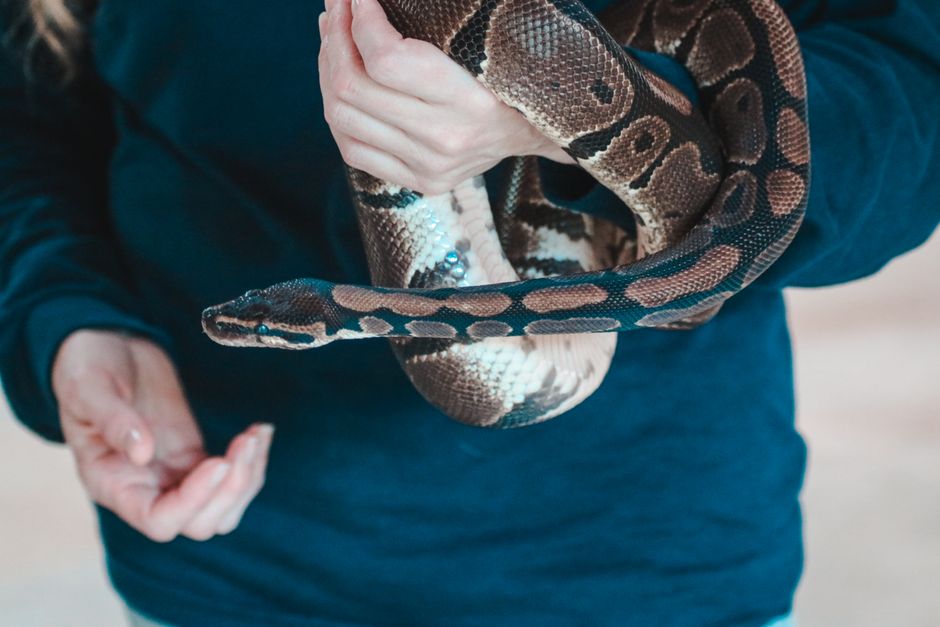
Ball pythons can bite, and any healthy ball python is physically capable of doing so. That said, biting is not typical behavior for this species. Most ball pythons would rather hide, ball up, or hiss than bite, and many owners go years without ever being bitten. When bites do happen, they are usually the result of a specific, identifiable situation rather than a naturally aggressive temperament.
Ball pythons are non-venomous constrictors. Their teeth are small and rear-curving, designed to grip prey, not to tear flesh. A bite from a ball python is rarely serious, but it can be startling and does carry a small risk of infection. Understanding why bites happen is the most reliable way to prevent them.
Why Do Ball Pythons Bite?
Ball pythons bite for reasons that have nothing to do with aggression. In almost every case, a bite is a feeding response, a fear response, or a handling mistake.
The most common cause is mistaken identity. Ball pythons rely heavily on heat and scent to identify food. A warm hand moving quickly near the enclosure, especially one that smells like rodent or pet food, can trigger a strike before the snake has time to process that it is not prey. This is called a feeding response, and it is not the same as defensive biting.
Defensive biting happens when a snake feels cornered or threatened. A ball python that has nowhere to retreat may hiss, flatten its body, or strike. This is more common in newly acquired snakes that have not yet settled in, or in snakes that are handled roughly or grabbed from above, which mimics the approach of a predator.
Stress and poor husbandry also increase bite risk. A snake kept at the wrong temperature, in an enclosure that is too exposed, or with inadequate hiding spots is more likely to feel unsafe. Chronic stress does not make a snake “mean,” but it does lower the threshold at which it responds defensively.
How Painful Is a Ball Python Bite?
A ball python bite is generally mild. The teeth are small and thin, and the snake is not built to inflict damage on large animals. Most people describe the sensation as a quick pinch or a series of small scratches.
What surprises many people is not the pain but the grip. Ball pythons have rows of sharp, backward-facing teeth. When they bite and hold, pulling your hand away can cause the teeth to drag across the skin, turning a minor bite into a series of small cuts. The instinct to yank your hand back is exactly the wrong move.
Bleeding is usually minimal. The bite may look like a cluster of tiny punctures or a light scratch. For most healthy adults, the wound heals without complications. The main medical concern is infection, since the mouth of any reptile carries bacteria. Cleaning the wound promptly with soap and water and keeping it covered is the standard approach. Anyone who notices spreading redness, swelling, warmth, or fever in the days after a bite should seek medical care.
People with weakened immune systems, diabetes, or poor circulation should take any animal bite more seriously and consider contacting a healthcare provider.
Do Ball Pythons Bite More Than Other Pet Snakes?
Ball pythons have a reputation as one of the more docile pet snakes, and that reputation is largely deserved. Compared with many other commonly kept species, they tend to be calm and slow-moving. They are also more likely to ball up than to bite when frightened, which is where the name comes from.
That does not mean they never bite. Corn snakes, king snakes, and other popular species are also generally docile, and bite frequency depends far more on the individual snake, its history, and how it is kept than on the species alone. A well-socialized ball python that is handled gently and fed correctly is unlikely to bite. A stressed or hungry one of any species may.
One useful distinction: ball pythons are not venomous, so a bite does not carry the risks associated with venomous species. The concern is mechanical injury and infection, not envenomation.



How Can You Prevent Ball Python Bites?
Most ball python bites are preventable with a few consistent habits. The goal is to make your hands predictable and non-food-related to the snake.
- Wash your hands before and after handling. This removes food scent that can trigger a feeding response.
- Use tongs to offer food, never your fingers. This keeps the snake from associating your hand with prey.
- Handle gently and support the snake’s body. Avoid grabbing from directly above, which can feel like a predator.
- Give the snake a few days to settle after feeding before handling again. Digesting snakes are often more reactive.
- Provide proper hiding spots and correct temperatures so the snake feels secure.
- Watch body language. A snake in a tight S-curve with its head raised and focused may be preparing to strike.
If a ball python does bite and hold, the safest response is to stay still and let it release on its own. Forcing it off can cause the teeth to tear skin. Some keepers gently place the snake and their hand under cool running water or use a small amount of alcohol-free mouthwash at the corner of the mouth to encourage release, though simply waiting is often enough. Never pull straight back.
A snake that bites repeatedly despite good husbandry and gentle handling may be stressed, ill, or in pain. In those cases, a reptile veterinarian can help identify an underlying issue.
Are Ball Python Bites Dangerous?
For most people, a ball python bite is not dangerous. The species is non-venomous, and its teeth are not large enough to cause deep wounds in a healthy adult. Serious injury from a ball python bite is uncommon.
The realistic risks are infection and, in rare cases, an allergic reaction. Reptile mouths contain bacteria, and any break in the skin can become infected if it is not cleaned. Signs to watch for include increasing redness, swelling, pus, or fever. These warrant a medical visit.
People sometimes worry about salmonella, which reptiles can carry. Salmonella is typically spread through contact with feces or surfaces rather than through a bite itself, but any reptile contact should be followed by thorough hand washing. This is especially important for households with young children, older adults, or anyone with a weakened immune system. The CDC advises that these groups take extra precautions with reptiles.
A ball python bite is not a medical emergency in most cases. It is a minor wound that needs cleaning and monitoring. The bigger takeaway is that bites are usually a signal about handling, feeding, or environment, not a sign that the snake is dangerous.
Frequently Asked Questions
Will ball pythons bite their owners?
They can, but it is uncommon when the snake is handled gently and fed correctly. Most bites are feeding responses or fear reactions, not aggression toward the owner.
Are ball python bites venomous?
No. Ball pythons are non-venomous constrictors, so a bite carries no venom. The main concerns are minor tissue damage and possible infection.
What should I do if a ball python bites and won’t let go?
Stay calm and let the snake release on its own rather than pulling away. Pulling can cause the teeth to tear the skin and make the wound worse.
Do baby ball pythons bite more than adults?
Baby ball pythons may bite more often because they are small, easily frightened, and still learning that hands are not food. Most settle down with consistent, gentle handling as they grow.
