
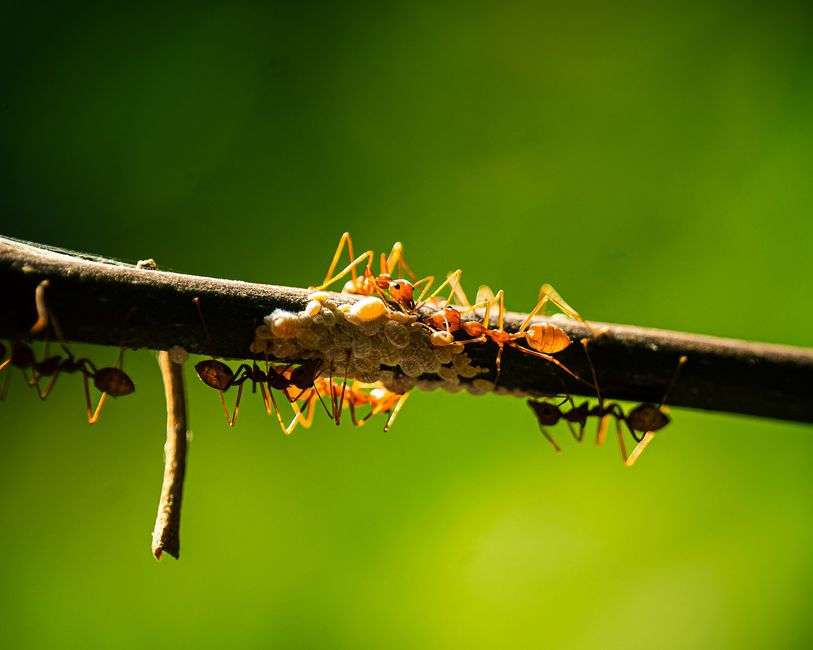
Most people assume every ant can bite, but that is not true. Some ants do not have the mouthparts to bite at all. Others use venomous stings instead of bites. A few species can both bite and sting. The short answer is that not all ants bite, but many species have defense mechanisms that can hurt humans. Understanding which ants bite and which use other methods helps you know what you are dealing with.
What Determines Whether an Ant Can Bite?
An ant’s ability to bite comes down to its jaw structure. All ants have mandibles, which are strong mouthparts used for carrying food, digging, and fighting. But not all mandibles can pierce human skin. The size and shape of the mandibles vary greatly between species.
Ants that bite have large, sharp mandibles that can clamp down with force. These mandibles work like pliers. They grip and hold the skin. Some ants, like carpenter ants, have mandibles strong enough to break skin and draw blood. Other ants have smaller, weaker mandibles that cannot do much more than pinch.
Research published in the journal Myrmecological News found that mandible strength correlates with ant diet and colony defense needs. Predatory ants tend to have stronger bites. Ants that eat mostly liquids have weaker mandibles. This means bite risk depends entirely on the species you encounter.
Which Ant Species Are Known for Biting?
Several common ant species in the United States are known for biting. Carpenter ants are one of the most frequent biters. They have large mandibles and can deliver a painful bite that sometimes breaks skin. The bite itself is not venomous, but it can sting and may cause a mild allergic reaction in some people.
Fire ants are famous for their sting, but they also bite. They first bite to grip the skin, then sting repeatedly. This combination makes fire ant attacks particularly painful. The CDC reports that fire ant stings cause medical visits for thousands of Americans each year.
Harvester ants have powerful mandibles and a venomous sting. They are aggressive and will bite if their nest is disturbed. Their bite is painful and can cause swelling. Some people experience more severe reactions requiring medical attention.
Bullet ants are not common in the US but are worth mentioning. They have one of the most painful insect stings in the world. They bite first to anchor themselves, then sting. The pain has been compared to being shot, which is how they got their name.
Do Ants That Sting Also Bite?
Yes, many ants that sting also bite. This is a common point of confusion. People often say an ant bit them when it actually stung them. Understanding the difference matters for treatment.
Ants use their mandibles to bite for two reasons. First, biting helps them hold onto the target. Second, biting positions their abdomen to deliver a sting. Fire ants are the best example. They bite with their jaws, then curl their abdomen to inject venom through a stinger. The bite holds them in place while the sting does the damage.
Some ants, like velvet ants (which are actually wasps), have a stinger but do not bite. Others, like sugar ants, can bite but rarely do because their mandibles are too small to hurt humans. The table below shows common ant species and their defense methods.
| Ant Species | Bites Humans | Stings Humans | Pain Level |
|---|---|---|---|
| Carpenter Ant | Yes | No | Moderate |
| Fire Ant | Yes (grips) | Yes | High |
| Harvester Ant | Yes | Yes | High |
| Bullet Ant | Yes (grips) | Yes | Extreme |
| Sugar Ant | Rarely | No | Mild |




What Does an Ant Bite Look Like and How Is It Different From a Sting?
An ant bite usually looks like a small red bump. It may have a tiny puncture mark in the center. The area around the bite can swell and become itchy. Most ant bites heal on their own within a few days.
A sting looks different. Fire ant stings produce a raised red welt that turns into a white pustule within 24 hours. This pustule is not an infection. It is a reaction to the venom. The CDC states that fire ant stings often form clusters of pustules that can last up to a week.
Some people confuse ant bites with mosquito bites. Mosquito bites are usually larger and more raised. Ant bites tend to be smaller and more localized. If you see a line of small red bumps, it is likely ant bites or stings. Ants attack in groups, so multiple marks are common.
Severe reactions are possible. The American College of Allergy, Asthma and Immunology reports that about 1 in 100 people have a serious allergic reaction to ant venom. Symptoms include hives, swelling of the face or throat, difficulty breathing, and dizziness. This is a medical emergency.
Do All Ants Bite When They Feel Threatened?
Not all ants bite when threatened. Many species rely on other defenses. Some ants release alarm pheromones that call other ants to attack. Others spray formic acid, which can irritate skin and eyes. Wood ants are known for this acid spray.
Some ants play dead. Others try to escape. The behavior depends on the species and the level of threat. A study in Behavioral Ecology and Sociobiology found that ant defensive behavior is highly specific. Ants near their nest are more aggressive. Ants far from the nest are more likely to flee.
Ants that live in large colonies tend to be more aggressive. They have more workers to lose and more resources to protect. Fire ants and army ants are examples. Solitary ants or ants in small colonies are less likely to bite.
Temperature also affects ant behavior. Research from the University of Oklahoma shows that ants are more aggressive in warmer weather. Cold ants move slowly and are less likely to attack. This is why you see more ant activity and bites in summer months.
How Can You Treat an Ant Bite at Home?
Most ant bites do not require medical treatment. Wash the area with soap and water to reduce infection risk. Apply a cold compress to reduce swelling. Over-the-counter antihistamines like diphenhydramine can help with itching.
Topical treatments work for mild reactions. Calamine lotion or hydrocortisone cream can soothe the skin. Baking soda mixed with water into a paste is a common home remedy. Some people report relief from aloe vera, though strong evidence is limited.
Do not pop pustules from fire ant stings. They are not infected. Popping them increases infection risk and can lead to scarring. Let them heal on their own. If a pustule becomes red, warm, or starts draining pus, see a doctor.
Seek medical help if you have signs of an allergic reaction. The Asthma and Allergy Foundation of America recommends immediate care if you experience widespread hives, swelling beyond the bite site, or trouble breathing. Carry an epinephrine auto-injector if you have known ant allergies.
Common Misconceptions About Ant Bites
One widespread myth is that all ant bites are venomous. This is not true. Only ants with a stinger inject venom. Ants that only bite do not deliver venom. Carpenter ant bites hurt but are not venomous. The pain comes from the mechanical force of the mandibles.
Another myth is that ant bites always get infected. Infection is not common with proper care. The red bump and itching are usually just the body’s immune response. True infection shows signs like increasing pain, warmth, and pus after several days.
Some people believe that all small red bumps from ants are bites. They may actually be stings. Fire ant stings are often mistaken for bites. Knowing the difference helps you choose the right treatment. Stings from fire ants require different care than bites from carpenter ants.
A final myth is that killing ants attracts more ants. This is partially true but misleading. Crushed ants release alarm pheromones that can alert nearby ants. But this does not cause a massive attack. It may cause a few more ants to investigate. The real attractant is food, not dead ants.
What to Avoid When Dealing With Ants
Do not disturb ant nests without protection. This is the most common cause of bites. If you see a mound or trail, avoid it. Wear shoes and long pants when walking in areas with known ant activity. Fire ant mounds are especially dangerous because they are often hidden in grass.
Avoid using home remedies that have no evidence. Putting toothpaste, vinegar, or bleach on ant bites can irritate the skin further. Stick to soap, water, and cold compresses. If you need more relief, use proven over-the-counter products.
Do not ignore signs of an allergic reaction. Some people assume ant bites are always harmless. This is not true. Severe allergic reactions can happen with any ant species. If you have had a reaction before, talk to your doctor about carrying emergency medication.
Avoid using insect repellents that are not designed for ants. Most mosquito repellents do not work on ants. Permethrin-treated clothing can help, but the best prevention is avoiding contact. Keep food sealed and clean up crumbs to reduce ant presence indoors.
Frequently Asked Questions
Can ants bite through clothing?
Some ants with strong mandibles can bite through thin clothing. Thicker fabrics like denim usually stop them.
Do all ants have stingers?
No, only ants in the subfamily Formicidae have stingers. Many common ants like carpenter ants do not have stingers.
How long does an ant bite last?
Most ant bites heal within 3 to 7 days. Fire ant stings may last up to 10 days with pustules.
Can ant bites make you sick?
Ant bites themselves rarely cause illness. Allergic reactions to venom can cause systemic symptoms like fever or nausea.
