
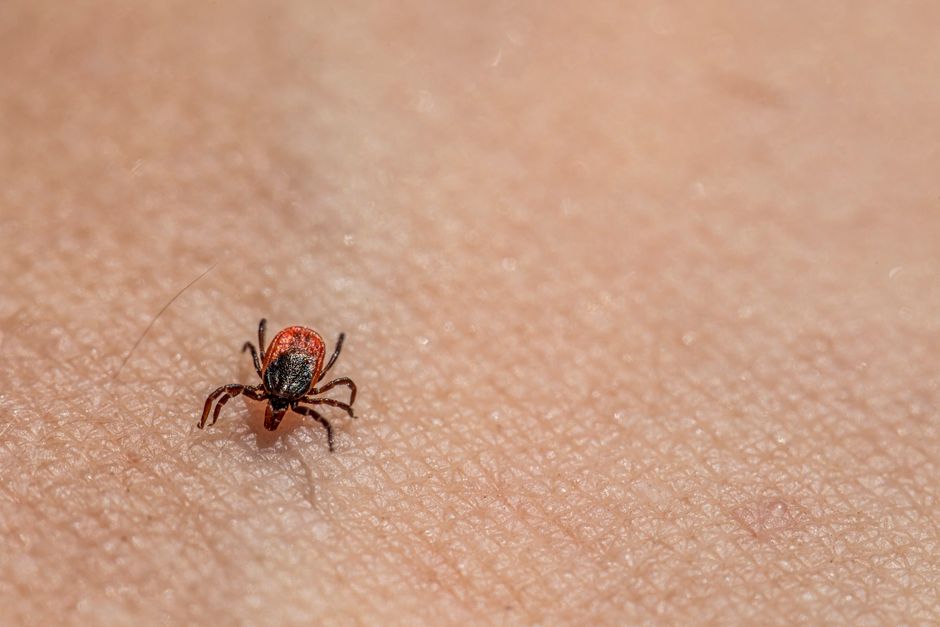
If you see tiny red bumps on your skin and find small, striped bugs in your home, your first thought might be that carpet beetles are biting you. The direct answer is no. Carpet beetles do not bite humans. Their mouthparts are not designed for biting skin. The red, itchy welts people get are almost always an allergic reaction to tiny hairs the beetles shed, not actual bites. This is a common mix-up with bed bugs, and knowing the difference matters for how you treat the problem.
Why Do People Think Carpet Beetles Bite?
The confusion is understandable. Carpet beetle larvae are small, hairy, and often found in bedrooms and closets. When someone wakes up with itchy red marks, they look for a cause. Carpet beetles are right there. Bed bugs also leave red marks. The timing and location can be similar.
But the mechanism is completely different. Bed bugs are parasites. They bite to feed on blood. Carpet beetles do not feed on blood. They eat natural fibers like wool, silk, fur, and feathers. Their larvae have chewing mouthparts for eating fabric, not piercing skin.
Research published in medical entomology journals confirms that carpet beetles are not blood feeders. The red bumps are a skin reaction to the tiny, barbed hairs (called setae) that carpet beetle larvae shed. These hairs are microscopic. They can become airborne and land on skin, causing a rash that looks very similar to bug bites.
Do Carpet Beetles Bite Humans or Cause a Rash?
Carpet beetles cause a rash. They do not cause bites. The medical term for the skin reaction is carpet beetle dermatitis. It is a form of contact dermatitis. The body reacts to the protein in the larval hairs as if it were an allergen.
The rash is red, raised, and itchy. It often appears in clusters or lines. This is why people mistake it for bed bug bites. However, there are key differences. Carpet beetle rashes are more likely to appear on areas of the body that are exposed while sleeping, like the arms, neck, and face. Bed bug bites can appear anywhere, but often follow a line or zigzag pattern.
Some people report blisters or a burning sensation. The severity depends on how sensitive a person is to the allergen. Children and people with sensitive skin or existing allergies tend to have stronger reactions. One study in the journal Contact Dermatitis documented cases where people were treated for months for “bug bites” before a doctor identified the real cause as carpet beetle larvae in the home.
How Can You Tell Carpet Beetle Rash from Bed Bug Bites?
Distinguishing between carpet beetle rash and bed bug bites is important because the treatments are different. Bed bugs require pest control that targets blood-feeding insects. Carpet beetles require cleaning and removing their food source.
Here is a comparison table to help you tell them apart:
| Feature | Carpet Beetle Rash | Bed Bug Bites |
|---|---|---|
| Cause | Allergic reaction to larval hairs | Insect bite to feed on blood |
| Appearance | Red, raised, often flat patches; can be scaly | Raised, red bumps; often a dark red center |
| Pattern | Clusters or scattered on exposed skin | Lines or zigzags; sometimes a single row |
| Timing | Can appear hours after exposure; may worsen over days | Often appear within 24 hours of a bite |
| Location on body | Arms, neck, face, hands (exposed areas) | Anywhere; often on back, legs, arms |
| Presence of insects | Small, striped, fuzzy larvae in fabric or corners | Small, flat, reddish-brown bugs in mattress seams or crevices |
The simplest clue is the insect itself. If you find a small, fuzzy, striped caterpillar-like bug, it is a carpet beetle larva. If you find a flat, oval, reddish-brown bug that hides in mattress seams, it is a bed bug. If you find neither, look for carpet beetle shed skins or fecal pellets near wool rugs or stored clothing.





What Does the Science Say About Carpet Beetle Reactions?
Medical literature is clear that carpet beetles do not bite. The reaction is allergic. The hairs from the larvae contain a protein called sericin. This is the same protein in silk. Some people are allergic to it. When the hairs touch skin, the immune system releases histamine, causing redness, swelling, and itching.
The CDC does not list carpet beetles as a biting pest. They are classified as a fabric pest. The American Academy of Dermatology states that most skin reactions attributed to carpet beetles are actually allergic contact dermatitis from the larval hairs.
Some people report respiratory issues from carpet beetles. If the hairs become airborne, they can be inhaled. This can trigger asthma symptoms or allergic rhinitis in sensitive people. This is rare but documented. A 2020 case study in Allergy and Asthma Proceedings described a woman with chronic cough and nasal congestion that resolved only after a heavy carpet beetle infestation was removed from her home.
It is worth noting that not everyone reacts to carpet beetles. Many people live with them and never notice a skin issue. The reaction depends on individual sensitivity and the level of exposure. A few hairs may cause no reaction in one person and a severe rash in another.
How to Get Rid of Carpet Beetles and Stop the Rash
Stopping the rash means removing the carpet beetles from your home. The larvae are the problem. They eat natural fibers and leave behind the irritating hairs. The adults eat pollen and are less of a concern, but they lay eggs in your home.
Here is a practical step-by-step approach based on recommendations from entomologists:
- Vacuum thoroughly. Focus on carpets, rugs, upholstered furniture, baseboards, and closets. Pay special attention to edges and corners where lint and pet hair collect. Vacuum under furniture and along baseboards.
- Wash all fabrics. Launder bedding, curtains, and clothing in hot water (at least 130°F). Dry on high heat. This kills eggs and larvae.
- Dry clean or heat treat. For wool sweaters, silk scarves, or other delicate items, dry cleaning works. You can also seal items in a plastic bag and freeze them for 72 hours.
- Seal cracks and crevices. Use caulk to seal gaps along baseboards, around windows, and where pipes enter walls. This prevents adult beetles from entering.
- Consider boric acid or diatomaceous earth. These are low-toxicity powders that kill larvae. Apply a thin layer in cracks and along baseboards. Do not use where pets or children might inhale the dust.
- Reduce food sources. Carpet beetle larvae eat lint, pet hair, dead insects, and natural fibers. Regular vacuuming and dusting remove these. Store off-season clothing in sealed plastic bins.
Pesticides are rarely needed for carpet beetles. The Environmental Protection Agency notes that thorough cleaning is usually enough. If you have a severe infestation, a pest control professional can apply an insect growth regulator that prevents larvae from maturing.
Common Misconceptions About Carpet Beetles
Several myths circulate online about carpet beetles. It is worth clearing them up so you do not waste time on ineffective treatments.
Myth: Carpet beetles burrow into skin. This is false. Their mouthparts cannot pierce skin. They do not live on humans. They live in fabric.
Myth: Carpet beetles cause “carpet beetle poisoning.” There is no such thing. The reaction is allergic, not toxic. No evidence exists of systemic poisoning from carpet beetles.
Myth: You need to fumigate your whole house. Fumigation is overkill for carpet beetles. Targeted cleaning and treatment of infested areas is more effective and less expensive.
Myth: Carpet beetles only live in dirty homes. They can infest any home. They feed on natural fibers, which are common in clean homes too. They are often brought in on cut flowers, used furniture, or clothing.
Some people also confuse carpet beetle larvae with fleas. Fleas are small, jumping insects that bite. Carpet beetle larvae are slow-moving, fuzzy, and do not jump. If you see a tiny bug that jumps, it is not a carpet beetle.
What to Do If You Have a Skin Reaction
If you have a rash that matches the description of carpet beetle dermatitis, treat the itch first. Over-the-counter hydrocortisone cream can reduce inflammation. Antihistamines like loratadine or cetirizine can help with itching. Calamine lotion can also soothe the skin.
Do not scratch the rash. Scratching can break the skin and lead to infection. If the rash is severe, covers large areas, or does not improve with OTC treatments, see a dermatologist. They can prescribe a stronger topical steroid.
It is also important to confirm the cause. If you treat for bed bugs but the problem is carpet beetles, you will not solve it. Look for the larvae in your home. Check wool rugs, natural fiber carpets, upholstered furniture, and stored clothing. If you find them, follow the cleaning steps above.
If you cannot find any insects or signs of them, the rash may be from something else. Poison ivy, scabies, or eczema can mimic carpet beetle dermatitis. A doctor can help you identify the real cause.
Frequently Asked Questions
Do carpet beetles bite humans while they sleep?
No. Carpet beetles do not bite humans at any time. They have chewing mouthparts designed for eating fabric, not piercing skin.
Can carpet beetles live in your bed?
They can live in bed frames or on natural fiber mattresses, but they are not commonly found there. They prefer areas with lint, pet hair, and fabric debris.
What kills carpet beetle larvae instantly?
High heat (above 130°F) kills larvae instantly. Washing fabrics in hot water or using a steam cleaner on carpets is effective.
How long does carpet beetle rash last?
Without treatment, the rash can last one to two weeks. With antihistamines or steroid cream, symptoms often improve within a few days.
