
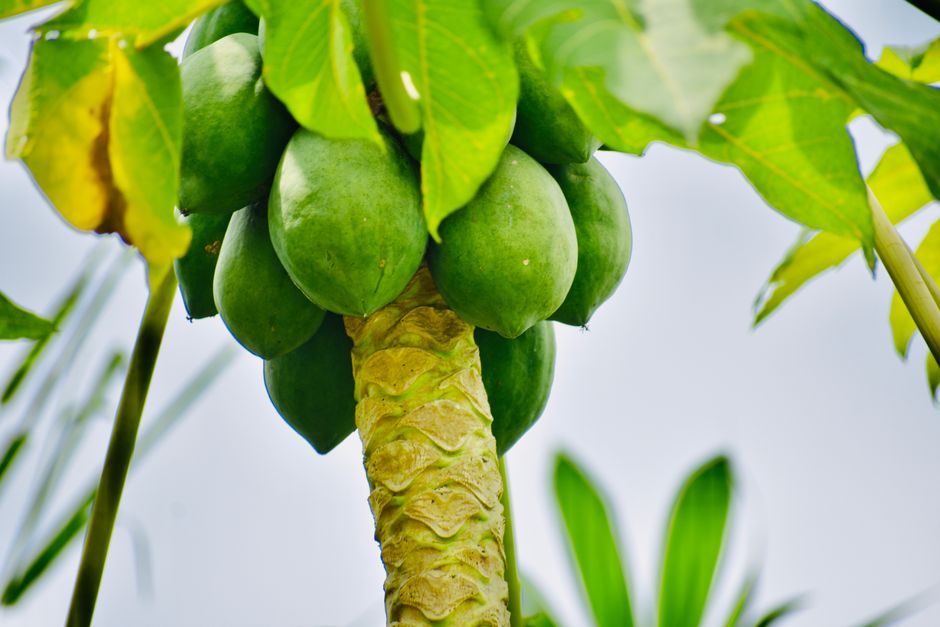
Why Is My Papaya Not Ripening After I Bought It?
This is the most common complaint. You bring home a papaya from the store, wait days, and nothing changes. The problem usually starts before you bought it. Most papayas sold in US grocery stores are picked when they are mature but still hard and green. This is standard practice for shipping. The fruit can handle the trip without bruising.
The issue is that some papayas are picked too early. If the fruit is harvested before it reaches a certain maturity level on the tree, it will never ripen properly. It will stay hard, bland, and may even rot without ever softening. Research from the University of Florida’s Institute of Food and Agricultural Sciences explains that papayas need to reach a stage called “color break” — when a hint of yellow appears on the skin — before they can ripen off the tree.
If your papaya is completely green with no yellow at all, it was likely picked too early. No amount of bagging or warmth will fix that. You can try, but the results will be disappointing.
Does Temperature Really Affect Papaya Ripening?
Yes, temperature is the single biggest factor you can control. Papayas are tropical fruits. They need warmth to ripen. The ideal temperature range for papaya ripening is between 68°F and 77°F (20°C to 25°C). Below 60°F, the ripening process slows to a crawl. Below 50°F, it stops entirely.
This is why refrigerating an unripe papaya is a mistake. Many people put fruit in the fridge thinking it will ripen slowly. For papayas, cold storage before ripening causes irreversible damage. The fruit develops a condition called chilling injury. The skin may turn unevenly, the flesh becomes watery and bland, and it will never soften properly.
A study published in the journal Postharvest Biology and Technology found that papayas stored at 41°F for even a few days showed significantly reduced ethylene production. Ethylene is the natural plant hormone that triggers ripening. Without it, the fruit stays hard.
If your kitchen is on the cooler side, especially in winter, find the warmest spot. On top of the refrigerator or near the stove (but not directly on it) works well.
What Causes a Papaya to Stay Green and Hard?
Several factors can cause a papaya to stay green and hard. The most common are listed below. Read through each one and see which fits your situation.
- Harvested too early. No yellow color at the stem end means it was picked before it could ripen. This is irreversible.
- Cold storage. Even a few hours in a cold car or a cold grocery display can damage the ripening enzymes.
- Lack of ethylene. Papayas produce their own ethylene, but slowly. Without another fruit nearby to boost it, ripening can take a very long time.
- Wax coating. Some commercial papayas are coated with a thin food-grade wax. This can trap gases and slow ripening. Washing the fruit gently can help.
- Variety differences. Some papaya varieties, like the Mexican papaya, are naturally slower to ripen than the Hawaiian Solo variety.
If you have ruled out early harvesting and cold damage, the next step is to boost ethylene exposure. This is the most effective fix you can try at home.





How Can You Fix a Papaya That Will Not Ripen?
The most reliable method is to trap the papaya with an ethylene-producing fruit in a confined space. Bananas and apples are the best choices. They release a steady amount of ethylene gas as they ripen.
Here is the process. Take a brown paper bag. Place the unripe papaya inside along with one ripe banana or one ripe apple. Do not use a plastic bag — it traps too much moisture and can cause mold. Fold the top of the bag loosely to keep the gas inside but allow some airflow. Leave the bag at room temperature, around 70°F to 75°F.
Check the papaya every 24 hours. Most papayas will begin to soften and show yellow color within two to four days using this method. If the banana or apple starts to rot before the papaya changes, replace it with a fresh one.
Some people report success using a sealed container or a cardboard box instead of a paper bag. That can work, but the bag is simpler. The key is concentrating the ethylene gas without suffocating the fruit.
Another method is placing the papaya in a bowl of uncooked rice. This is a traditional trick used in some cultures. The rice absorbs moisture and helps concentrate ethylene around the fruit. It works, but it is slower than the paper bag method.
What About Using Heat or Sunlight to Ripen a Papaya?
You may have seen advice to put papayas in direct sunlight or near a heater. Do not do this. Heat can speed up ripening, but it also damages the fruit. Direct sunlight causes uneven ripening. The side facing the sun will soften and rot while the other side stays hard.
Placing a papaya near a warm appliance, like the top of a refrigerator, is fine. Direct heat from a stove or radiator is not. The goal is consistent warmth, not intense heat.
If you are in a hurry, you can try the warm water method. Fill a large bowl with warm tap water — not hot, just warm to the touch. Submerge the papaya for 10 minutes. Dry it off and place it in a paper bag with a banana. The warmth jumpstarts the enzymes. This is a trick used by some commercial fruit handlers. There is no large-scale study on it, but anecdotal reports from home cooks suggest it works.
Do not microwave a papaya to ripen it. This cooks the flesh and destroys the texture entirely.
Can You Eat a Papaya That Is Not Ripe?
Yes, you can eat an unripe papaya, but it is very different from a ripe one. Green papaya is firm, crunchy, and has a mild, slightly bitter taste. It is commonly used in Southeast Asian cooking, especially in salads like Thai som tam. The texture is similar to a raw carrot or jicama.
Nutritionally, green papaya contains more papain, an enzyme that helps digest protein. Some people use green papaya as a meat tenderizer for this reason. The CDC notes that green papaya is safe to eat in moderate amounts, though pregnant women are often advised to avoid it in large quantities due to concerns about the latex content in the skin.
If your papaya is hard and green and will not ripen no matter what you try, you do not have to throw it away. Shred it or slice it thin and use it in a slaw or salad. It will not taste like a sweet ripe papaya, but it is a perfectly edible vegetable.
Frequently Asked Questions
Can I ripen a papaya in the microwave?
No. Microwaving a papaya cooks the flesh and ruins the texture. It will not ripen properly.
How long does it take for a papaya to ripen at room temperature?
A mature papaya typically ripens in three to five days at room temperature. Using a paper bag with a banana can shorten this to two to three days.
Why is my papaya soft but still green?
This is called “green ripe.” The fruit is soft and edible but was harvested before the skin color changed. It is safe to eat and may taste fine, though less sweet.
Should I wash a papaya before trying to ripen it?
Washing is not necessary for ripening. If you suspect a wax coating, a gentle rinse can help, but dry the fruit completely before bagging it.
