
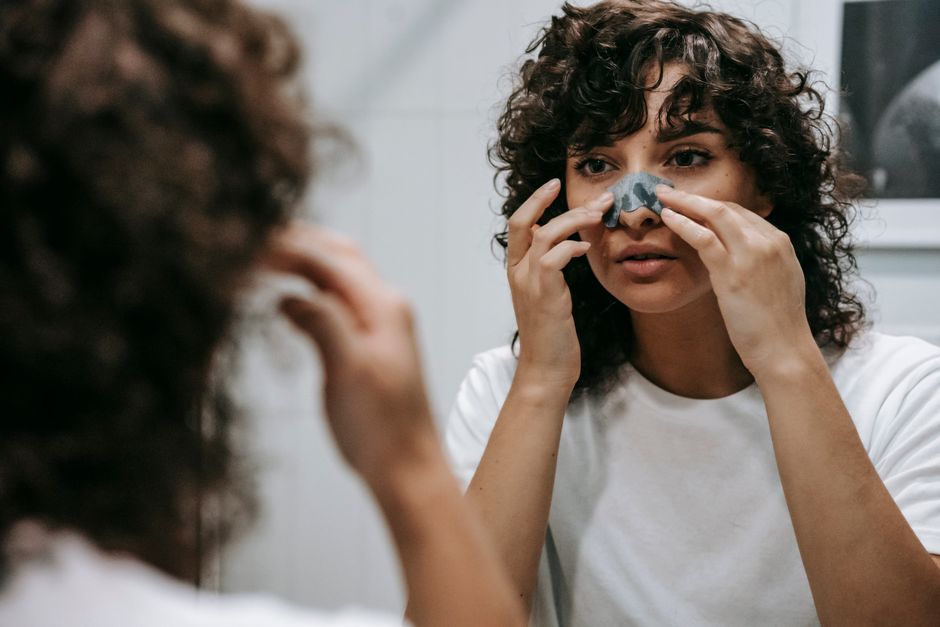
Noticing that your nose looks darker than the rest of your face can be confusing. It is a common concern, and it is usually harmless. The skin on your nose is unique, and several specific factors can make it appear darker, including sun exposure, oil production, and certain skin conditions.
What Causes the Skin on Your Nose to Look Darker?
The skin on your nose is not identical to the skin on your cheeks or forehead. It has a higher density of sebaceous (oil) glands. This makes it prone to a specific type of pigmentation issue.
Sun exposure is the most common culprit. Your nose sits at the highest point of your face and catches direct sunlight more than any other area. Because it is constantly exposed, it produces more melanin (the pigment that gives skin color) to protect itself. Over time, this leads to a visible difference in tone.
Friction is another factor. Wearing glasses, rubbing your nose, or even resting your face on your hand can trigger extra pigment production. This is a form of post-inflammatory hyperpigmentation. The skin darkens in response to repeated pressure or irritation.
Is This Melasma or Something Else?
Melasma is a common skin condition that causes brown or gray-brown patches on the face. It typically appears on the cheeks, forehead, and upper lip, but it can also affect the bridge of the nose.
Unlike simple sun tanning, melasma is often driven by hormones. It is heavily associated with pregnancy, birth control pills, and hormone replacement therapy. Sun exposure makes it significantly worse, and the pattern on the nose can be butterfly-shaped across the cheeks.
Another possibility is a condition called seborrheic dermatitis. This causes redness and flaking, but in some skin tones, the inflammation can leave behind a darker patch. The nose, with its many oil glands, is a prime location for this condition.
Why Is My Nose Darker Than My Face: Causes and Fixes
To fix the issue, you first need to identify the exact cause. The table below breaks down the most common reasons and the general approach for each.
| Cause | What It Looks Like | Primary Fix |
|---|---|---|
| Sun exposure | Diffuse darkening, often worse on the nose bridge | Strict sun protection and sunscreen |
| Melasma | Symmetric brown patches, often on cheeks and nose | Sun protection plus prescription topicals |
| Post-inflammatory hyperpigmentation | Dark spot where you had a pimple or irritation | Treat the underlying acne or irritation first |
| Friction | Darkening where glasses or masks rub | Reduce pressure and stop touching the area |
| Seborrheic dermatitis | Greasy scales with redness or darkening | Medicated cleansers or creams |
If you are unsure which category fits you, see a board-certified dermatologist. They can examine your skin with a special light to determine the depth of the pigment.




Does Sunscreen Actually Prevent a Darker Nose?
Yes. Strict sun protection is the single most important step. The nose receives more ultraviolet (UV) radiation than any other part of the face because of its prominent position.
You need a broad-spectrum sunscreen with an SPF of 30 or higher. Apply it every morning as the last step of your skincare routine. Reapply every two hours if you are outdoors. For the nose specifically, a zinc oxide or titanium dioxide mineral sunscreen offers the best physical barrier.
Do not forget that UV rays pass through clouds and windows. If you sit near a window at work or drive daily, the left or right side of your nose can darken asymmetrically. Sunscreen is not just for beach days. It is a daily requirement for preventing further darkening.
What Skincare Ingredients Help Lighten a Dark Nose?
Several over-the-counter ingredients have evidence supporting their use for hyperpigmentation. These work by interrupting melanin production in the skin.
Vitamin C (L-ascorbic acid) is an antioxidant that inhibits melanin formation. It works best in concentrations between 10% and 20%. It is most effective when used in the morning under sunscreen.
Niacinamide (vitamin B3) has been shown in studies to reduce pigment transfer from melanocytes to skin cells. A 2% to 5% concentration is typical in serums. It is gentle and pairs well with most other active ingredients.
Azelaic acid is another option. It is available over the counter in lower strengths and by prescription in higher ones. It works well for both acne and pigmentation, making it a good choice if you have breakouts on your nose.
Kojic acid and alpha arbutin are additional lightening agents found in many serums. They are generally well tolerated, but results take time.
Consistency matters more than the specific product. Pigmentation treatments typically require 8 to 12 weeks of daily use before you see visible change. If you stop using the product, the pigment often returns.
Are Prescription Treatments More Effective?
For stubborn pigmentation, prescription treatments are often more effective than over-the-counter options. The gold standard is a combination of hydroquinone, tretinoin, and a mild corticosteroid. This is commonly called a “triple cream.”
Hydroquinone is the most studied skin-lightening agent available. It works by blocking an enzyme needed for melanin production. Prescription strengths range from 4% to 8%. It is typically used for a few months at a time, then stopped to prevent side effects.
Tretinoin (a retinoid) speeds up cell turnover. It helps shed pigmented skin cells and allows the other ingredients to penetrate deeper. It can cause dryness and peeling during the first few weeks of use.
Chemical peels performed in a dermatologist’s office can also help. Glycolic acid and salicylic acid peels exfoliate the top layers of skin, revealing lighter skin underneath. Multiple sessions are usually needed, spaced several weeks apart.
Laser therapy is another option for certain types of pigmentation. However, lasers can sometimes make melasma worse. This is why a dermatologist’s evaluation is essential before choosing this route. Do not assume that a stronger treatment is automatically safer or more effective for your specific skin type.
Can You Prevent the Darkening From Returning?
Prevention is largely about maintenance. The underlying tendency for your nose to produce extra pigment does not go away. You are managing a chronic pattern, not curing a one-time event.
Daily sunscreen is non-negotiable. If you skip it, the pigment will likely return even after successful treatment. Sun exposure is the primary trigger for most forms of facial hyperpigmentation.
Avoid picking at your skin. Post-inflammatory hyperpigmentation from a squeezed blackhead or pimple can leave a mark on the nose that lasts for months. Let blemishes heal on their own or use a spot treatment.
Re-evaluate your glasses. If your frames sit tightly on your nose, the constant pressure can darken the skin. A lighter frame or a different fit can reduce this friction.
When Should You See a Dermatologist?
See a dermatologist if the darkening is new, changing, or uneven in shape. Any mole or spot on the nose that changes in size, color, or shape needs evaluation. Skin cancer can occur on the nose because it receives so much sun exposure.
You should also see a doctor if over-the-counter treatments have not worked after three months of consistent use. Prescription options may be necessary. A dermatologist can also rule out less common causes of skin darkening, such as systemic conditions or medication reactions.
Do not attempt to bleach your skin with unregulated products. Some creams sold online contain mercury or high-dose steroids that are unsafe. These can cause permanent skin damage, thinning of the skin, or systemic toxicity. Only use products from reputable brands that list their ingredients clearly.
Finally, be patient with your skin. Fading pigmentation takes time. The process is measured in months, not days. Consistent daily care is more effective than sporadic intense treatments.
Frequently Asked Questions
Why is only my nose darker and not the rest of my face?
Your nose sits higher on your face and receives more direct sun exposure, which triggers extra melanin production. It also has more oil glands, making it prone to inflammation and post-inflammatory darkening.
Can a dark nose be a sign of a health problem?
Usually not, but any spot that changes shape or color should be checked by a dermatologist. In rare cases, systemic conditions like Addison’s disease can cause skin darkening, but this typically affects more than just the nose.
How long does it take for a dark nose to lighten?
With consistent use of sunscreen and lightening ingredients, expect to see results in 8 to 12 weeks. Prescription treatments may work faster, but the process still takes several months.
Is it safe to use lemon juice to lighten my nose?
No. Lemon juice is acidic and can irritate your skin, which often leads to more darkening. It also makes your skin more sensitive to sunlight, increasing your risk of sunburn.
