
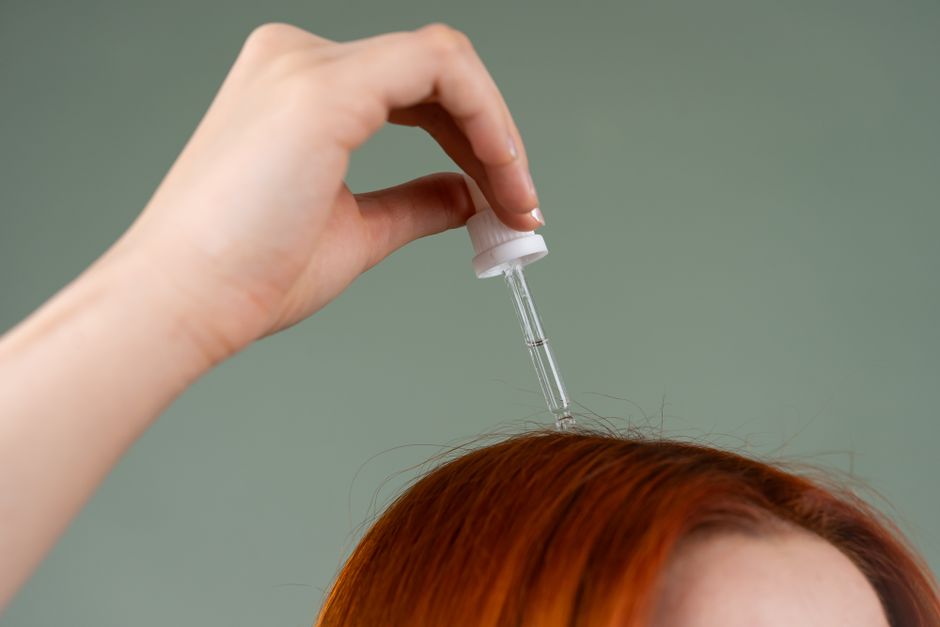
Hair thickness is not random. It comes down to three main factors: your genes, your hormones, and your nutrition. Genetics set the baseline for your hair follicle size and shape. Hormones can change that baseline over time. Nutrition provides the raw materials your hair needs to grow at its best. Understanding how these three forces work together explains why your hair is the way it is.
What Determines Natural Hair Thickness?
Your genes are the starting point. They determine how many hair follicles you have and how large each follicle is. A larger follicle produces a thicker hair strand. A smaller follicle produces a thinner one. This is largely decided before you are born.
Your ethnicity also plays a role. People of Asian descent often have thicker individual strands but fewer total hairs. People of European descent typically have finer strands but more hairs overall. People of African descent often have strands that are tightly coiled, which changes how thick the hair appears even if the strand diameter is similar.
Hair thickness is also about density. Density refers to how many hairs you have per square inch of scalp. Some people have 100,000 hairs. Others have 150,000. Both can be completely healthy. Density and strand thickness are separate things. You can have thick strands but low density, or fine strands but high density.
One important detail: the hair you see is dead protein. The living part is the follicle, which sits below the scalp. Everything that affects hair thickness happens at the follicle level, not at the strand level. Trimming your hair does not make it thicker. Shaving does not make it thicker. Those are myths. The follicle size is already set.
How Do Hormones Change Hair Thickness Over Time?
Hormones can alter your hair over your lifetime. The most important hormone for hair is dihydrotestosterone, or DHT. DHT is a byproduct of testosterone. In people who are genetically sensitive to it, DHT shrinks hair follicles over time. This process is called follicular miniaturization.
Miniaturization means the follicle gets smaller with each hair growth cycle. The new hair comes in thinner than the one before. Eventually the follicle may stop producing visible hair altogether. This is the mechanism behind male and female pattern hair loss. It is genetic and hormone-driven. It is not caused by stress, hats, or shampoo.
Other hormones matter too. Thyroid hormones regulate the hair growth cycle. When thyroid levels are off, hair can become thin or brittle. Estrogen tends to support thicker hair. That is why many women notice fuller hair during pregnancy when estrogen is high. After childbirth, estrogen drops and many women shed more hair than usual. This is normal and temporary.
Menopause changes hair as well. Estrogen declines, and the balance shifts toward androgens. Many women notice their hair becomes thinner at the temples or crown during this time. This is a hormonal change, not a sign of poor health.
Stress hormones also play a role. Cortisol can push hair follicles into a resting phase. This is called telogen effluvium. It usually happens two to three months after a stressful event. The good news is that this type of hair loss is typically reversible once stress levels return to normal.
Which Nutrients Actually Support Thicker Hair?
Hair is made of a protein called keratin. Your body needs adequate protein to build it. Severe protein deficiency can cause hair to become thin and weak. Most people eating a normal diet get enough protein, but very restrictive diets can fall short.
Iron is another key nutrient. Iron helps red blood cells carry oxygen to hair follicles. Low iron levels are linked to hair thinning, especially in women. If you are losing more hair than usual, a blood test for ferritin can check your iron stores. Do not guess. Supplementing iron when you do not need it can be harmful.
Vitamin D also appears to play a role. Some research suggests a link between low vitamin D and hair thinning. The evidence is not conclusive, but it is reasonable to have your levels checked if you are concerned.
Zinc is involved in hair tissue growth and repair. Zinc deficiency is rare but can cause hair loss. Biotin is widely marketed for hair health, but the evidence is weak. Biotin deficiency is extremely rare. Taking biotin supplements will not thicken hair in someone who already gets enough.
The honest position on supplements is this: if you have a true deficiency, correcting it can help. If you do not have a deficiency, extra vitamins will not make your hair thicker. The supplement industry heavily markets hair vitamins, but no rigorous study has shown that high-dose vitamins thicken hair in healthy people.




Why Is My Hair Thick In Some Areas And Thin In Others?
This is normal. Hair follicles across your scalp have different sensitivities to hormones. The follicles at the back and sides of your head are usually less sensitive to DHT. The follicles at the crown and temples are often more sensitive. This is why pattern hair loss follows a predictable shape.
In women, pattern hair loss typically shows as widening of the part line. The front hairline usually stays intact. In men, it often starts with a receding hairline or thinning at the crown. Both patterns are driven by the same underlying mechanism: genetic sensitivity to DHT.
Hair thickness can also vary by region of the scalp for reasons unrelated to hormones. Blood flow, follicle density, and even your sleeping position can influence how hair behaves in different areas. Most variation is simply genetic.
Can You Make Hair Thicker With Products Or Treatments?
Some treatments work. Others do not. It depends on what is causing the thinning.
For pattern hair loss, two medications have strong evidence behind them. Minoxidil, sold under brand names like Rogaine, is applied to the scalp. It can slow hair loss and stimulate some regrowth. Finasteride, taken as a pill, blocks the conversion of testosterone to DHT. Both require ongoing use. If you stop, the effect reverses.
These medications are not for everyone. Finasteride is not approved for use in women who may become pregnant. It can cause birth defects. Minoxidil can cause scalp irritation. Talk to a doctor before starting either one.
Low-level laser therapy is another option. Some devices are cleared by the FDA for treating hair loss. The evidence is modest. It may help some people but results vary.
Platelet-rich plasma, or PRP, is a procedure where your blood is drawn, processed, and injected into the scalp. Some studies suggest it can stimulate hair growth. The evidence is still emerging. It is expensive and not covered by most insurance.
Hair transplant surgery is the most permanent option. It moves follicles from areas resistant to DHT to thinning areas. The transplanted hair usually continues to grow for life. It is a surgical procedure with real risks and costs.
What does not work: biotin supplements for people without deficiency, special shampoos that claim to thicken hair, scalp massages as a treatment for pattern loss, and essential oil blends that claim to regrow hair. These are marketed heavily but lack solid clinical evidence.
When Should You See A Doctor About Hair Thinning?
Sudden or rapid hair loss is worth a medical visit. So is hair loss with itching, redness, or scaling. Hair loss accompanied by fatigue, weight changes, or irregular periods may indicate a hormone or thyroid issue.
Patchy hair loss could be alopecia areata. That is an autoimmune condition where the immune system attacks hair follicles. It is different from pattern hair loss and may need different treatment.
A doctor can run basic blood tests to check thyroid function, iron levels, and vitamin D. These are simple and inexpensive. They can rule out the most common reversible causes of hair thinning.
Dermatologists specialize in hair and scalp conditions. If your primary care doctor cannot identify a cause, a dermatologist is the right next step. They can examine your scalp under magnification and may do a scalp biopsy if needed.
Frequently Asked Questions
Can stress permanently change hair thickness?
Usually not. Stress-related hair loss typically reverses within months once stress resolves. Permanent thinning is more often genetic or hormonal.
Does cutting hair make it grow back thicker?
No. Cutting or shaving does not change follicle size. The thicker appearance after a cut is an optical effect of blunt ends, not actual change in strand diameter.
Are hair growth supplements worth taking?
Only if you have a confirmed deficiency. For people with normal nutrient levels, no strong evidence shows that supplements thicken hair.
Can diet alone fix hereditary hair thinning?
No. Diet supports hair health, but it cannot override genetic sensitivity to hormones. Pattern hair loss typically requires medication or procedures to slow or reverse.
