
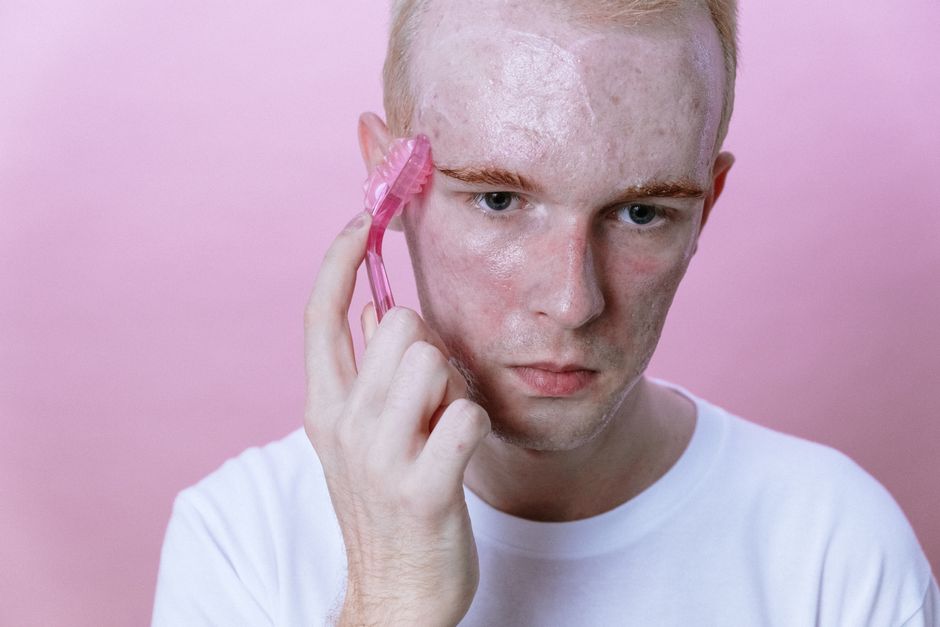
Teen acne happens because rising androgen hormones during puberty tell the oil glands in your skin to produce more sebum, and that extra oil mixes with dead skin cells to plug hair follicles. Once a follicle is blocked, the bacterium Cutibacterium acnes can multiply inside it and trigger inflammation — the redness, swelling, and pus that turn a blocked pore into a pimple. Diet and stress can make this process worse, but they are not the root cause. Hormones are.
Why Teens Get Acne: Hormones, Diet, and Stress
Acne is not a hygiene problem and it is not a sign that someone is doing something wrong. It is a predictable response to a specific set of biological changes that almost everyone goes through.
The sebaceous glands — the oil-producing glands attached to hair follicles — are concentrated on the face, chest, and upper back. These glands have receptors that respond to androgens, the class of hormones that includes testosterone. Before puberty, androgen levels are low and those glands stay relatively quiet.
During puberty, the adrenal glands and the gonads begin producing much more androgen. The sebaceous glands respond by enlarging and ramping up sebum production. This is the first step in what clinicians call the acne cascade.
At the same time, the lining of the hair follicle changes. Skin cells that would normally shed from the follicle wall start sticking together and shedding less efficiently. That combination — more oil plus cells that do not shed — is what forms a plug, also called a comedo. A comedo open to the air is a blackhead. A comedo closed under the skin is a whitehead.
Here is where it becomes more than a blocked pore. Cutibacterium acnes is a bacterium that lives on human skin normally, in everyone. When a follicle is plugged, the environment inside it changes. Oil accumulates, oxygen levels drop, and the bacterium multiplies. The immune system responds to that overgrowth with inflammation. That inflammation is what produces the red, tender, swollen bumps people call pimples.
The timing of acne tracks the timing of androgen rise. Acne typically begins around age 10 to 13 in girls and slightly later in boys, though there is wide normal variation. Boys often develop more severe acne than girls, which is consistent with boys producing higher levels of testosterone.
Do Androgens Cause Acne by Themselves?
Androgens are necessary for acne to develop, but they are not sufficient on their own. This is one of the more useful things to understand about acne.
Almost every teenager has the same surge in androgen levels. Not every teenager develops acne, and among those who do, severity varies enormously. Blood androgen levels in teens with acne are often within the normal range — the difference appears to lie partly in how sensitive an individual’s sebaceous glands are to those hormones, and partly in other factors including genetics and the skin’s immune response.
Genetics matter a great deal. Acne runs in families. If one or both parents had significant acne as teenagers, their children are more likely to as well. Research on twins has pointed toward a substantial inherited component in acne risk.
This also explains why acne can persist beyond the teenage years. Androgens do not disappear after puberty. They settle into adult levels, and some people’s oil glands continue responding to them well into their twenties, thirties, or beyond. Acne in adulthood is common, particularly in women, and it is driven by the same basic mechanism.
Does Diet Really Cause Acne?
Diet can influence acne, but it is a contributing factor rather than the cause. The evidence is strongest for high-glycemic diets and for dairy, and it is not equally strong for every food that gets blamed.
High-glycemic foods — foods that raise blood sugar quickly, such as white bread, sugary drinks, and refined carbohydrates — have the most consistent evidence behind them. The proposed mechanism is that spikes in blood sugar raise insulin, and insulin can increase androgen activity and sebum production. Some studies have found that people who eat lower-glycemic diets have less acne, though results are not uniform across all research.
Dairy has been studied fairly extensively, and several observational studies have found an association between milk consumption and acne, particularly skim milk. The mechanism is not fully settled. Milk contains hormones and growth factors that may influence oil production or inflammation. It is worth being precise here: an association in observational studies is not the same as proof that dairy causes acne in any given person, and the effect, if real, appears modest.
Chocolate is the food most often blamed and the least well supported. Studies looking specifically at chocolate and acne have not produced consistent evidence that it causes breakouts. The belief is widespread; the data are thin.
Greasy foods do not cause acne. Eating fried food does not put oil into your pores. That is a myth that has been repeated for decades.
The practical takeaway from the diet research is modest. No diet has been shown to cure acne. Some people notice their skin improves when they reduce high-glycemic foods or dairy, and that is reasonable to explore. But blaming a teenager’s diet for their acne is both inaccurate and unhelpful.





Does Stress Make Acne Worse?
Stress can worsen acne, and the mechanism is reasonably well understood. Stress does not create acne from nothing, but it can aggravate existing acne.
When someone is under stress, the body releases cortisol and other stress hormones. These hormones can stimulate the sebaceous glands and increase inflammation. Stress also tends to disrupt sleep, and poor sleep is associated with worse skin outcomes.
There is a behavioral piece as well. People under stress tend to pick at their skin more, which worsens existing lesions and can cause scarring. They may also skip their skincare routine or change their eating habits.
Studies on stress and acne have generally found a correlation — people report more breakouts during stressful periods, such as exam season. Correlation is not the same as causation, and it is difficult to design a study that isolates stress from everything else going on in a teenager’s life. But the physiological link through cortisol and inflammation is plausible and reasonably supported.
What Actually Helps Teen Acne
Acne treatment depends on severity. Mild acne — mostly blackheads and whiteheads with few inflamed lesions — often responds to over-the-counter products. Moderate to severe acne, or acne that is causing scarring or significant distress, generally warrants a visit to a doctor or dermatologist.
For mild acne, the mainstays are:
- Benzoyl peroxide, which reduces C. acnes bacteria and helps unclog pores. It is available over the counter in various concentrations.
- Salicylic acid, which helps the follicle shed dead skin cells more effectively.
- Topical retinoids, which are among the most effective treatments for comedonal acne. Some are available over the counter; stronger versions require a prescription.
For moderate to severe acne, prescription treatments include stronger topical retinoids, topical or oral antibiotics, and in some cases hormonal therapies for women. Isotretinoin is a highly effective prescription treatment for severe acne, and it requires medical supervision because of its side effect profile.
Two things are worth being honest about. First, most acne treatments take weeks to show results, not days. A common reason treatments “fail” is that people stop too soon. Second, no treatment works for everyone, and finding the right combination often takes some trial and error with a clinician.
What does not help: scrubbing the skin hard, which irritates it and can worsen inflammation. Picking or squeezing pimples, which pushes bacteria and inflammation deeper and increases scarring risk. And relying on diet changes alone to treat moderate or severe acne, which delays effective treatment.
Why Acne Affects Mental Health, Not Just Skin
Acne is not a cosmetic issue. It sits on the face, which is the part of the body people see first and the part teenagers are most self-conscious about.
Research has consistently found associations between acne and higher rates of anxiety, depression, and social withdrawal in adolescents. The relationship runs in both directions — acne causes distress, and stress can worsen acne. This is one of the reasons dermatologists take acne seriously even when it is not severe by clinical measures. The impact on quality of life is real and worth treating.
If acne is affecting mood, sleep, or daily functioning, that is a reason to seek treatment, not a reason to wait it out. And for anyone experiencing significant depression or thoughts of self-harm, that warrants prompt professional support.
Frequently Asked Questions
At what age does teenage acne usually start?
Acne typically begins between ages 10 and 13 in girls and slightly later in boys, though normal variation is wide. It usually peaks in the mid-to-late teens and often improves by the early twenties, though it can persist longer.
Does chocolate cause acne?
The evidence does not consistently support chocolate as a cause of acne. Studies looking specifically at chocolate have not produced reliable findings, despite how widely the belief is held.
Can stress alone cause acne?
No. Stress can worsen existing acne by raising cortisol and increasing inflammation, but it does not create acne without the underlying hormonal and follicular changes. Hormones are the necessary cause.
Does washing your face more often clear up acne?
No, and washing too often can irritate the skin and make inflammation worse. Gentle cleansing twice a day is generally sufficient; acne is not caused by poor hygiene.
