
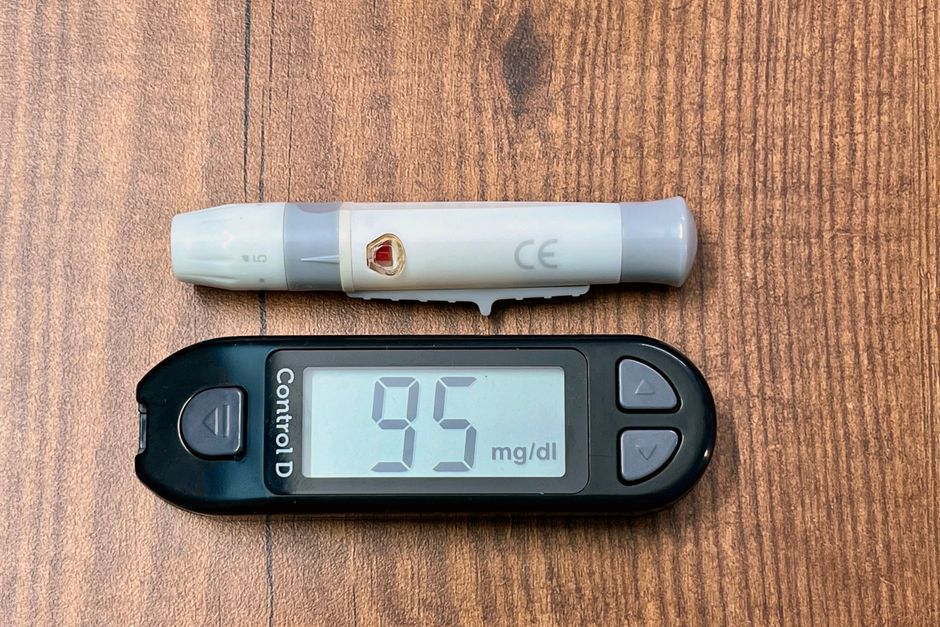
Your blood sugar reading this morning was fine. Your A1C came back high. This is not a lab error. It happens because your A1C reflects your average blood sugar over the past three months, not just the moment you test. A single normal glucose reading can miss spikes that happen after meals, overnight, or on days you do not test. Many conditions also affect how hemoglobin binds to sugar, which can push A1C up even when daily glucose looks normal.
What Does A1C Actually Measure?
A1C measures how much sugar is stuck to your red blood cells. Red blood cells live about three months. So A1C gives a picture of your average blood sugar over that time. It is not the same as a finger-stick glucose test. A finger-stick shows your blood sugar right now. A1C shows the cumulative effect of all those moments.
Think of it like a fitness tracker recording your steps for a month versus checking your step count at one moment. The monthly average tells a more complete story. The same is true for blood sugar. Research published in the New England Journal of Medicine has shown that A1C predicts diabetes complications more reliably than single glucose readings.
The test works by measuring glycated hemoglobin. When glucose enters your bloodstream, some of it attaches to hemoglobin in red blood cells. The more glucose present over time, the more hemoglobin gets sugar attached. A1C reports this as a percentage. A normal A1C is below 5.7 percent. Prediabetes is 5.7 to 6.4 percent. Diabetes is 6.5 percent or higher.
Why Is My Glucose Normal But My A1C High?
This happens for several reasons. The most common is that your fasting glucose is fine but your blood sugar spikes after eating. These post-meal spikes raise your A1C over time even though your morning reading looks normal. Many people only test their blood sugar when they wake up or before meals. They miss the spikes entirely.
Another cause is something called the glycation gap. Some people naturally have more glucose attaching to hemoglobin than others at the same blood sugar level. This is not a disease. It is a biological variation. Studies published in Diabetes Care have found that this gap can make A1C read higher than expected by 0.5 to 1.0 percent.
Anemia also plays a role. Iron deficiency makes red blood cells live longer. Longer-lived cells have more time to accumulate sugar. The result is a higher A1C even if your average glucose is normal. The CDC reports that iron deficiency affects about 10 percent of women in the United States. That is a large group of people who may get misleading A1C results.
What Conditions Can Make A1C Inaccurate?
Several medical conditions affect A1C accuracy. Kidney disease changes how hemoglobin behaves. The National Kidney Foundation notes that people with chronic kidney disease often have falsely low or falsely high A1C depending on the stage of their condition. Liver disease can do the same.
Pregnancy alters red blood cell turnover. A1C is not reliable for diagnosing gestational diabetes. The American Diabetes Association recommends a glucose tolerance test instead. Sickle cell trait and other hemoglobin variants interfere with some A1C tests. This is more common in people of African, Mediterranean, or Southeast Asian descent.
Recent blood loss or blood transfusion resets your red blood cell population. If you donated blood last month, your A1C will be lower than your true average. The same happens if you had surgery or an injury that caused significant bleeding. Doctors should ask about these events before interpreting your A1C.


How Do Fasting Glucose and A1C Compare?
| Measurement | What It Shows | Time Window | Limitations |
|---|---|---|---|
| Fasting glucose | Blood sugar after 8 hours without food | Single moment | Misses post-meal spikes and overnight changes |
| A1C | Average blood sugar over 2-3 months | 90-day average | Affected by anemia, kidney disease, and hemoglobin variants |
| Continuous glucose monitor (CGM) | Blood sugar every 5-15 minutes | Real-time with trend data | Expensive and not always covered by insurance |
This table shows why one test is not enough. If your glucose is normal but your A1C is high, a CGM can reveal whether you are having post-meal spikes or nighttime rises. Some people find that their blood sugar climbs to 180 or 200 mg/dL after meals and returns to normal by morning. Those spikes drive A1C up without ever showing on a fasting test.
What Should You Do If Your A1C Is High but Glucose Is Normal?
Do not ignore it. A high A1C still predicts risk even if your fasting glucose is normal. Research from the Journal of the American Medical Association has found that people with elevated A1C and normal fasting glucose have a higher risk of developing diabetes within five years compared to people with both values normal.
Ask your doctor for a complete blood count to check for anemia. If you have iron deficiency, treating it may bring your A1C back into alignment with your glucose readings. Also ask about hemoglobin variants if you are of African or Mediterranean descent. Some labs use tests that are not affected by these variants. You may need a specific type of A1C test called an HPLC method.
Consider using a continuous glucose monitor for two weeks. This will show your blood sugar pattern throughout the day and night. If you are having post-meal spikes, you can adjust your eating habits. Eating fewer carbohydrates at breakfast and dinner often reduces these spikes. So does walking for 10 minutes after meals.
Some doctors use an alternative test called fructosamine. It measures average blood sugar over the past two to three weeks instead of three months. Fructosamine is not affected by red blood cell lifespan. It can help clarify whether your A1C is falsely elevated or truly reflecting high average glucose.
Common Misconceptions About A1C and Glucose
A common myth is that A1C and fasting glucose should always match. They do not. They measure different things at different times. Expecting them to be perfectly aligned is like expecting your car speedometer and your trip odometer to show the same number. They serve different purposes.
Another misconception is that a normal fasting glucose means you do not have prediabetes. The American Diabetes Association states that about 30 percent of people with prediabetes have a normal fasting glucose but an elevated A1C. Relying on fasting glucose alone misses a significant number of cases.
Some people also believe that A1C is always more accurate than finger-stick testing. That is not true for everyone. If you have a condition that affects red blood cells, A1C can be misleading. Finger-stick testing and CGM provide real-time data that A1C cannot. Neither test is perfect. They work best together.
What to Avoid When Interpreting These Results
Avoid dismissing a high A1C just because your glucose looks normal. That is the most common mistake. Your body may be telling you that your blood sugar is not as stable as you think. Ignoring it delays treatment and increases your risk of complications.
Avoid changing your diet or medication based only on one test result. If your A1C is high, repeat the test in three months. If it is still high, then take action. One elevated A1C with a normal glucose could be a lab error or a temporary issue like illness or stress. Wait for confirmation before making major changes.
Avoid assuming that a high A1C means you need more medication. If your glucose is normal and your A1C is high, the problem may not be your insulin. It may be your red blood cells. Adding medication when you do not need it can cause dangerously low blood sugar. Always get a full workup before changing treatment.
Frequently Asked Questions
Can stress cause high A1C with normal glucose?
Yes. Chronic stress raises cortisol, which can increase blood sugar over time. A single glucose test may catch you at a calm moment while A1C reflects the cumulative effect.
How long does it take for A1C to change after improving diet?
A1C starts to change within two to three weeks but takes about three months to fully reflect your new average. Retest at three months for an accurate picture.
Is A1C always accurate for people with anemia?
No. Iron deficiency anemia can falsely raise A1C. Treating the anemia often brings A1C back to a level that matches your actual glucose readings.
Can a high A1C with normal glucose be reversed?
Often yes. Identifying the cause — whether post-meal spikes, anemia, or a hemoglobin variant — allows targeted treatment. Many people see normal A1C after addressing the underlying issue.
