
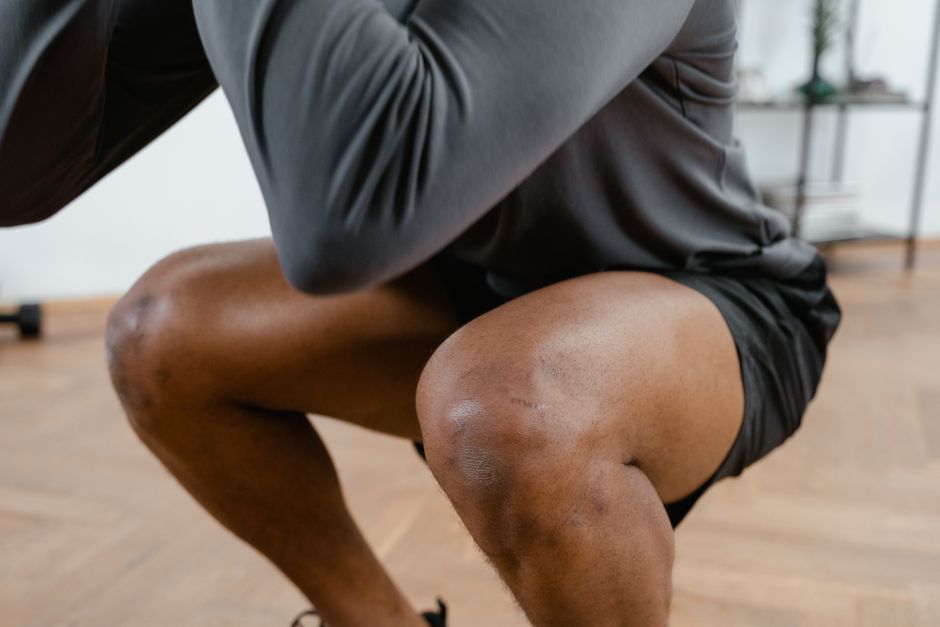
Knee pain when squatting is almost always a mechanical problem, not a medical mystery. The pain comes from your kneecap pressing against your thigh bone under load, or from tight muscles pulling your joints out of alignment. In most cases, you can fix it by changing how you squat, not by quitting squats.
What Actually Happens Inside Your Knee When You Squat?
Your knee is a hinge joint. When you bend it, your kneecap slides up and down in a groove on your thigh bone. This movement is guided by your quadriceps muscles, which attach to your kneecap via a tendon. When those muscles are tight or imbalanced, the kneecap gets pulled sideways. It rubs against the bone instead of gliding smoothly.
That rubbing causes pain behind or around the kneecap. It is the most common reason for squatting pain. The medical term is patellofemoral pain syndrome. Research published in the British Journal of Sports Medicine found that this condition accounts for roughly 25% of all knee injuries treated in sports medicine clinics.
Cartilage damage, arthritis, and meniscus tears are less common causes. These usually come with swelling, catching, or locking. If your knee clicks but does not hurt, that is normal. If it clicks and hurts, something is wrong.
Why Do Your Knees Hurt When You Squat? The Most Common Cause
The most common cause is poor squat form. Your knees track inward when you squat down. This is called knee valgus. It happens when your hip muscles, especially the gluteus medius, are weak. Your hips cannot stabilize your legs, so your knees collapse inward. The kneecap gets yanked out of its groove.
Another form problem is letting your knees travel too far forward over your toes. This increases the angle at your knee joint and jams your kneecap into your thigh bone. A 2018 study in the Journal of Orthopaedic & Sports Physical Therapy found that limiting forward knee travel by just a few inches reduced patellofemoral joint stress by 24%.
Your feet matter too. If your arches collapse or your feet turn out too much, your lower leg rotates and drags your kneecap sideways. Flat shoes with thin soles give you better ground feel than thick running shoes for squatting.
What Tight Muscles Have to Do With Squat Pain
Tight quadriceps are a hidden cause. Your quads attach to your kneecap. When they are short and tight, they pull your kneecap upward and compress it against your thigh bone. This happens even before you start squatting. Add weight and the compression gets worse.
Tight hamstrings also contribute. Short hamstrings pull your pelvis into a posterior tilt, which rounds your lower back and shifts your weight forward. This forces your knees farther over your toes. A 2019 review in Sports Medicine linked restricted hamstring flexibility to increased anterior knee pain in athletes.
Tight calves limit ankle dorsiflexion. If your ankles cannot bend enough, your body compensates by moving your knees forward. Stretching your calves before squatting can reduce this compensation. Research from the Journal of Strength and Conditioning Research showed that 30 seconds of calf stretching improved squat depth by 8%.
How Your Squat Style Affects Your Knees
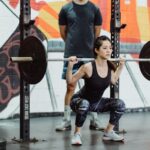
Your stance width changes where the load goes. A narrow stance keeps your knees more forward. A wider stance shifts load to your hips. People with long femurs relative to their torso often find narrow squats painful because their knees have to travel far forward to reach depth. A wider stance reduces that travel.
| Squat Style | Knee Stress | Best For |
|---|---|---|
| Narrow stance, feet forward | Higher patellofemoral compression | People with short femurs, strong glutes |
| Wide stance, toes out | Lower patellofemoral compression | People with long femurs, limited ankle mobility |
| Box squat | Reduces depth variability | Relearning form after injury |
| Goblet squat | Encourages upright torso | Beginners, people with back issues |
Depth also matters. Squatting to parallel or slightly below puts your kneecap in a position where it contacts the thigh bone less. Going deeper than that increases contact pressure. Going shallower than parallel can be worse because your kneecap stays in the part of the groove where pressure is highest. A 2015 study in Clinical Biomechanics found that partial squats actually produced higher patellofemoral stress than full-depth squats.
What the Research Says About Fixing Squat Pain
Evidence from multiple studies points to the same solution: strengthen your hips and glutes, improve your ankle mobility, and fix your form. A 2020 meta-analysis in the American Journal of Sports Medicine looked at 18 studies on patellofemoral pain treatment. Hip strengthening exercises reduced pain by an average of 55% over 12 weeks. Quadriceps strengthening alone was less effective.
Specific exercises that research supports include:
- Side-lying hip raises with a resistance band
- Clamshells with a band around your knees
- Single-leg bridges on the floor
- Wall sits with a ball between your knees
- Ankle dorsiflexion stretches using a wall stretch
These exercises target the muscles that control knee tracking. The CDC reports that over 50% of adults with knee pain stop all physical activity, which weakens the muscles further and makes the pain worse. The opposite approach — loading the joint properly — is what the research supports.
When Squat Pain Is Not a Form Problem
Some causes of squat pain have nothing to do with how you squat. Patellar tendinitis, also called jumper’s knee, causes pain right below the kneecap. It is an overuse injury. The tendon becomes inflamed from too much volume or too much weight too fast. Rest and eccentric loading exercises are the standard treatment.
Arthritis causes a different kind of pain. It feels like a dull ache deep inside the joint, not a sharp pinch behind the kneecap. It often comes with morning stiffness that lasts more than 30 minutes. If you have arthritis, squatting to parallel is usually fine, but deep squats increase pain. A 2017 study in Arthritis Care & Research found that people with knee osteoarthritis who continued squatting with proper form had less pain progression than those who stopped.
Meniscus tears cause pain on one side of the knee, not behind the kneecap. You may feel a catch or a lock when you try to straighten your leg. This requires a medical evaluation. The American Academy of Orthopaedic Surgeons recommends an MRI if you have locking or giving way.
Common Misconceptions About Squat Pain
Many people believe that squatting is bad for your knees. The evidence says the opposite. A 2018 study in the European Journal of Applied Physiology followed 1,400 adults over 8 years. Those who squatted regularly had no higher rates of knee arthritis than those who did not. Squatting with proper form strengthens the muscles that stabilize your knee.
Another misconception is that your knees should never go past your toes. This advice came from a single 1978 study that measured shear forces on the knee. Later research showed that restricting forward knee travel increases stress on your lower back. A 2003 study in Medicine & Science in Sports & Exercise found that allowing knees to move past toes by 7 to 10 centimeters reduced hip moment by 1,000%. Do not jam your knees forward, but do not lock them behind your toes either.
Some people think knee cracking means damage. If there is no pain, cracking is harmless. It is gas bubbles popping in the joint fluid. A 2015 study in PLOS ONE used ultrasound to watch knuckles crack and found no structural damage. The same applies to knees.
Frequently Asked Questions
Why do my knees hurt when I squat but not when I run?
Squatting puts your kneecap under higher compressive force than running because you are moving through a larger range of motion under load. Running is more about impact absorption, which uses different muscle groups.
Can I keep squatting if my knees hurt?
Yes, if the pain is mild and goes away when you stop. Reduce your weight and check your form. If the pain is sharp or causes limping, stop and see a physical therapist.
Does squatting with knee sleeves help with pain?
Knee sleeves provide compression and warmth, which can reduce pain perception for some people. They do not fix the underlying mechanical problem. Sleeves are a temporary aid, not a solution.
How long does it take to fix squat knee pain?
Most people see improvement within 4 to 8 weeks of consistent hip strengthening and form correction. If you have no improvement after 8 weeks, see a specialist for a full evaluation.
