
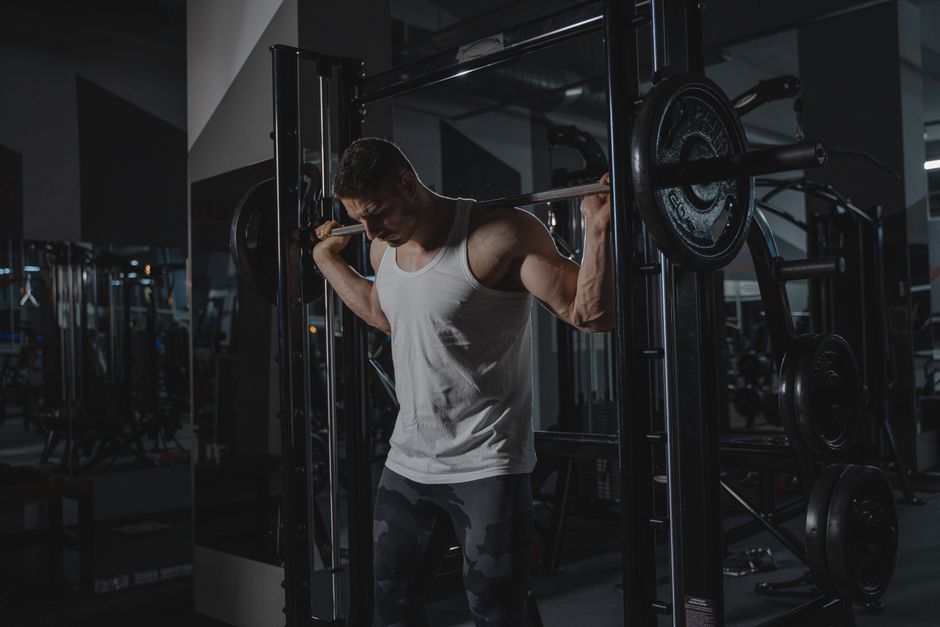
The hack squat machine targets your quadriceps — the large muscles on the front of your thighs — more directly than a regular barbell back squat does. Research shows it also works your glutes and hamstrings to a lesser degree, though the exact muscle activation depends heavily on where you place your feet on the platform. Unlike a free-weight squat, the machine stabilizes your torso, which shifts more load to your quads and removes much of the balance and core demands.
What Muscles Does the Hack Squat Actually Work?
The primary mover in a hack squat is the quadriceps group. Studies using electromyography (EMG), which measures muscle electrical activity, consistently show the vastus medialis (inner quad) and rectus femoris (middle quad) fire hardest during a standard hack squat. Your gluteus maximus activates too, but at roughly 60-70% of the intensity seen in a barbell back squat.
Your hamstrings get some work, but not much. EMG data from the Journal of Strength and Conditioning Research found hamstring activation during hack squats is about half of what you get from a conventional deadlift or leg curl. Your calves and lower back act as stabilizers, but the machine does most of the stabilizing work for you. If you want to grow your glutes and hamstrings significantly, the hack squat alone is not enough.
Does Foot Placement Change What the Hack Squat Works?
Yes, and the difference is meaningful. Place your feet high on the platform — near the top edge — and you shift more load to your glutes and hamstrings. Place your feet low, near the bottom, and your quads take over almost entirely. A 2021 study in the International Journal of Environmental Research and Public Health confirmed this: high foot placement increased glute activation by 22% compared to a standard mid-platform stance.
Foot width matters too. A narrow stance keeps tension on the outer quads. A wider stance brings the inner thighs and adductors into play. The American Council on Exercise recommends using a shoulder-width stance as your starting point, then adjusting based on which muscle you want to emphasize. If your knees track inward or you feel pinching in your hips, widen your stance slightly.
| Foot Position | Primary Muscle Worked | Secondary Muscle |
|---|---|---|
| Low on platform (near bottom) | Quadriceps (especially outer quad) | Glutes (minimal) |
| Mid-platform (standard) | Quadriceps (balanced) | Glutes, hamstrings |
| High on platform (near top) | Glutes, hamstrings | Quadriceps (reduced) |
| Wide stance | Inner quad, adductors | Glutes |
| Narrow stance | Outer quad (vastus lateralis) | None significant |
What Does the Research Say About Hack Squat vs. Barbell Back Squat?
The barbell back squat activates your glutes 20-30% more than a hack squat, according to EMG research published in the Journal of Human Kinetics. The hack squat, by contrast, isolates your quads more efficiently because the machine removes the need for balance and core bracing. For quad growth specifically, a 2019 systematic review in Sports Medicine found that machine-based squats produce similar muscle thickness gains to free-weight squats when load and volume are matched.
However, the hack squat does not train your stabilizer muscles the way a free-weight squat does. Your erector spinae, obliques, and deep core muscles stay relatively quiet on a machine. If your goal is athletic performance or general strength, you need both. The CDC notes that adults should do muscle-strengthening activities at least two days per week, and varying your squat type helps target all the leg muscles evenly.
One non-obvious insight: the hack squat can actually be harder on your knees than a back squat for some people. The fixed movement path forces your knees to travel forward more than a barbell squat, which increases shear force on the patellar tendon. If you have a history of knee pain, you may want to limit your depth or stick to a back squat instead.


What Are the Common Mistakes People Make on the Hack Squat?
The most common mistake is going too deep with too much weight. When you lower the platform past parallel — meaning your hips drop below your knees — your lower back rounds and your pelvis tucks under. This shifts stress from your quads to your lumbar spine and increases injury risk. A 2018 study in the Journal of Orthopaedic & Sports Physical Therapy found that deep hack squats with heavy loads increased compressive forces on the L4-L5 vertebrae by 35% compared to a parallel-depth squat.
Another mistake is locking your knees at the top of the movement. This transfers the weight from your muscles to your knee joint ligaments. Keep a slight bend in your knees at the top of each rep. Also, do not let your heels lift off the platform. If your heels rise, your weight shifts forward onto your toes, and your knees take the brunt of the load. Keep your entire foot flat against the platform throughout the movement.
- Do not go deeper than parallel unless you are using light weight and have healthy knees.
- Do not lock your knees at the top of the rep.
- Keep your heels flat on the platform — no rising.
- Do not bounce at the bottom of the movement. Control the descent.
- Do not use momentum to push the weight up. Slow, controlled reps build more muscle.
How Should You Program the Hack Squat for Best Results?
For muscle growth, aim for 3-4 sets of 8-12 reps with a weight that makes the last two reps very difficult to complete. Rest 90 seconds between sets. The American College of Sports Medicine recommends this rep range for hypertrophy, and the hack squat fits it well because the machine allows you to safely push close to failure without a spotter. If you want strength instead, use heavier weight for 4-6 reps per set with longer rest — about 2-3 minutes.
Place the hack squat after your compound lifts — like barbell squats or deadlifts — in your workout. That way your quads are already warmed up and you can target them specifically. If you do hack squats first, your quads will fatigue and your heavier compound lifts will suffer. A smart leg day order is: barbell squat or deadlift first, then hack squat, then leg extensions or lunges, then hamstring curls.
Some people report knee discomfort with the hack squat even with good form. If this happens, try reducing the range of motion to a quarter squat — lowering only about 30 degrees — and see if the pain disappears. If it persists, swap the hack squat for a leg press or Bulgarian split squat instead. The hack squat is a tool, not a mandatory exercise. There is no clinical evidence that you must do hack squats to build strong legs.
Frequently Asked Questions
Is the hack squat better than the leg press for quads?
Yes, the hack squat typically activates your quads more than the leg press because your torso is upright, which increases knee flexion and quad demand. The leg press distributes load more evenly across your entire leg.
Can the hack squat replace barbell squats completely?
No, the hack squat does not train your core stabilizers or glutes as effectively as a barbell back squat. Most strength programs should include both for balanced leg development.
Does the hack squat work your glutes enough to grow them?
Not on its own. Research shows glute activation during hack squats is significantly lower than during barbell squats or hip thrusts. You need dedicated glute exercises for meaningful growth.
What is the safest depth for a hack squat?
Parallel depth — when your thighs are parallel to the floor — is safest for most people. Going deeper increases stress on your lower back and knees without added quad benefit.
