
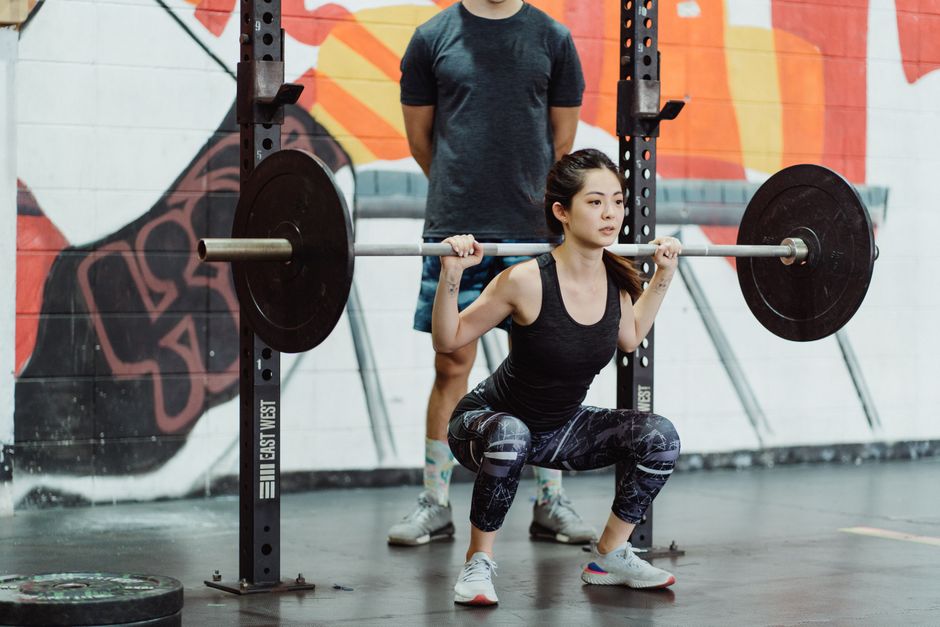
The Bulgarian split squat is a single-leg exercise that primarily strengthens your quadriceps, glutes, hamstrings, and inner thigh muscles. It works these muscles harder than a standard squat because your entire body weight rests on one front leg while the back foot is elevated on a bench or step. This makes it one of the most effective exercises for building leg strength and correcting muscle imbalances between your right and left sides.
What Does Bulgarian Split Squat Work?
The Bulgarian split squat works your quadriceps as the primary driving muscle. Your gluteus maximus and hamstrings assist heavily, especially when you push back up to the starting position. Your adductor magnus — a large inner thigh muscle — activates strongly to stabilize your hip during the movement. Your core muscles, including the erector spinae and transversus abdominis, engage continuously to keep your torso upright and prevent you from tipping forward or sideways.
Because your rear foot is elevated, your front leg goes through a greater range of motion than it would in a standard squat. This increased range forces the quadriceps to work through a longer stretch and contraction cycle. Research consistently shows that the Bulgarian split squat produces higher activation in the quadriceps compared to back squats or front squats performed at the same relative intensity.
The exercise also challenges your balance and proprioception — your body’s awareness of where it is in space. Your calves and smaller stabilizer muscles in your ankles and feet work continuously to keep you steady on one leg. This makes the Bulgarian split squat a true full-lower-body exercise with meaningful core demands.
Which Muscles Does the Bulgarian Split Squat Target?
The Bulgarian split squat targets several major muscle groups in the lower body. Each plays a distinct role during the movement.
Quadriceps. All four heads of the quadriceps activate strongly. The rectus femoris and vastus medialis show particularly high activation during the descent and ascent phases. The quadriceps are responsible for extending your knee as you push back up.
Gluteus maximus. Your gluteus maximus extends your hip as you rise from the bottom position. Glute activation increases significantly when you keep your torso upright and allow your front knee to travel forward over your toes.
Hamstrings. The hamstrings assist with hip extension and act as dynamic stabilizers for your knee. They also help control the descent phase by resisting forward movement of your shin.
Adductors. The adductor magnus on your working leg activates at high levels during the Bulgarian split squat. Some research suggests adductor activation may be higher here than in conventional squats or leg presses.
Core musculature. Your erector spinae, rectus abdominis, and transverse abdominis contract isometrically to maintain trunk stability. Without this core engagement, your torso would collapse forward or rotate toward your working leg.
Calf muscles. Your gastrocnemius and soleus on the standing leg work to maintain balance and control subtle shifts in your center of mass.
How Does the Bulgarian Split Squat Differ From a Regular Squat?
The Bulgarian split squat and the regular squat are fundamentally different exercises. The key differences matter for anyone choosing between them for their training program.
Here is a direct comparison of the two exercises:
| Factor | Bulgarian Split Squat | Regular Squat |
|---|---|---|
| Legs used | One at a time | Both simultaneously |
| Stance | Split stance with rear foot elevated | Feet flat on ground, hip-width or wider |
| Primary load | Front leg only | Both legs together |
| Range of motion | Greater knee and hip flexion on front leg | Moderate to deep based on mobility |
| Quadriceps emphasis | Higher relative activation | Moderate to high depending on depth |
| Balance demand | High | Low to moderate |
| Spinal load | Lower — no barbell on back required | Higher, especially with barbell squats |
| Asymmetry correction | Excellent — each leg works independently | Poor — stronger leg can compensate |
| Equipment needed | Bench or step plus optional dumbbells or barbell | Barbell, dumbbells, or bodyweight |
The most important difference is that the Bulgarian split squat prevents your stronger leg from compensating for your weaker leg. In a regular barbell squat, one leg can contribute more force without you noticing. In a Bulgarian split squat, each leg must do the work entirely on its own. This makes it one of the best exercises for correcting strength imbalances.

What Are the Proven Benefits of Bulgarian Split Squats?
Studies have identified several benefits of the Bulgarian split squat that go beyond general leg strengthening. These benefits are supported by consistent research findings.
Reduces strength asymmetries between legs. Strength differences between legs of more than 10 to 15 percent are linked to higher injury risk in sports. The Bulgarian split squat forces each leg to work independently, making it effective for closing that gap over time.
Increases quadriceps activation. Research consistently shows that the Bulgarian split squat produces high levels of quadriceps activation, particularly in the vastus medialis. This muscle is important for knee stability and patellar tracking.
Improves balance and single-leg stability. The exercise trains your ankle, knee, and hip to coordinate under load on one leg. This has direct carryover to walking, running, climbing stairs, and sports that involve single-leg stance.
Requires less spinal loading than barbell squats. You can perform Bulgarian split squats with dumbbells or a barbell, but the load is distributed differently. For people with lower back concerns, this exercise often allows heavy leg work without aggravating spinal issues.
Translates to athletic performance. Running, jumping, and changing direction all occur on one leg at a time. Strengthening each leg independently with the Bulgarian split squat improves performance in these movements more effectively than bilateral exercises alone.
The evidence for these benefits comes from exercise physiology research and sports medicine studies. No large clinical trials have compared Bulgarian split squats to other exercises for long-term outcomes like injury prevention or fall risk reduction in older adults.
Is the Bulgarian Split Squat Safe for Your Knees?
The Bulgarian split squat places considerable stress on your front knee, particularly at the patellofemoral joint where your kneecap meets your thighbone. For people with healthy knees and proper form, this stress is well tolerated and can even strengthen the structures around the knee over time.
However, the exercise is not appropriate for everyone. People with patellofemoral pain syndrome, quadriceps tendonitis, or patellar tendonitis may find that the deep knee flexion required by this exercise aggravates their symptoms. The same applies to anyone recovering from an ACL reconstruction or meniscus injury, especially in the early stages of rehabilitation.
Two form factors directly affect knee safety. First, placing your front foot farther from the bench shifts more stress to your glutes and hamstrings and reduces shear forces on your knee. Placing your front foot closer increases quadriceps demand and knee stress. Second, allowing your front knee to travel past your toes increases knee flexion and quadriceps load. Limiting forward knee travel can reduce knee stress for some people.
If you have existing knee pain, consult a physical therapist or sports medicine clinician before adding Bulgarian split squats to your routine. No clinical guidelines currently exist for the safe depth or load progression of this exercise across different knee conditions. Individual tolerance varies significantly.
How Do You Perform a Bulgarian Split Squat Correctly?
Proper setup and form determine whether this exercise builds strength safely or creates unnecessary joint stress. Follow these steps to perform the Bulgarian split squat correctly.
Stand facing away from a bench or step that is roughly knee height. Place the top of your rear foot on the bench behind you. Your front foot should be far enough forward that when you squat down, your front shin stays nearly vertical and your rear knee can drop toward the floor without hitting it. A good starting point is roughly two to three feet from the bench, but this varies with your height and leg length.
Keep your torso upright and your chest open. Do not round your shoulders forward. Lower your rear knee toward the floor by bending your front knee and hip. Descend until your front thigh is roughly parallel to the floor or until you feel a stretch in your rear hip flexor. Do not let your front knee cave inward. Push through your front heel to return to the starting position.
Start with bodyweight only. Once you can perform three sets of eight to twelve reps on each leg with consistent form, add weight by holding a dumbbell in each hand or holding one dumbbell at your chest. Progress loading gradually. A common mistake is adding weight too quickly, which leads to form breakdown and increased joint stress.
Frequently Asked Questions
How deep should you go in a Bulgarian split squat?
Lower yourself until your front thigh is roughly parallel to the floor or slightly below. Going deeper increases quadriceps and glute activation but also increases stress on your front knee, so stop at the depth where you can maintain control and without knee pain.
Should your front knee go past your toes?
Some forward knee travel past the toes is normal and safe for people with healthy knees. Limiting knee travel shifts load to your glutes and hamstrings, while allowing travel increases quadriceps demand.
How many reps and sets should you do?
For general strength, three to four sets of eight to twelve reps per leg is a common starting range. For muscular endurance, higher rep ranges of twelve to fifteen reps per leg are appropriate.
Can Bulgarian split squats replace regular squats?
They can replace regular squats for most lower body strength goals, especially for addressing muscle imbalances and reducing spinal loading. For powerlifters or athletes who need to train the back squat specifically for competition, the Bulgarian split squat is a supplement rather than a replacement.
