
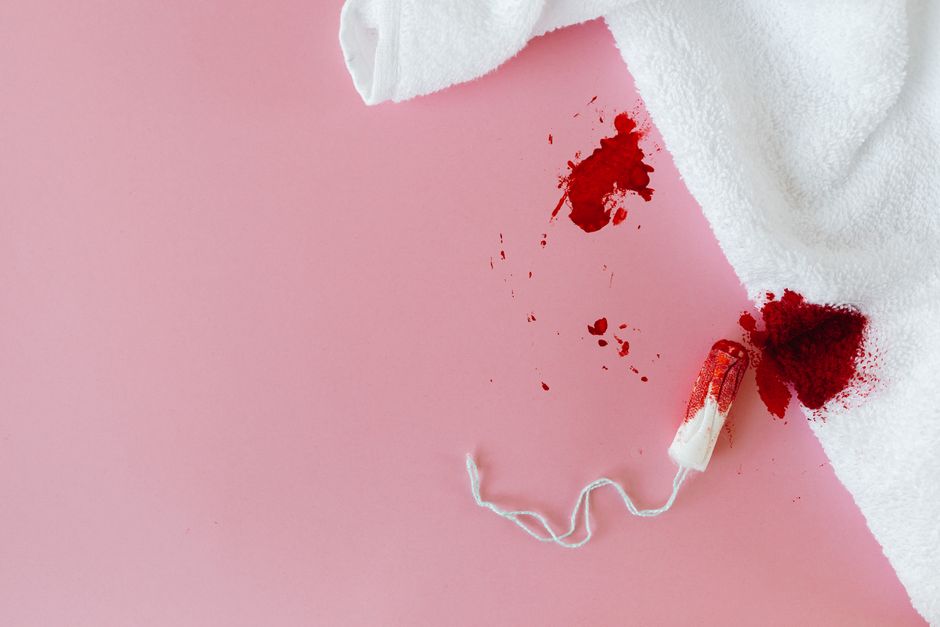
Period blood clots form because your body releases anticoagulant proteins to thin menstrual blood as it leaves the uterus. When bleeding is heavy or fast, those proteins cannot keep up, and some blood leaves as a gel-like clot. Most clots during a period are normal. Passing occasional clots the size of a dime or smaller, especially on your heaviest days, is common and usually not a sign of a problem.
Why Do Period Blood Clots Form And Are They Normal?
Menstrual blood is not the same as the blood that comes from a cut. It contains tissue from the uterine lining along with blood, and the body mixes in proteins that keep it from clotting too quickly inside the uterus.
The main one is called plasmin, a protein that breaks down fibrin. Fibrin is the mesh-like material that holds a clot together. During a period, plasmin works to keep menstrual fluid thin so it can pass through the cervix and out of the body.
When menstrual flow is heavy, blood leaves the uterus faster than plasmin can thin it. The result is that some blood arrives already clotted. Clots also tend to form when blood pools in the vagina or on a pad before it exits, giving it time to gel.
So clots are a normal byproduct of how the body manages menstrual bleeding. The question that matters is not whether clots happen. It is how large they are, how many you pass, and whether they come with other symptoms.
What Size Of Period Clot Is Considered Normal?
Size is the single most useful thing to pay attention to. Small clots are common. Large ones deserve a closer look.
In general:
- Clots smaller than a dime are common and rarely a concern.
- Clots around the size of a quarter are worth mentioning to a doctor, especially if they happen often.
- Clots larger than a quarter, or clots that are consistently large, are a reason to get checked.
These size guides come from clinical practice rather than a single definitive study. Clinicians commonly use the quarter-size threshold as a rough marker for heavy bleeding, but it is a guide, not a hard rule.
Number matters too. Passing one or two small clots on your heaviest day is typical. Passing many clots, or passing them throughout your period, is different.
What Causes Large Or Frequent Period Clots?
Large or frequent clots usually point to heavier-than-normal bleeding. When flow is heavy, blood leaves the uterus quickly and has less time to be thinned. Several conditions can cause that heavier flow.
Uterine fibroids are noncancerous growths in the muscular wall of the uterus. They are a common cause of heavy menstrual bleeding and large clots.
Adenomyosis happens when tissue that normally lines the uterus grows into the uterine muscle. It can make periods heavy and painful.
Hormonal imbalances can thicken the uterine lining, so there is more tissue to shed. Conditions like polycystic ovary syndrome and thyroid problems can affect this.
Endometriosis is often linked to painful periods, though its relationship to heavy clotting is less direct than the conditions above.
Pregnancy loss can cause passage of large clots and tissue. If there is any chance you could be pregnant, this needs prompt medical attention.
Bleeding disorders such as von Willebrand disease can cause heavy menstrual bleeding that starts early in life, often from the first periods.
Some of these conditions are common and manageable. Others need specific treatment. A doctor can help sort out which is which.





When Should You Talk To A Doctor About Period Clots?
Talk to a doctor if any of the following apply:
- You pass clots larger than a quarter.
- You soak through a pad or tampon in an hour or less for several hours.
- Your period lasts longer than seven days.
- You need to change protection through the night.
- You feel dizzy, weak, or unusually tired during your period.
- You have severe pain along with the clots.
- You might be pregnant.
Heavy bleeding can lead to iron deficiency anemia over time. Fatigue, shortness of breath, and pale skin can be signs. A simple blood test can check your iron levels.
There is no need to panic about a single clot. The pattern over time is what matters. If clots are getting bigger, more frequent, or coming with other symptoms, that is your signal to get checked.
How Are Heavy Periods With Clots Evaluated?
A doctor will usually start with your history. They will ask about how long your periods last, how heavy they are, and how clots fit into that picture. Keeping a simple log of your cycle can help.
From there, common steps include:
- A pelvic exam.
- Blood tests to check for anemia, thyroid problems, and bleeding disorders.
- An ultrasound to look for fibroids, adenomyosis, or other structural causes.
- Sometimes a procedure to sample the uterine lining, depending on your age and symptoms.
The goal is to find out whether there is an underlying cause and whether the bleeding is affecting your health. Many causes are treatable.
What Helps With Heavy Periods And Clots?
Treatment depends on the cause. There is no single fix that works for everyone, and what helps one person may not help another.
Options that clinicians commonly consider include:
- Nonsteroidal anti-inflammatory drugs like ibuprofen, which can reduce bleeding and cramping. These are not right for everyone, so check with a doctor first.
- Hormonal birth control, including pills, patches, rings, or hormonal IUDs, which can lighten flow.
- Tranexamic acid, a prescription medication that helps reduce bleeding.
- Procedures for fibroids or other structural causes.
- Iron supplements if you are anemic.
These are general categories, not recommendations for any one person. The right choice depends on your age, whether you want to get pregnant, the cause of the bleeding, and other health factors. A doctor can help you weigh the options.
One thing worth knowing: hormonal IUDs are often used to reduce heavy bleeding, and this is a well-established use. But how much any option helps varies from person to person.
Frequently Asked Questions
Are period blood clots normal?
Yes, small clots are normal, especially on your heaviest days. Clots larger than a quarter, or many clots, are worth discussing with a doctor.
What size blood clot during a period is too big?
Clots larger than a quarter are generally considered a reason to get checked. This size guide comes from clinical practice rather than a single definitive study.
What causes large blood clots during a period?
Large clots usually mean heavier-than-normal bleeding, which can be caused by fibroids, adenomyosis, hormonal imbalances, or bleeding disorders. A doctor can help identify the cause.
Can period clots be a sign of pregnancy loss?
Yes, passing large clots and tissue can be a sign of pregnancy loss, especially if you might be pregnant. If there is any chance you are pregnant, seek medical care promptly.
