
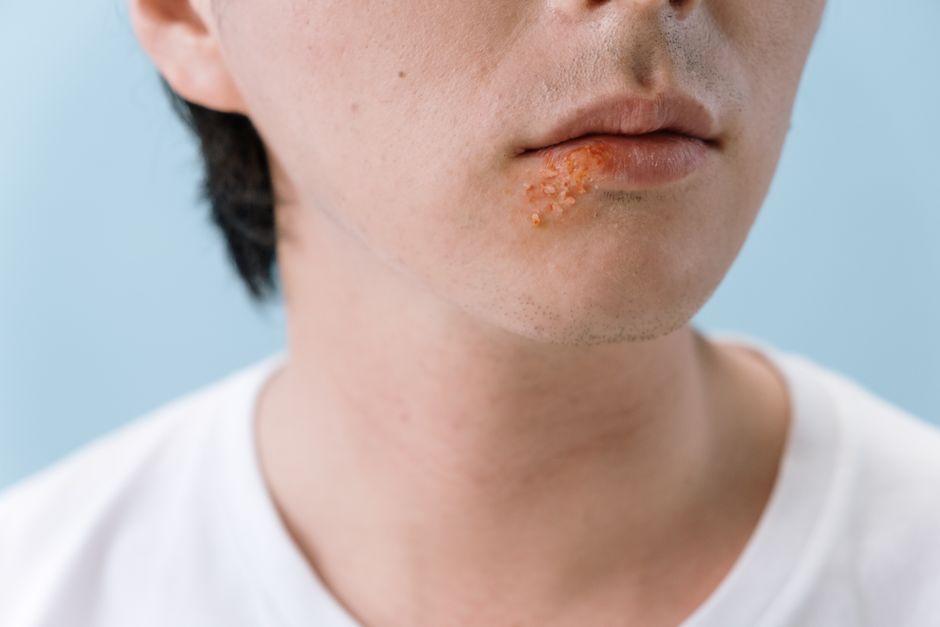
A cold sore appeared because the herpes simplex virus type 1 (HSV-1) already living in your nerve cells was reactivated. This virus stays dormant most of the time, but certain triggers wake it up, causing a sore on or around your lip. To prevent cold sores, you need to identify and manage your personal triggers, protect your lips from the sun, and talk to your doctor about antiviral medication if you get outbreaks often.
What exactly causes a cold sore?
A cold sore is caused by the herpes simplex virus type 1 (HSV-1). Most people catch this virus during childhood, often from a kiss or shared utensil with someone who had an active sore. Once the virus enters your body, it travels to a cluster of nerve cells called the trigeminal ganglion near your ear. There it stays quiet — inactive — for months or years.
When something stresses your body or your immune system, the virus can reactivate. It travels back down the nerve to the skin on your lip or nostril. There it multiplies, creating a blister. That blister is a cold sore. The virus never leaves your body completely. That is why cold sores can come back.
What triggers a cold sore outbreak?
Different people have different triggers. The most common ones include:
- Stress. Emotional or physical stress can weaken your immune system enough to let the virus reactivate.
- Illness. A fever, cold, or flu is a classic trigger. This is why cold sores are sometimes called fever blisters.
- Sun exposure. Ultraviolet light on your lips can directly stimulate the virus. Sunburn weakens the skin and immune response.
- Fatigue. Lack of sleep puts stress on your body.
- Hormonal changes. Many women notice cold sores around the start of their menstrual period.
- Lip injury. Dental work, chapped lips, or a cut near your mouth can trigger an outbreak.
Your personal triggers may be a combination of these. Keeping a simple diary for a few months can help you spot your own pattern.
Are cold sores contagious?
Yes. The virus spreads easily through direct contact with the sore or the fluid inside it. This includes kissing, sharing lip balm, sharing utensils, or touching the sore and then touching someone else. You can spread the virus from the very first tingle — the warning feeling before the blister appears — until the sore is fully scabbed over and healed.
Even when you have no visible sore, the virus can sometimes be shed from your skin without your knowing it. This is called asymptomatic shedding. It means you can rarely pass the virus to someone even when you feel fine. But the risk is highest when a sore is present.




How can I prevent cold sores?
Prevention starts with managing your triggers. If stress is a trigger, finding effective ways to relax may help. If the sun is a trigger, use a lip balm with SPF 30 or higher every day, even in winter. Avoid touching your lips when you feel a tingle.
For people who get six or more cold sores per year, doctors often recommend a preventive medication. This is called suppressive therapy. You take a low dose of an antiviral drug — typically valacyclovir or acyclovir — every day. Studies show this can reduce the number of outbreaks by 70 to 80 percent. It does not clear the virus from your body, but it keeps it inactive.
Some people try dietary supplements, especially the amino acid lysine. The idea is that lysine blocks arginine, another amino acid that the virus needs to multiply. However, the evidence is mixed. Some small studies suggest a benefit, but larger, high-quality trials have not confirmed that lysine prevents cold sores reliably. No major clinical guideline currently recommends lysine for prevention.
There is no vaccine for HSV-1. The best proven approach to prevention remains avoiding your known triggers and, if outbreaks are frequent, talking to your doctor about daily antiviral medication.
What treatments work for an active cold sore?
Once you feel the tingle or see the redness, the sooner you start treatment, the better. Antiviral creams can shorten the healing time by about one day if applied early. The most common ones are acyclovir cream and penciclovir cream, available by prescription. Over-the-counter docosanol (Abreva) also has evidence for shortening healing time slightly.
Oral antiviral pills are more effective than creams. A single-day high-dose treatment with valacyclovir or acyclovir can reduce pain and healing time by one to two days. These are prescription-only.
Home remedies like ice, aloe vera, or tea tree oil have not been proven to help in clinical studies. Some people find them soothing, but do not expect them to shorten the outbreak.
Keep the area clean and avoid picking at the scab. Picking can lead to a bacterial infection and scarring.
When should you see a doctor?
Most cold sores heal on their own in 7 to 10 days. But you should see a doctor if:
- The sore spreads or becomes very large.
- You have a sore near your eye. The virus can infect your eye and cause scarring.
- You get more than six outbreaks per year (this qualifies for suppressive therapy).
- You have eczema or a weakened immune system from medication or illness. Cold sores can become severe in these cases.
- The sore does not heal within two weeks.
A doctor can prescribe oral antiviral medication and rule out other causes, like impetigo or an allergic reaction.
Frequently Asked Questions
Can you get a cold sore from someone without a visible sore?
Yes. The virus can be spread through asymptomatic shedding, when the virus is present on the skin without causing a sore.
How long does a cold sore last?
A cold sore usually lasts 7 to 10 days from the first tingle to complete healing.
Can stress cause cold sores?
Yes, stress is one of the most common triggers for reactivating the herpes simplex virus.
Does lip balm with SPF prevent cold sores?
For people with sun-triggered outbreaks, applying SPF 30 or higher lip balm daily can help prevent cold sores.
