
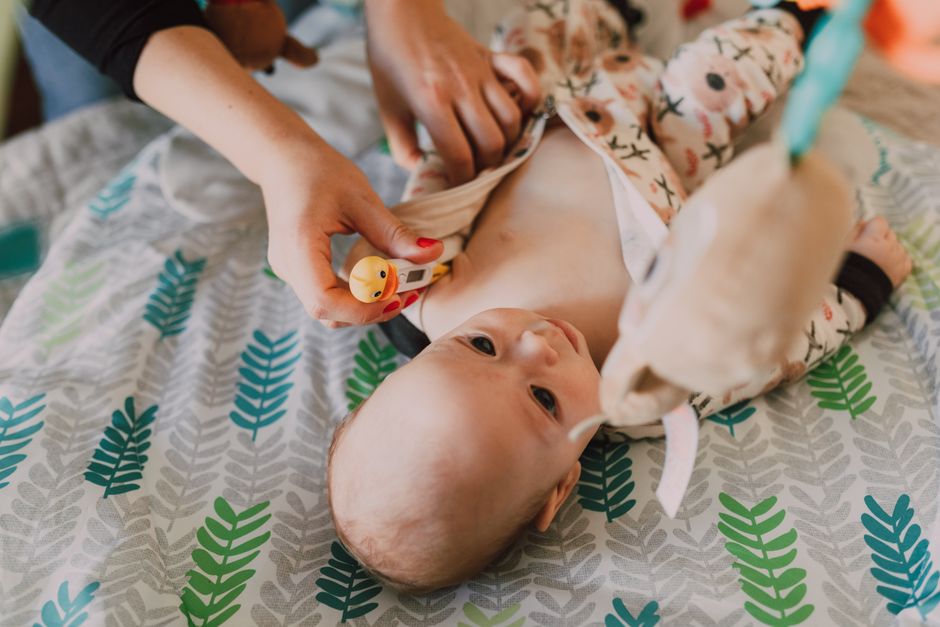
Dry air pulls moisture from a baby’s skin and airways, and their bodies are less able to compensate than an adult’s. Babies breathe faster, lose heat and water more quickly, and have narrower nasal passages that clog easily when the air around them is dry. A humidifier adds moisture back into a room, which can ease dry skin, irritated nasal passages, and some of the nighttime congestion that makes sleep harder. It is a comfort tool, not a treatment — it does not cure illness, and it carries real risks if used carelessly.
Why Babies Need Humidifiers Skin Sleep Breathing
Babies have a few built-in disadvantages when the air is dry. Their skin is thinner than an adult’s, with a weaker outer barrier, so it loses water faster. Their nasal passages are small, and a small amount of dried mucus can narrow them significantly. And because they breathe faster — a normal newborn rate is roughly 30 to 60 breaths per minute — they move more dry air across their airways every minute than an adult does.
When indoor humidity drops, usually in winter or in air-conditioned rooms, that combination can show up as:
- Dry, flaky, or rough patches on the skin, especially on cheeks and legs
- Crusty or blocked noses that make feeding and sleeping harder
- Dry mouth and throat, and a hoarse or scratchy cry
- More night waking, often because a stuffy nose wakes them
- Increased coughing or throat clearing in older babies
Adding moisture to the air does not treat any of these underlying causes. What it does is remove one aggravating factor. A baby with eczema will still have eczema. A baby with a cold will still have a cold. But the symptoms that come from dry air itself — the cracked skin, the dried-out nasal crusts — often improve when the air is less dry.
One clarification worth making: humidity is not the same as steam. Running a hot shower and sitting in the bathroom is a traditional remedy for congestion, and it does add moisture to the air a baby breathes. But the water itself is not doing anything medicinal. The benefit, if there is one, comes from the moisture, not the heat.
What Indoor Humidity Level Is Best for a Baby’s Room?
Most guidance points to keeping indoor relative humidity somewhere between 30% and 50%. Below roughly 30%, dry air starts to irritate skin and airways. Above about 50%, you create conditions that favor mold, dust mites, and bacteria — which is a bigger problem than dry air in most homes.
Relative humidity is temperature-dependent, which is why the same humidifier setting can produce different results on different days. A cheap hygrometer — a small humidity gauge — takes the guesswork out of it. Place it in the room, not next to the humidifier, and check it a few times a day.
If you live in a very dry climate or a heated apartment in winter, you may find the room sits below 30% for most of the day. If you live somewhere humid, you may already be in range without doing anything. The number matters more than the device.
Can a Humidifier Help a Baby Sleep Better?
A humidifier can help sleep indirectly, by reducing the nasal dryness and congestion that wake babies up. It does not sedate, calm, or otherwise make a baby sleepy. If a baby is waking because they are hungry, teething, or going through a developmental leap, humidity will not change that.
The sleep benefit is most consistent in babies who are congested. Dry air thickens nasal mucus, which makes it harder to clear. Moist air keeps secretions thinner, so they move more easily. A baby who can breathe through their nose tends to feed and sleep more comfortably than one who cannot.
For babies with eczema, the sleep benefit is more about skin. Itching is one of the main reasons babies with eczema wake at night, and dry air makes itching worse. Keeping the room humidified, along with regular moisturizing, is a reasonable part of a nighttime routine. It is not a substitute for prescribed eczema treatment.
One honest note: there is not a large body of controlled research showing that humidifiers improve infant sleep as a measured outcome. The reasoning is sound and the practice is widespread, but the direct evidence is limited. Treat it as a comfort measure, not a proven sleep intervention.




Are Humidifiers Safe for Babies?
Humidifiers are safe when used correctly. The risks come from misuse, and they are real.
Mold and bacteria. A humidifier tank that is not cleaned regularly becomes a breeding ground. Those organisms get aerosolized into the air your baby breathes. Cool-mist and warm-mist units both need emptying, rinsing, and drying daily, with a deeper cleaning every few days following the manufacturer’s instructions.
Mineral dust. Ultrasonic and cool-mist humidifiers can release fine white dust if you use tap water with high mineral content. Distilled or demineralized water avoids this. The dust itself is not known to be dangerous at typical levels, but it settles on surfaces and is easy to avoid.
Burns. Warm-mist and steam vaporizers heat water and can cause serious burns if tipped. For a baby’s room, a cool-mist humidifier avoids that risk entirely. The moisture output is the same either way.
Over-humidification. Running a humidifier too high, or in a closed room for too long, pushes humidity above 50% and encourages mold growth in walls, carpets, and bedding. If windows fog up or surfaces feel damp, turn it down.
Essential oils. Many humidifiers have a tray for essential oils. Do not use them around babies. Some oils, including eucalyptus and camphor, can cause breathing problems in infants, and none are established as safe for this use in babies.
Cool-Mist vs. Warm-Mist Humidifiers for Babies
Both types add moisture to the air. The difference is temperature, and for a baby’s room that difference matters mostly for safety.
| Type | How it works | Main advantage | Main concern |
|---|---|---|---|
| Cool-mist (ultrasonic) | Vibrates water into fine droplets | No burn risk; quiet | Can release mineral dust if tap water is used |
| Cool-mist (evaporative) | Fan blows air through a wet wick | No burn risk; self-limiting in humid rooms | Wick needs regular replacement; fan noise |
| Warm-mist / steam vaporizer | Heats water to produce steam | Feels warm; steam is sterile | Burn risk if tipped; higher energy use |
For a baby’s room, cool-mist is the safer default. The American Academy of Pediatrics has historically advised against warm-mist units in nurseries because of the burn risk, and that reasoning has not changed.
Evaporative cool-mist units have one practical advantage: as room humidity rises, they naturally put out less moisture, so they are harder to over-humidify with. Ultrasonic units keep putting out the same amount regardless, which is why a hygrometer matters more with those.
How to Use a Humidifier Safely in a Baby’s Room
The device is simple. The habits around it are what determine whether it helps or hurts.
- Place it at least three feet from the crib, and never on a surface where it could fall in
- Keep the cord out of reach and out of walkways
- Use distilled or demineralized water if you have an ultrasonic or cool-mist unit
- Empty the tank every day, rinse it, and let it dry completely before refilling
- Clean the tank and base every few days per the manufacturer’s instructions
- Check humidity with a hygrometer and aim for 30% to 50%
- Turn it off when the room reaches range — running it all day is not necessary
- Replace filters and wicks on schedule; a dirty wick defeats the purpose
If your baby has a persistent cough, ongoing congestion, trouble breathing, or a rash that is not improving, a humidifier is not the answer. Those need a pediatrician. A humidifier addresses dry-air discomfort. It does not address infection, allergy, asthma, or eczema that needs treatment.
When a Humidifier Is Not Enough
Some symptoms look like they could be from dry air but are not. A baby who is working hard to breathe, flaring their nostrils, or pulling in at the ribs needs medical attention, not more humidity. A fever in a young infant is also a reason to call a doctor rather than adjust the room.
For older babies and toddlers, chronic congestion that lasts weeks is more often related to allergies, enlarged adenoids, or repeated viral infections than to dry air. A humidifier may take the edge off, but it will not resolve the cause.
Eczema is another case where humidity is supportive but not curative. Moisturizing with a fragrance-free emollient, avoiding harsh soaps, and using any prescribed topical treatment consistently matters more than the room’s humidity level. Dry air makes eczema worse; it does not cause it.
Frequently Asked Questions
What humidity level is best for a baby’s room?
Most guidance recommends keeping indoor relative humidity between 30% and 50%. Above 50% encourages mold and dust mites, which can be worse for a baby than dry air.
Should I use a cool-mist or warm-mist humidifier for my baby?
Cool-mist is the safer choice for a nursery because it carries no burn risk if tipped. Warm-mist units produce the same moisture but heat the water, which is a hazard around infants.
Can a humidifier help my baby sleep through the night?
It can help if dry air or congestion is what is waking them, since moist air keeps nasal mucus thinner. It will not help with waking caused by hunger, teething, or normal developmental changes.
How often should I clean a baby’s humidifier?
Empty, rinse, and dry the tank every day, and clean the tank and base every few days following the manufacturer’s instructions. A dirty humidifier can spray mold and bacteria into the air your baby breathes.
