
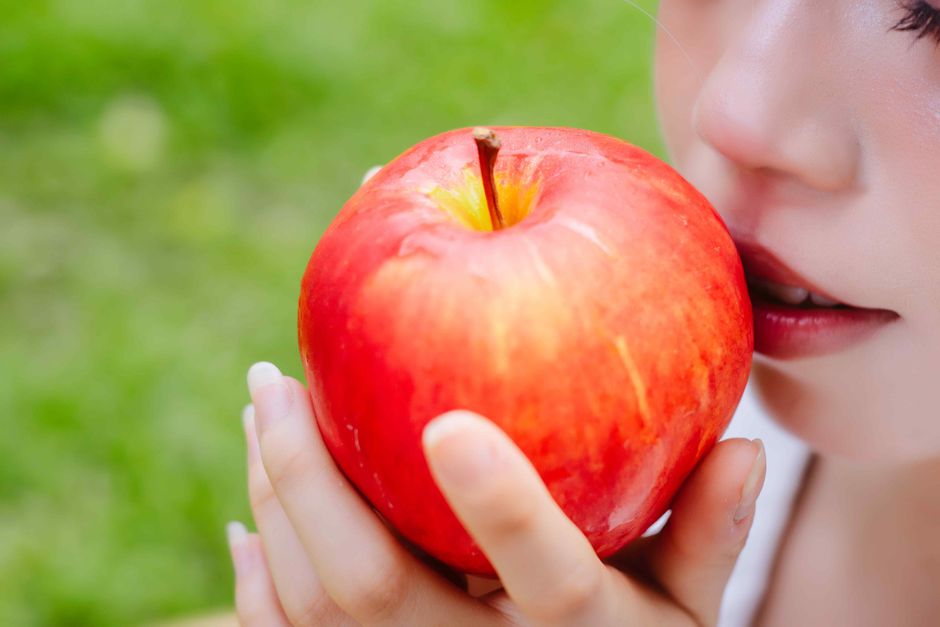
Yes, babies can eat apple skin, but only after they are old enough to handle the texture safely. For most babies, that means waiting until around 12 months of age. Before that, the skin presents a choking hazard and is difficult to chew. The age matters less than your baby’s chewing skills. Some babies manage well at 10 months, while others need longer. The safest approach is to introduce peeled apples early and add the skin only when your baby can chew food thoroughly.
What Is the Choking Risk with Apple Skin?
Apple skin is firm, smooth, and slippery. Those three qualities make it a genuine choking hazard for young babies. A piece of skin can slide down the throat before a baby can chew it properly. It can also wrap around the airway if a larger piece breaks off.
Babies younger than 12 months typically use a gumming motion rather than a true chewing motion. That works fine for soft, cooked foods. It does not work for raw apple skin. The skin does not break down with gumming. It stays intact and can block the airway.
The American Academy of Pediatrics recommends waiting until 12 months before offering raw apples in any form. Even then, apples should be cut into very thin slices or small pieces. Whole apple slices with skin are still risky for toddlers under 2 years old.
What Age Is Safe for Apple Skin?
Twelve months is the general guideline, but it is not a magic date. Your baby’s oral motor skills matter more than their exact age. A 12-month-old who has only eaten purees is not ready for raw apple skin. A 10-month-old who chews soft foods well might be closer to ready, though most experts still advise waiting.
Here is how the progression usually looks:
- 6-9 months: Cooked, peeled apples only. Serve as puree or soft mashed pieces.
- 9-12 months: Cooked apple slices with the skin may be acceptable if very soft. Raw apple skin is still not recommended.
- 12 months and older: Thin raw apple slices with skin can be introduced. Watch closely.
- 2 years and older: Most toddlers can manage apple slices with skin, but whole apples remain a choking hazard until around age 4.
Whole apples are a leading cause of choking in young children. Even at age 3, a whole apple should be cut. The skin on a whole apple is especially dangerous because biting through it requires strong teeth and careful chewing.
Are There Any Nutritional Benefits to Apple Skin?
Yes, the skin is the most nutrient-dense part of the apple. It contains most of the fiber and a large share of the antioxidants. A peeled apple is mostly water and sugar with modest nutrition. The skin adds meaningful fiber, which supports healthy digestion.
Research consistently shows that apple skin contains compounds called flavonoids and polyphenols. These are plant chemicals with antioxidant properties. Some studies suggest they support heart health and may reduce inflammation. The evidence for these benefits is strongest in adults, not babies. No clinical evidence currently confirms that apple skin provides specific health advantages for infants.
The fiber in apple skin is valuable for babies who are constipated. If your baby struggles with hard stools, the skin can help once they are old enough to eat it safely. For younger babies, cooked peeled apples still provide some fiber and are much safer.




How Should You Prepare Apple Skin for a Baby?
Preparation matters as much as age. The way you cut an apple changes its risk level dramatically. Thin slices are safer than chunks. Small pieces are safer than large ones. Grated apple is safest of all.
Here are preparation methods that work:
- Grated raw apple with skin: The finest texture. Safe for older babies who are close to 12 months. The grating breaks down the skin’s structure.
- Thin matchstick slices: Cut the apple into thin strips about the size of a french fry. These are easy to hold and chew.
- Very thin flat slices: Cut the apple into thin rounds or half-moons. Thin enough that the skin is not a separate layer.
- Cooked apple with skin: Baking or steaming softens the skin significantly. This is a good middle step before raw.
Never serve raw apple chunks or cubes with skin to a baby. These are the most dangerous form. The cube shape is easy to swallow whole, and the skin makes it slippery.
Always wash the apple thoroughly before serving. Pesticide residue concentrates on the skin. Washing under running water removes some but not all residue. If you are concerned about pesticides, buy organic apples or peel them. No clinical guidelines currently exist for pesticide exposure from apple skin in babies, but reducing exposure where practical is reasonable.
What Are the Signs Your Baby Is Ready for Apple Skin?
Age is a starting point, but your baby’s behavior tells you more. Watch for these signs before introducing raw apple skin:
- Your baby chews food with a side-to-side grinding motion, not just up and down.
- Your baby has molars or is actively teething.
- Your baby handles other firm foods like well-cooked carrot sticks or soft crackers without gagging.
- Your baby does not stuff large amounts of food into their mouth at once.
- Your baby can move food from one side of the mouth to the other.
If your baby shows none of these signs at 12 months, wait. There is no nutritional emergency that requires apple skin. Cooked apples provide similar benefits with far less risk.
Gagging is normal and different from choking. Gagging is a protective reflex. Choking is silent and dangerous. If your baby gags on apple skin, they are managing the food but struggling. Remove the food and try a smaller or softer form next time.
What Should You Do If Your Baby Chokes?
Knowing what to do in an emergency matters more than any preparation tip. Choking is silent. A choking baby cannot cough, cry, or make noise. Their face may turn red or blue. They may clutch their throat.
For babies under 1 year, the correct response is back blows and chest thrusts. Lay the baby face-down along your forearm, head lower than the body. Give five firm back blows between the shoulder blades. Turn the baby over and give five chest thrusts using two fingers in the center of the chest. Call emergency services immediately if the airway does not clear.
For children over 1 year, the Heimlich maneuver is appropriate. Stand behind the child, make a fist above the navel, and give quick upward thrusts. Call emergency services if the obstruction does not clear.
Every parent of a baby starting solids should take an infant CPR course. This is not optional preparation. It is essential knowledge. The course takes a few hours and could save your child’s life.
Are There Alternatives to Raw Apple Skin?
If you want the nutritional benefits without the choking risk, alternatives exist. Baked apples with skin soften the skin enough for younger babies. The baking process breaks down the fiber structure, making it much easier to chew.
Apple sauce made from unpeeled apples retains some skin fiber. The cooking and blending process eliminates the choking risk entirely. This is an excellent option for babies 6 months and older.
Steamed apple slices with skin are another middle ground. Steaming softens the skin while keeping more texture than baking. Let the slices cool completely before serving.
These alternatives let your baby experience apple flavor and nutrition without the raw skin hazard. You can gradually transition to raw skin as your baby’s chewing improves.
Frequently Asked Questions
Can babies eat apple skin at 10 months?
Most experts recommend waiting until 12 months for raw apple skin. Cooked apple with softened skin can be acceptable at 10 months if your baby chews well.
Should I peel apples for my baby?
Yes, peel apples for babies under 12 months and for any baby who cannot chew firm textures. The skin is a choking hazard until chewing skills develop.
Is organic apple skin safer for babies?
Organic apples have less pesticide residue, but no study has confirmed a health difference in babies. Washing thoroughly is important either way.
Can babies eat apple skin in applesauce?
Yes, applesauce made from unpeeled apples is safe for babies because blending eliminates the choking risk. The skin fiber is broken down completely.
