
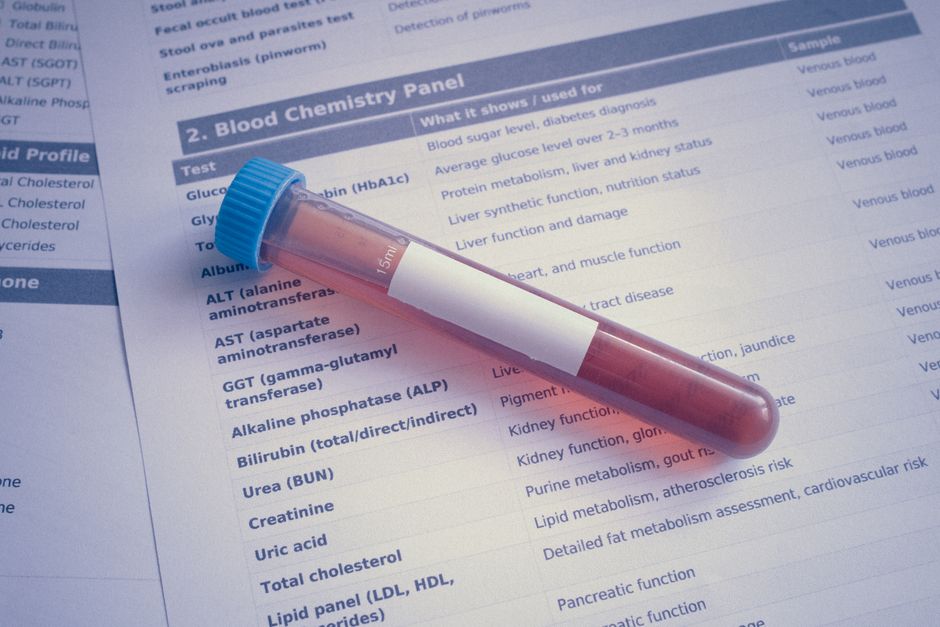
Hair loss has many causes, and a blood test is often the fastest way to find out whether an internal problem is driving it. The tests most commonly ordered are a complete blood count (CBC) with ferritin, thyroid-stimulating hormone (TSH), vitamin D, and sometimes zinc, vitamin B12, and hormone panels. Which tests your doctor orders depends on your pattern of shedding, your sex, your age, and your medical history.
Which Blood Tests Are Required For Hair Loss?
There is no single universal panel. What gets ordered depends on what your doctor suspects after examining your scalp and asking about your health.
The tests most often used fall into a few groups:
- Complete blood count (CBC) — checks for anemia and other blood disorders
- Ferritin — measures stored iron, which matters even when hemoglobin is normal
- Thyroid-stimulating hormone (TSH) — screens for an underactive or overactive thyroid
- Vitamin D (25-hydroxyvitamin D) — low levels are common in people with certain types of shedding
- Zinc and vitamin B12 — deficiencies in either can affect hair
- Hormone panels — testosterone, DHEA-S, and others when a hormonal cause is suspected
- Antinuclear antibody (ANA) — sometimes ordered when an autoimmune condition like lupus is possible
- C-reactive protein (CRP) or erythrocyte sedimentation rate (ESR) — markers of inflammation that may point to an underlying condition
Not everyone needs every test. A 28-year-old woman with diffuse shedding after a crash diet has a different likely cause than a 55-year-old man with a receding hairline. The panel should match the picture.
Why Does Iron Matter So Much For Hair?
Ferritin is one of the most important tests, and it is often the one most overlooked. Ferritin reflects how much iron your body has stored. You can have a normal hemoglobin level and still have low iron stores.
Hair follicles are among the most rapidly dividing tissues in the body. They need a steady supply of oxygen and nutrients, and iron is central to that. When iron stores drop, the body appears to prioritize more essential functions. Hair growth can slow or shift into a shedding phase.
Research published in the Journal of the American Academy of Dermatology and other dermatology journals has found that low ferritin is more common in women with certain forms of hair loss than in women without it. The relationship is well documented, though the exact ferritin level at which hair recovers is still debated. Some clinicians aim to bring ferritin above a certain threshold before expecting regrowth; others treat based on symptoms and overall iron status. There is no single agreed number, and this is an area where practice varies.
This matters because ferritin is not always included in a standard CBC. If your doctor only orders a CBC, your iron stores may not be checked. Ask specifically whether ferritin is part of the panel.
How Do Thyroid Problems Cause Hair Loss?
Both an underactive thyroid (hypothyroidism) and an overactive thyroid (hyperthyroidism) can cause hair shedding. The mechanism is fairly well understood: thyroid hormones help regulate the hair growth cycle, and when levels are off, more follicles shift into the resting and shedding phase.
TSH is the standard first test. It is sensitive enough to catch most thyroid dysfunction. If TSH comes back abnormal, your doctor will usually follow up with free T4 and sometimes free T3 or thyroid antibodies.
The good news is that when thyroid disease is the cause, hair often recovers once the thyroid is treated. This is one of the more treatable causes of shedding, which is why TSH is almost always part of the initial workup.
One caution: thyroid symptoms can be subtle. Fatigue, feeling cold, dry skin, or changes in weight may be easy to dismiss. Hair loss is sometimes the first noticeable sign.



Can Vitamin Deficiencies Really Cause Hair Loss?
Yes, but the picture is more specific than many people assume. Vitamin D, zinc, and B12 are the ones most often linked to hair problems.
Vitamin D plays a role in the hair growth cycle. Low vitamin D has been associated with several forms of hair loss, including telogen effluvium and alopecia areata. Whether correcting a low level reliably restores hair is less clear. Some studies suggest improvement; others show the association without proving that supplementation fixes it.
Zinc is involved in hair follicle function, and severe zinc deficiency is a known cause of hair loss. However, severe deficiency is uncommon in people eating a varied diet. Mild deficiency is more common but its effect on hair is not well established.
Vitamin B12 deficiency can cause hair loss, and it is more likely in people who follow a vegan diet, have absorption problems, or take certain medications. B12 deficiency is also associated with other symptoms like fatigue and tingling in the hands and feet.
Here is where caution is warranted. Taking high doses of vitamins you do not need does not improve hair and can cause harm. Vitamin A in excess, for instance, is itself a cause of hair loss. More is not better.
When Are Hormone Tests Needed?
Hormone testing depends heavily on who you are and what pattern of loss you have.
In women, excess androgens can cause a pattern of thinning at the part and crown. This is often linked to polycystic ovary syndrome (PCOS). Tests may include total and free testosterone, DHEA-S, and sometimes prolactin. Because hormone levels shift throughout the menstrual cycle, timing of the test can matter, and your doctor will advise on that.
In men, testosterone and related hormones may be checked if there are signs of a hormonal cause, though male pattern hair loss (androgenetic alopecia) is usually diagnosed by pattern and history rather than by blood work. The genetics are typically the main driver.
Thyroid disease, PCOS, and other endocrine conditions can overlap, so a doctor may order several hormone tests together rather than one at a time.
What Blood Tests Cannot Tell You
Blood tests are useful, but they do not explain every case of hair loss. Several common causes leave no trace in the blood.
The most common form of hair loss in both men and women is androgenetic alopecia, or pattern hair loss. It is driven by genetics and hormones acting on the follicle, not by a deficiency you can measure in a blood sample. A normal panel does not rule it out.
Telogen effluvium — the diffuse shedding that follows stress, illness, surgery, or a major life event — is usually diagnosed by history. It often shows up two to three months after the trigger, which can make the connection easy to miss. Blood tests help rule out other causes but do not confirm this one.
Traction alopecia from tight hairstyles, trichotillomania (hair pulling), and scarring alopecias are diagnosed by examination, sometimes with a scalp biopsy. No blood test identifies them.
This is why a blood panel is a starting point, not the whole answer. A doctor who examines your scalp and takes a careful history will get further than any single lab result.
Should You Get These Tests On Your Own?
Direct-to-consumer lab testing is widely available, and some people order their own panels. There are real limits to this approach.
A result outside the reference range does not always mean it is causing your hair loss. Reference ranges are built from broad populations and may not reflect the optimal level for hair. Interpreting a ferritin of 20 ng/mL, for example, requires context — it may be normal on paper and still be relevant to shedding.
Self-ordering also skips the exam. A blood test cannot see a receding hairline, a smooth patch, or broken hairs at the scalp. Those findings often point to the diagnosis faster than any lab value.
If you do get tested on your own, bring the results to a clinician rather than acting on them alone. Treatment decisions — especially anything involving iron, hormones, or high-dose vitamins — should involve a doctor.
What To Expect From Testing
Most of these tests require a simple blood draw, and many can be done in one visit. Some, like hormone panels, may need to be timed to your cycle. Results usually come back within a few days to a couple of weeks.
If a deficiency or thyroid problem turns up, treating it may help — but hair recovery is slow. Hair grows roughly half an inch per month, so visible improvement after correcting a cause often takes months, not weeks. Patience and follow-up matter.
If everything comes back normal, that is useful information too. It shifts the focus toward pattern hair loss, shedding from stress or illness, or a scalp condition — each with its own approach.
Frequently Asked Questions
What is the most important blood test for hair loss?
Ferritin is often considered the most useful single test because low iron stores are a common and treatable cause of shedding. A CBC and TSH are usually ordered alongside it.
Can normal blood tests still mean I have hair loss?
Yes. Pattern hair loss and shedding from stress or illness often leave no trace in the blood, so a normal panel does not rule out a cause. A scalp exam is still needed.
Do I need to fast for hair loss blood tests?
Most hair loss panels, including ferritin, TSH, and vitamin levels, do not require fasting. If your doctor adds glucose or a lipid panel, fasting may be needed for those specific tests.
How long after treatment do hair tests improve?
Hair grows about half an inch per month, so visible regrowth after correcting a deficiency often takes several months. Blood levels can normalize faster than hair visibly recovers.
