
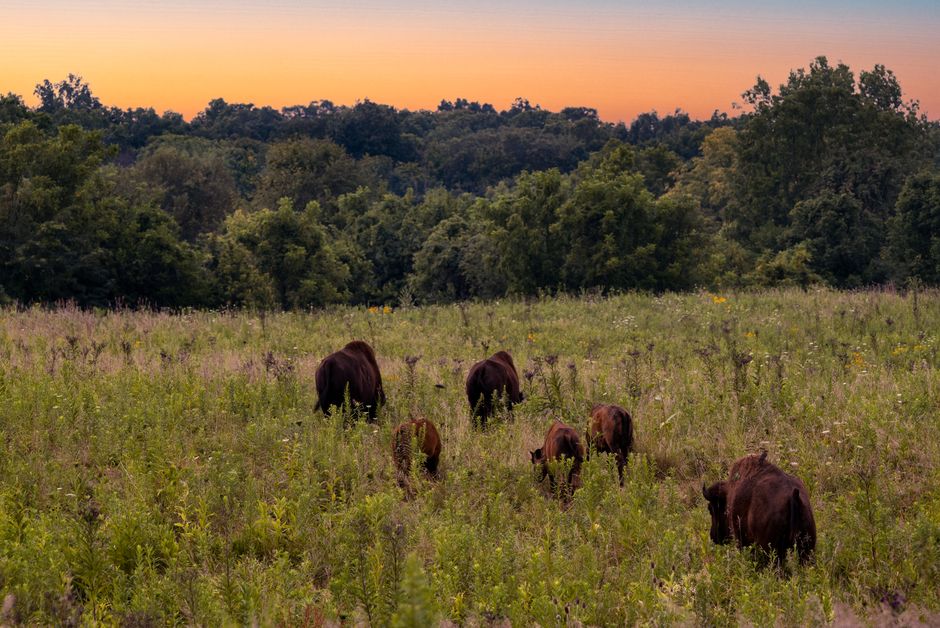
Bison meat starts on a ranch, moves through a processing facility, and reaches your plate through a supply chain that is shorter and more fragmented than the one behind most supermarket beef. The animals are raised on pasture, processed at USDA-inspected facilities, and sold either fresh or frozen. That path is simple in outline but has real variations that affect what you buy, what you pay, and how it tastes.
Where Does Bison Meat Come From Ranch To Table?
Bison meat comes from the American bison, a species that was nearly wiped out in the late 1800s and has been rebuilt through private ranching and conservation herds. Almost all bison sold as meat today is commercially raised, not hunted from wild herds.
The supply chain runs through a few clear stages:
- Ranch: Bison are raised on pasture, typically with minimal intervention compared to conventional cattle operations.
- Processing: Animals are transported to a USDA-inspected facility for slaughter and butchering.
- Distribution: Cuts move to wholesalers, restaurants, or direct-to-consumer shippers.
- Retail or table: You buy it at a grocery store, farmers market, or online, then cook it at home.
Each stage adds cost and time. Bison is a smaller industry than beef, so it lacks the same economies of scale. That is a major reason bison costs more per pound.
How Are Bison Raised On Ranches?
Most bison raised for meat spend their lives on pasture. They are grazing animals built for open range, and they generally do not tolerate the tight confinement used in some cattle feedlots.
Ranchers typically manage bison with less hands-on handling than cattle. Bison are more excitable and can be dangerous to move, so producers often use calm, low-stress handling methods and wide-open pens. Some operations finish bison on grass alone. Others finish them on grain for a period before processing, which can affect flavor and fat content.
Health management is generally lighter than in conventional beef production. Bison are hardy animals, and many herds use fewer antibiotics and growth hormones than typical cattle operations. That said, “generally” is not “always.” Practices vary by ranch, and there is no single national standard that applies to every producer.
If a specific claim matters to you — grass-fed, no antibiotics, no added hormones — the reliable move is to ask the producer directly or look for a third-party certification. Marketing language on a package is not the same as a verified standard.
What Happens During Processing And Inspection?
Bison processed for sale in the US must be slaughtered and processed at a USDA-inspected facility. This is a legal requirement, and it applies whether the meat is sold across state lines or within a state under federal inspection rules.
Inspection is mandatory. Grading is not. This is a point many people miss. USDA inspection confirms the meat was processed under sanitary conditions and is safe to eat. Grading, which rates quality and yield, is a voluntary, paid service. Most bison is not graded, unlike much of the beef in grocery stores.
That distinction matters at the counter. When you buy beef, a “Choice” or “Prime” label tells you something standardized about marbling and quality. Bison usually carries no equivalent grade, so quality signals come from the producer’s reputation, the cut itself, and how it was handled.
After processing, bison is either sold fresh or frozen. Because the industry is small and scattered, a large share of bison reaches consumers frozen. Freezing is not a quality problem in itself — done properly, it preserves meat well. But it does mean thawing becomes part of your cooking plan.





Why Does Bison Cost More Than Beef?
Bison costs more because the industry is smaller and less efficient. There is no way around the basic economics.
Beef production benefits from enormous scale: vast feedlots, high-volume processing plants, and decades of optimized logistics. Bison production runs at a fraction of that volume. Herds are smaller. Processing facilities that handle bison are fewer, which adds transportation cost. Bison also take longer to reach market weight than cattle raised under intensive systems, and they convert feed less efficiently in some production models.
Supply is also limited. The entire US bison herd numbers in the hundreds of thousands, while the cattle herd numbers in the tens of millions. When supply is tight relative to demand, prices stay high.
None of this is a quality judgment. It is simply the cost structure of a niche industry. If bison were produced at beef scale, it would likely cost less. It is not, and probably will not be, because the animals and the market do not support that kind of expansion easily.
Is Bison Meat More Nutritious Than Beef?
Bison is leaner than most beef, and that difference is well documented. It tends to be lower in total fat and saturated fat, and it is a strong source of protein, iron, zinc, and vitamin B12.
Here is the comparison most people want, using cooked, lean values. Exact numbers vary by cut and by whether the animal was grass- or grain-finished, so treat these as general ranges rather than fixed figures.
| Nutrient (per 3 oz cooked, lean) | Bison | Beef (lean) |
|---|---|---|
| Calories | ~120-145 | ~150-180 |
| Protein | ~22-24 g | ~22-24 g |
| Total fat | Lower | Higher |
| Saturated fat | Lower | Higher |
| Iron | Comparable or higher | Comparable |
The leaner profile is real. But leaner is not automatically “healthier” in every context. Fat carries flavor and moisture, so bison can dry out faster and needs different cooking than a well-marbled steak.
One clarification worth making: the nutritional gap between bison and lean beef is smaller than marketing often implies. If you compare bison to a lean cut of beef rather than a fatty one, the difference shrinks. Bison is a good choice, but it is not a dramatically different food.
How Does Bison Get From The Ranch To Your Table?
There are three main routes, and they affect freshness, price, and how much you know about the source.
- Retail stores: Sold fresh or frozen at supermarkets and specialty grocers. Convenient, but you usually know little about the specific ranch.
- Direct from ranch or online: Producers ship frozen cuts straight to your door. Often more traceable, sometimes pricier after shipping.
- Restaurants and farmers markets: Chefs and local vendors buy from specific producers. Good for asking questions face to face.
Because much of the supply is frozen, the practical question is handling, not origin. Once thawed, treat bison like any raw meat: keep it cold, cook it to a safe internal temperature, and do not refreeze meat that was thawed at room temperature.
For ground bison, the USDA recommends cooking to an internal temperature of 160°F (71°C). For whole cuts like steaks and roasts, 145°F (63°C) with a three-minute rest is the standard for safety, though many people prefer bison cooked to medium-rare because it is lean and dries out easily at higher temperatures.
Does “Grass-Fed” Or “Wild” Bison Mean Anything?
“Wild” bison sold as meat is rare. Nearly all commercial bison comes from managed herds, even when the label suggests otherwise. True wild bison hunting exists, but it is limited and heavily regulated, and it is not the source of grocery store bison.
“Grass-fed” is more meaningful but still needs care. It generally means the animal ate only grass and forage after weaning, with no grain finishing. Some producers use the term loosely. Unlike beef, bison does not have a widely enforced federal definition that all sellers must follow, so the label can vary in what it actually guarantees.
If grass-fed status matters to you, look for a recognized third-party certification rather than trusting the phrase on its own. Certifications involve outside verification. A word on a package does not.
Frequently Asked Questions
Is bison meat actually from wild bison?
No. Almost all bison sold as meat comes from commercially raised herds on ranches, not wild animals. Wild bison hunting is limited and regulated and is not a commercial food source.
Is bison healthier than beef?
Bison is leaner than most beef, with less total and saturated fat, and it provides comparable protein and iron. The advantage is smaller when you compare it to lean cuts of beef rather than fatty ones.
Does bison meat need to be cooked differently than beef?
Yes, because it is leaner and dries out faster. Cook ground bison to 160°F (71°C) and whole cuts to 145°F (63°C) with a rest, and consider slightly lower heat or shorter cooking times than you would use for beef.
Why is bison meat so expensive?
Bison is produced at a much smaller scale than beef, with fewer animals, fewer processing facilities, and higher per-unit costs. Limited supply relative to demand keeps prices high.
