

Blood pressure is one of those numbers that changes all day long, so the timing of a reading matters as much as the number itself. For most adults without diagnosed high blood pressure, checking once a year at a routine visit is enough. If you have high blood pressure, take medication for it, or have other risk factors like diabetes or kidney disease, home monitoring is usually more frequent — often daily or several times a week, depending on what your clinician recommends. The most reliable readings come when you sit quietly for five minutes first, keep your feet flat on the floor, and avoid caffeine, exercise, and smoking for at least 30 minutes beforehand.
Why Does Timing Change Your Blood Pressure Reading?
Blood pressure is not a fixed number. It rises and falls in a daily rhythm, and it responds to almost everything you do — standing up, drinking coffee, feeling stressed, or even just talking during the measurement.
Blood pressure typically follows a circadian pattern. It tends to be lower during sleep and rises in the early morning hours, often peaking sometime in the mid-morning. This morning surge is a normal physiological event, but it is also the window when cardiovascular events are statistically more common. For that reason, many clinicians ask patients to take readings at consistent times so that comparisons are meaningful.
A single reading is a snapshot, not a diagnosis. One high number in a doctor’s office does not mean you have hypertension. It may reflect what clinicians call white coat hypertension — elevated readings caused by the setting itself. Conversely, some people have normal office readings but elevated numbers at home, a pattern called masked hypertension. Both situations are why repeated measurements over time matter more than any single result.
Posture, arm position, cuff size, and even the temperature of the room can shift a reading by several points. A cuff that is too small can read falsely high. An arm hanging at your side instead of supported at heart level can do the same. These are measurement errors, not true changes in your blood pressure.
When To Check Blood Pressure And How Often?
The answer depends on your health status, not on a single rule for everyone.
For healthy adults with no history of high blood pressure and no major risk factors, a reading at an annual checkup is generally considered sufficient. Clinical guidelines in the United States have historically recommended screening at least once a year for adults with normal blood pressure, and some organizations suggest screening every two years for adults with consistently normal readings and no risk factors.
If you have been diagnosed with hypertension, the picture changes. Home monitoring becomes a tool for managing the condition, not just detecting it. Many clinicians ask patients to check once in the morning and once in the evening for a set period — often seven days — before a follow-up appointment. This gives a clearer picture than a handful of isolated readings.
For people adjusting to a new medication or a dose change, more frequent checking may be requested. This is not because home readings replace clinical judgment, but because they help show whether the treatment is working across the day.
A few general timing principles apply to almost everyone:
- Check at roughly the same times each day so readings can be compared.
- Take readings before taking blood pressure medication in the morning, unless your clinician says otherwise.
- Avoid checking within 30 minutes of caffeine, exercise, or smoking.
- Empty your bladder first — a full bladder can raise a reading.
- Sit quietly for five minutes before the cuff goes on.
If you feel unwell, dizzy, or have a headache, a reading at that moment can be useful information to share with a clinician. But routine monitoring should happen when you are calm and rested, not only when you feel off.
What Is The Correct Way To Take A Reading At Home?
Technique matters more than most people realize. A well-placed cuff and a still body can mean the difference between a useful number and a misleading one.
Use a validated upper-arm cuff monitor. Wrist and finger monitors are less reliable and are not generally recommended for home use. The cuff should fit the circumference of your upper arm — most devices list a range on the packaging.
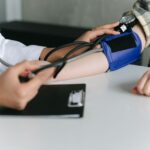
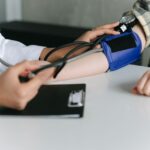
Sit in a chair with your back supported and both feet flat on the floor. Do not cross your legs. Rest your arm on a table so the cuff is at roughly heart level. Place the cuff on bare skin, not over a sleeve.
Stay still and do not talk during the measurement. Talking can raise a reading. So can a full bladder or a room that is too cold.
Take two or three readings about one minute apart and average them. This is standard practice in clinical research and in many home-monitoring protocols. The first reading is often slightly higher than later ones, which is why a single number can be misleading.
Keep a log — either on paper or in an app — with the date, time, and readings. Bring it to appointments. A record over weeks tells a far better story than a number recalled from memory.



What Do The Numbers Mean?
Blood pressure is written as two numbers. The top number (systolic) is the pressure in your arteries when your heart beats. The bottom number (diastolic) is the pressure between beats, when the heart is resting.
For adults, the following categories are widely used in the United States:
- Normal: less than 120/80 mm Hg
- Elevated: systolic 120–129 and diastolic less than 80
- Stage 1 hypertension: systolic 130–139 or diastolic 80–89
- Stage 2 hypertension: systolic 140 or higher or diastolic 90 or higher
These thresholds come from the American College of Cardiology and American Heart Association. Other organizations, including the European Society of Cardiology, use somewhat different cutoffs. That difference is real and reflects ongoing debate about where the line should be drawn. What matters for you is consistency with whatever framework your clinician uses.
A diagnosis of hypertension is not made from one reading. It requires multiple elevated measurements on separate occasions, or evidence from home monitoring or ambulatory monitoring over 24 hours.
Should You Use A Home Monitor Or A Pharmacy Machine?
Home monitors, when validated and used correctly, give more useful information than pharmacy or grocery store machines.
Pharmacy machines are convenient, but they are often used without proper rest, with arms unsupported, and with cuffs that may not fit. They can also go long periods without calibration. A reading from one of these machines is not useless, but it should not be treated as equivalent to a properly taken home reading.
Home monitoring has a real advantage: it captures many readings over time in your normal environment. Research has consistently found that home blood pressure readings correlate better with cardiovascular outcomes than office readings alone. That does not mean office readings are unimportant — they remain part of standard care — but home data adds a dimension that a single clinic visit cannot.
If you use a home monitor, check its accuracy against a clinical reading periodically. Bring the device to an appointment and compare it side by side with the office equipment. This is a simple step that many people never take.
When Should You Check More Often Or See A Clinician?
There is no universal rule for increasing frequency. The decision should come from your clinician based on your history, medications, and other conditions.
Some situations generally warrant closer monitoring or a prompt conversation with a healthcare professional:
- Readings that are consistently above your target range despite treatment
- Readings that are unusually low, especially with dizziness or fainting
- New symptoms like chest pain, severe headache, shortness of breath, or vision changes
- A reading above 180/120 mm Hg — this is considered a hypertensive crisis and needs immediate medical attention
A single high reading without symptoms is not automatically an emergency, but it should be repeated after a few minutes of rest. If it stays very high, seek care.
Do not adjust medication doses on your own based on home readings. Blood pressure medication is typically titrated slowly, and changes should be guided by a clinician who can see the full pattern.
What About Age And Other Factors?
Blood pressure tends to rise with age, largely because arteries stiffen over time. This means the frequency of monitoring often increases as people get older, even without a diagnosis.
Other factors that may prompt more frequent checking include diabetes, kidney disease, a history of cardiovascular events, pregnancy, and certain medications such as oral contraceptives or decongestants. In pregnancy, blood pressure monitoring is handled differently and should follow obstetric guidance — home monitoring may or may not be appropriate depending on the situation, and no universal home protocol exists for all pregnant people.
For children and adolescents, blood pressure screening follows pediatric guidelines and is typically done at well-child visits. Home monitoring in children is not routine and should only be done under clinical direction.
Lifestyle factors also influence readings. High sodium intake, excess alcohol, poor sleep, and chronic stress can all push numbers up. These are not reasons to check more often; they are reasons to address the underlying factors with your clinician’s guidance.
Frequently Asked Questions
How often should I check my blood pressure at home?
If you have high blood pressure, many clinicians recommend checking once in the morning and once in the evening for a set period, often seven days, before a follow-up visit. If your blood pressure is normal and you have no risk factors, an annual reading at a routine checkup is generally enough.
What time of day is best to check blood pressure?
Morning and evening readings are both useful, and consistency matters more than the specific hour. Many clinicians ask patients to take morning readings before medication and before caffeine or exercise.
Can I check my blood pressure too often?
Checking too often can create anxiety that raises readings and makes the data harder to interpret. Follow the frequency your clinician recommends rather than checking repeatedly throughout the day.
Should I check my blood pressure if I feel fine?
Yes — high blood pressure usually causes no symptoms, which is why routine monitoring matters. Waiting until you feel unwell can mean missing years of elevated readings.
