
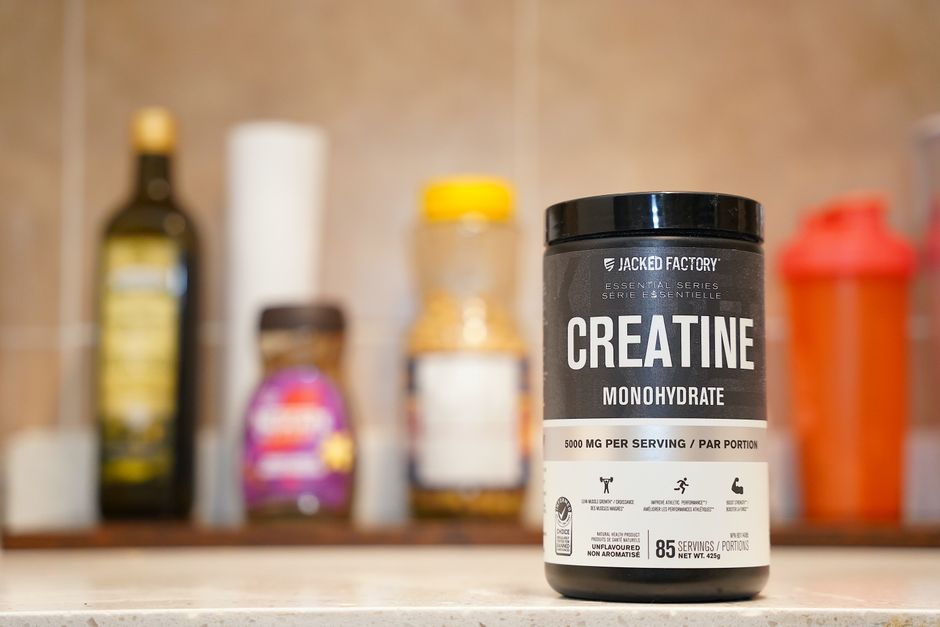
Creatine works whether you take it in the morning, at night, or between meals. The timing question matters far less than most supplement marketing suggests. What actually drives results is taking it consistently every day, at a dose that saturates your muscles, for weeks and months at a time. If you want the simplest answer: take it whenever you will remember to take it.
That said, there is real physiology behind the timing debate, and some of it is more interesting than the standard advice. Here is what the evidence actually shows.
When Is Creatine Best Taken?
There is no single best time of day. Daily consistency is what matters most.
Creatine works by increasing the amount of phosphocreatine stored in your muscles. Phosphocreatine helps regenerate ATP, the basic energy currency your cells use during short, intense efforts like sprinting or heavy lifting. Your muscles hold a limited amount of creatine at any given time, and that storage capacity has a ceiling.
Once your muscles are saturated, they stay saturated as long as you keep taking creatine daily. Timing does not change the ceiling. It only changes how quickly you get there and how stable the level stays.
This is why the research on timing has produced mixed results. Some studies suggest a small advantage to taking creatine near a workout. Others show no meaningful difference. The effect, when it appears at all, is modest compared to the effect of simply taking it every day.
Does It Matter If You Take Creatine Before or After a Workout?
The evidence here is genuinely mixed. No clear winner has emerged.
Some research suggests that taking creatine close to resistance training may support slightly greater gains in lean mass or strength over time. Other studies comparing pre-workout and post-workout timing have found no difference between the two. The inconsistency across studies is a signal that the timing effect, if real, is small.
One reason timing might matter at all comes down to blood flow. Exercise increases circulation to working muscles, and some researchers have proposed that this could improve creatine delivery to muscle tissue when taken around training. That is a reasonable mechanism, but a plausible mechanism is not the same as a demonstrated benefit. The human trials have not consistently confirmed it.
If you want a practical rule: taking creatine within a few hours before or after your workout is a fine choice. So is taking it with breakfast. Neither is clearly better than the other based on current evidence.
Should You Take Creatine With Food or on an Empty Stomach?
Taking creatine with a meal that contains carbohydrates and protein may improve how much your body retains, though the practical difference is small.
Insulin rises after you eat, particularly after carbohydrates. Insulin helps drive creatine into muscle cells. Some studies have found that combining creatine with a carbohydrate-containing meal, or with a carbohydrate and protein combination, increases muscle creatine retention compared to taking it alone. This effect appears most relevant during the loading phase, when you are trying to fill your muscles quickly.
For most people taking a maintenance dose daily, this difference is not worth restructuring meals around. If you already eat regularly, taking creatine with a meal is easy and may give a slight edge. If you prefer to take it on an empty stomach, that also works. Your muscles will still absorb it. It just may take slightly longer to reach full saturation.
One note: creatine is not a stimulant and does not need to be taken before exercise for an energy boost. Any energy benefit comes from muscle saturation over days and weeks, not from an acute effect in the hour after you swallow it.





What Is the Standard Creatine Dose?
The most studied approach uses a loading phase followed by a maintenance phase, though a lower daily dose without loading also works over a longer period.
In the research literature, a common protocol is:
- Loading phase: about 20 grams per day, split into four doses of 5 grams, for 5 to 7 days
- Maintenance phase: 3 to 5 grams per day thereafter
An alternative is to skip the loading phase and take 3 to 5 grams per day from the start. This reaches the same muscle saturation level, but it takes longer, typically several weeks rather than about a week.
Both approaches end up in the same place. Loading just gets you there faster. Some people find the loading phase causes more bloating or stomach discomfort, which is one reason some prefer the slower route.
These figures come from decades of clinical and sports science research on creatine monohydrate. They are the doses used in the majority of human trials.
Does Creatine Timing Matter More for Some People?
Timing may matter slightly more for people who are just starting, and less for people who have been taking it for months.
When you first begin, your muscles are not yet saturated. Anything that speeds absorption or retention during this window could theoretically shorten the time to full saturation. Once you are saturated, the daily dose mainly replaces what your body breaks down and excretes. At that point, timing becomes almost irrelevant.
People who eat a lot of meat and fish already get creatine from food. Red meat and fish are the main dietary sources, and a typical omnivorous diet provides roughly 1 to 2 grams per day. Vegetarians and vegans have lower baseline muscle creatine stores and may respond more noticeably to supplementation. Whether timing matters differently for them is not well established.
What Actually Matters More Than Timing
Consistency beats timing by a wide margin. Missing doses is the most common reason people do not see results.
Creatine is not a pre-workout stimulant. It does not work like caffeine, where the effect is tied to when you take it. It works by gradually filling a storage tank in your muscles. That tank stays full only if you keep refilling it.
Other factors that matter more than when you take it:
- Taking it every day, including rest days
- Using creatine monohydrate, the form with the most research behind it
- Staying hydrated, since creatine draws water into muscle cells
- Giving it time, usually several weeks, before judging results
On rest days, some people skip creatine because they are not training. That is a mistake for most people. Your muscles do not stop using and losing creatine on rest days. Taking it daily keeps levels stable.
Common Myths About Creatine Timing
A few claims circulate widely and are not supported by the evidence.
Myth: You must take creatine immediately after your workout. The “anabolic window” idea borrowed from protein timing does not apply to creatine in the same way. There is no narrow window you are missing.
Myth: Taking creatine at night disrupts sleep. Creatine is not a stimulant. There is no established mechanism by which it would interfere with sleep, and it is not classified as a stimulant in any regulatory sense.
Myth: Cycling creatine on and off is necessary. The research does not support routine cycling for healthy adults. Your body does not develop a tolerance to creatine the way it might to caffeine. Consistent daily use is the standard approach studied in trials.
Myth: Creatine damages your kidneys. In healthy people, studies have not found kidney damage from recommended doses. Creatine does raise creatinine levels on blood tests, which can look like reduced kidney function even when the kidneys are fine. This matters for anyone being evaluated for kidney disease, and it is worth telling your doctor you take creatine before a blood test. People with existing kidney disease should talk to a doctor before using it.
The Bottom Line on Creatine Timing
Pick a time you will stick with and take it every day. Morning, pre-workout, post-workout, or with dinner all work. If you want to take it with a carbohydrate-containing meal, that may slightly improve retention, especially during loading. But do not let timing become a reason to skip a dose.
The dose, the consistency, and the weeks of patience matter more than the clock.
Frequently Asked Questions
Is it better to take creatine before or after a workout?
Neither has been clearly shown to be better. Some studies suggest a small advantage to taking it near training, but others find no difference, so the effect appears minor.
Can I take creatine at night?
Yes. Creatine is not a stimulant and there is no established reason it would affect sleep. Any time of day works as long as you take it consistently.
How long does creatine take to work?
With a loading phase of about 20 grams per day for 5 to 7 days, muscle saturation happens within roughly a week. Without loading, at 3 to 5 grams per day, it typically takes several weeks.
Do I need to take creatine on rest days?
Yes, for most people. Your muscles continue to use and lose creatine on rest days, so daily dosing keeps levels stable.
