
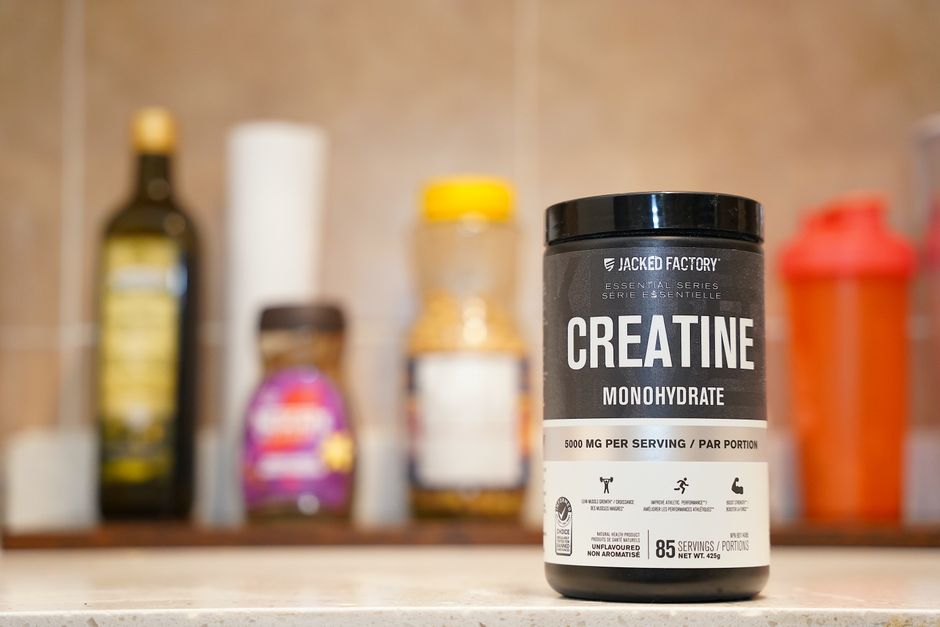
Creatine is one of the most studied sports supplements in the world, and the dose most often used in research is simple: 3 to 5 grams per day for most healthy adults. A short “loading” phase of about 20 grams per day split into four doses for 5 to 7 days can raise muscle creatine faster, but it is optional. Taking 3 to 5 grams daily steadily reaches a similar level over a few weeks.
That said, “how much” depends on your body size, what you eat, and why you are taking it. This article explains the standard doses, how timing and food affect absorption, and what the evidence does and does not support.
How Much Creatine Should You Take Per Day?
For most healthy adults, 3 to 5 grams of creatine monohydrate per day is the standard maintenance dose used in research and recommended by position stands from sports nutrition bodies. This amount keeps muscle creatine elevated once it is fully loaded.
There are two common ways to get there:
- Loading then maintaining: About 20 grams per day (split into four 5-gram doses) for 5 to 7 days, then 3 to 5 grams per day to maintain.
- Steady dosing: 3 to 5 grams per day from the start. Muscle levels rise more slowly but reach a similar point within roughly 3 to 4 weeks.
Both approaches work. Loading saturates your muscles faster. Steady dosing is easier on the stomach and simpler to stick with. The end result is comparable.
Creatine monohydrate is the form with the most research behind it. Other forms — creatine hydrochloride, creatine ethyl ester, buffered creatine — are marketed as superior, but head-to-head studies have not shown they outperform plain monohydrate. In several comparisons, monohydrate performed as well or better.
Does Your Body Weight Change the Dose?
Body size does influence how much creatine you need, though the effect is modest for most people. Larger bodies have more muscle mass, and muscle is where creatine is stored.
The 3 to 5 gram range covers most adults. Some researchers suggest scaling the maintenance dose closer to 0.03 grams per kilogram of body weight per day, which lands higher for people with a lot of muscle. For a 200-pound (about 91 kg) person, that works out to roughly 2.7 grams — still within the standard range. For a 250-pound (about 113 kg) person, it is closer to 3.4 grams.
People with more muscle mass, such as trained athletes, may sit at the higher end of the range. Smaller adults may do fine at the lower end. The difference is not large, and no clinical guidelines set separate doses by body weight for the general public.
Should You Do a Loading Phase?
A loading phase is optional. It speeds up saturation but is not required to get the benefits of creatine.
The logic behind loading is straightforward. Muscle creatine stores have a ceiling. Taking large amounts for several days fills those stores quickly. Taking a small daily dose fills them gradually. Once stores are full, extra creatine is mostly excreted in urine.
Loading can cause digestive discomfort — bloating, cramping, or loose stools — in some people, especially when doses are taken close together. Splitting the 20 grams into four smaller doses with food and water reduces this. If you would rather avoid the hassle, steady dosing at 3 to 5 grams per day avoids the GI issues for most people and still works.
One point worth knowing: the “loading” idea is not a marketing invention. It comes from research showing that raising muscle creatine faster produces faster effects on performance. But faster is not the same as better in the long run. After a few weeks, both methods arrive at roughly the same place.





Does Timing or Food Matter?
Timing matters far less than consistency. What raises muscle creatine is taking it every day, not the hour you take it.
Some studies suggest that taking creatine with a meal containing carbohydrates and protein may increase retention slightly, because insulin helps drive creatine into muscle cells. The effect is small and mostly relevant during loading. For everyday maintenance, taking it with food or without is unlikely to make a meaningful difference.
The practical takeaway: pick a time you will remember — with breakfast, before a workout, after a workout — and stick with it. Consistency over weeks and months is what fills and keeps muscle stores elevated.
Does Creatine Need to Be Cycled?
No. There is no established need to cycle off creatine, and the practice is not supported by clinical evidence.
Cycling is often recommended in gym culture, sometimes borrowed from ideas about hormones or receptor downregulation. Creatine does not work that way. It is stored in muscle, and stopping it simply lets those stores drift back toward baseline over several weeks. There is no known benefit to deliberately interrupting use.
Long-term studies in healthy adults have not found harm from continuous use at standard doses. That said, most long-term data covers periods of months to a few years, not decades. The evidence for safety is strong over the medium term and reasonable over the longer term, but it is not infinite.
Who Should Be Careful With Creatine?
Creatine is generally well tolerated by healthy adults, but certain groups should talk to a clinician before using it.
- People with kidney disease: Creatine is filtered by the kidneys. Anyone with reduced kidney function should not start it without medical guidance.
- People with liver disease: Similar caution applies, since creatine is processed in the liver.
- People taking medications: Some drugs can interact with creatine or affect kidney function. A pharmacist or doctor can check.
- Pregnant or breastfeeding women: No clinical guidelines currently exist for creatine use in pregnancy or breastfeeding. Safety data are lacking.
- Children and adolescents: No clinical guidelines currently exist for routine creatine use in children. Some research has looked at specific adolescent athlete groups, but this should be a conversation with a pediatrician, not a self-directed decision.
Creatine can raise blood creatinine levels, which is a marker doctors use to estimate kidney function. This can make kidney tests look worse than they are. If you take creatine and get bloodwork, tell your doctor so the results are interpreted correctly. This is a real and often overlooked point.
What Does the Evidence Actually Show?
Creatine has strong evidence for improving short bursts of high-intensity performance — sprinting, heavy lifting, repeated explosive efforts. This is well established across many studies and reviews.
Evidence for other uses is more mixed. Creatine has been studied for muscle preservation with aging, for certain neurological conditions, and for cognitive effects. Some findings are promising; others are inconsistent. This does not mean creatine is a treatment for any disease. It means research is ongoing, and claims should be matched to the strength of the evidence.
What creatine is not: it is not a fat burner, not a hormone booster, and not a substitute for protein, training, or sleep. Marketing around those claims is not supported by clinical trials.
What Form and Dose Should You Buy?
Plain creatine monohydrate is the form to choose. It is the most studied and the least expensive. “Micronized” versions are simply ground finer, which may dissolve more easily and cause less stomach upset for some people, but the active ingredient is the same.
Ignore claims that a specific brand or fancy form is “more absorbable” or “more potent.” No human trials have confirmed that these forms outperform monohydrate at the standard dose.
For most healthy adults, the plan is simple: 3 to 5 grams of creatine monohydrate daily, taken consistently, with or without a short loading phase. Drink water normally. There is no need to force extra fluids beyond your usual intake.
Frequently Asked Questions
How many grams of creatine should I take daily?
Most healthy adults take 3 to 5 grams of creatine monohydrate per day to maintain elevated muscle stores. A short loading phase of about 20 grams daily for 5 to 7 days is optional and raises levels faster.
Is 5 grams of creatine a day enough?
Yes, 5 grams per day is enough for most adults once muscle stores are loaded. Some larger or highly muscular people may sit at the higher end of the 3 to 5 gram range.
Do I need to cycle off creatine?
No, there is no established need to cycle off creatine, and no clinical evidence supports doing so. Stopping simply lets muscle stores return to baseline over several weeks.
Can I take creatine without a loading phase?
Yes, you can skip loading and take 3 to 5 grams daily, which reaches similar muscle levels over about 3 to 4 weeks. Loading is faster but not required.
