
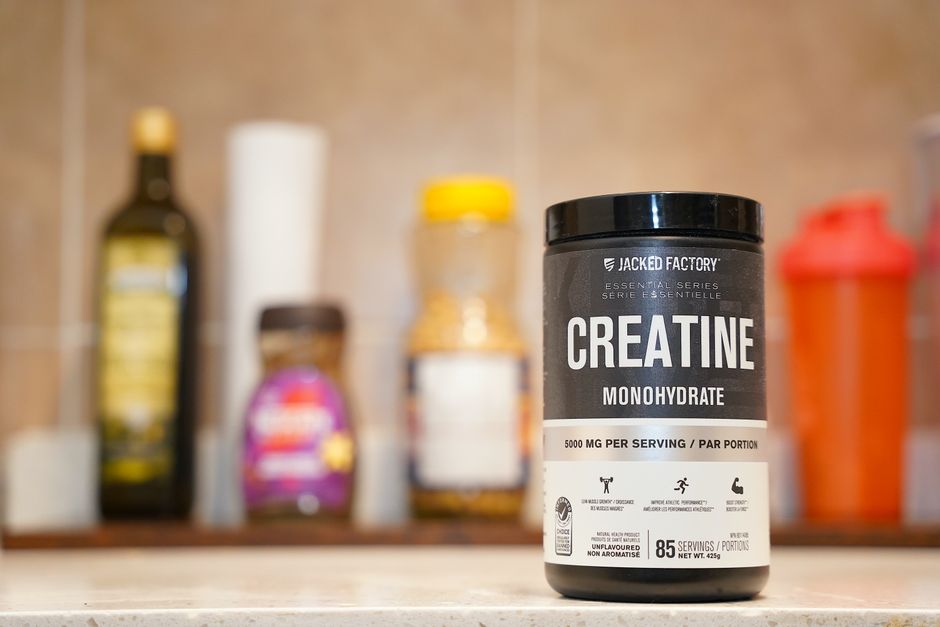
Creatine does not directly make you sweat more. It has no known effect on the sweat glands or on the body’s core temperature set point. What creatine does do is support short bursts of intense effort — and that kind of effort makes you sweat. So the sweating people notice is usually coming from the training, not the supplement.
That distinction matters because the rumor has a real consequence. Some athletes skip creatine because they believe it causes dehydration, cramping, or dangerous overheating. The evidence behind those beliefs is much weaker than most people assume.
Does Creatine Make You Sweat More?
No. Creatine is not a stimulant and does not raise body temperature. It is not a diuretic in the way caffeine or alcohol can be. It does not act on the nervous system in a way that triggers sweating.
What creatine does is participate in the phosphocreatine system — a fast energy buffer inside muscle cells. During the first several seconds of a hard effort, this system helps regenerate ATP, the molecule muscles actually use for fuel. Having more creatine available means your muscles can perform more repeated high-intensity work before fatigue sets in.
More work means more heat produced. More heat produced means more sweat. That chain of events is normal exercise physiology, not a side effect of the supplement.
There is one indirect effect worth understanding. Creatine draws water into muscle cells, which is why some people gain a few pounds of body weight in the first week or two of use. This is intracellular water — water stored inside the muscle cell, not lost from the body. It is not dehydration. It does mean your total body water is slightly higher than before, which is the opposite of what the “creatine dehydrates you” claim suggests.
Why Do People Think Creatine Causes Sweating?
Three things get tangled together in this belief. The first is timing. Most people start creatine at the same time they start or intensify a training program. Sweating increases, and the supplement gets the credit.
The second is water weight. That rapid jump on the scale gets misread as fluid loss. It is fluid gain, held inside muscle tissue.
The third is the cramping myth. If someone cramps during a hot workout while taking creatine, they assume the creatine caused it. Heat, dehydration from inadequate fluid intake, and unfamiliar exertion are far more common causes of exercise cramps.
Athletes also tend to be more aware of their bodies during training. Sweat becomes something you notice. That attention can create a link that is not actually there.
Does Creatine Affect Body Temperature or Hydration?
Creatine does not raise core body temperature. There is no established mechanism by which it would. Thermoregulation during exercise is driven by metabolic heat production, ambient conditions, clothing, and how well your body can dissipate heat through sweat and skin blood flow.
Hydration is where the picture gets slightly more nuanced. Because creatine increases water content inside muscle cells, your body is holding more water overall. Some research suggests that this intracellular water does not come at the expense of the fluid in your blood and between your cells. In other words, it is not stealing water from the parts of your body that need it for circulation and cooling.
What is clear is that creatine does not increase your fluid requirements in any dramatic way. You still need to drink according to your sweat losses, your training duration, and the heat. That guidance is the same whether or not you take creatine.
One practical point: if you are adding creatine and also training harder, your sweat losses go up because of the training. Replace those fluids. The supplement did not create the need.

Does Creatine Cause Cramps or Dehydration?
The short answer is that the evidence does not support it. This is one of the more persistent beliefs in sports nutrition, and it has been examined.
Some studies have looked directly at cramping and dehydration in people taking creatine. They have not found an increased risk. A review of the research on creatine safety concluded that concerns about dehydration and cramping are not supported by the available evidence in healthy people.
That does not mean cramps never happen. Exercise-associated muscle cramps are common, especially in the heat and during long or unfamiliar efforts. They are usually linked to fatigue, heavy sweating with large sodium losses, or a sudden increase in workload. Blaming creatine is understandable but not accurate.
There is a real caveat. People with kidney disease, liver disease, or conditions that affect fluid balance should talk to a clinician before using creatine. This is not because creatine is known to harm them, but because their situation is different and general statements do not apply.
What Actually Makes You Sweat During a Workout?
Sweating is your body’s cooling system. When your core temperature rises, your nervous system signals the sweat glands to release fluid onto your skin. As that fluid evaporates, it carries heat away.
Several things drive how much you sweat:
- How hard and how long you train
- The temperature and humidity around you
- Your clothing and how much skin is covered
- Your fitness level — trained people often sweat sooner and more, because their cooling system responds faster
- Your genetics and how many active sweat glands you have
- Your hydration status going into the session
None of these are affected by creatine. If you are sweating more since starting creatine, look at what else changed. New program, heavier loads, hotter gym, more layers, longer sessions. Those are the levers.
Does Creatine Make You Retain Water?
Yes, and this is the one effect that is real and expected. Creatine pulls water into muscle cells. A typical result is a modest weight gain over the first week or two of use, often described as a few pounds.
This is intracellular water, held inside the muscle. It is not bloating in the usual sense, and it is not the same as the puffiness some people get from high sodium intake. It also tends to level off once your muscles reach a new saturation point.
Some people notice this as a slightly fuller look in the muscles. Others notice nothing except the scale. Either way, it is not dehydration and it is not a sign that something is wrong.
If you are in a weight-class sport or care about scale weight for competition, this matters for planning. The gain is water, not fat, and it is usually small.
Should You Drink More Water If You Take Creatine?
No special increase is required. Standard hydration guidance applies: drink to match your sweat losses, and start sessions well hydrated.
The idea that creatine demands extra water comes from mixing up two different things. Creatine increases the water stored inside muscle cells. That is a shift in where water sits, not a net loss that needs replacing.
That said, hard training in the heat increases fluid needs regardless of what supplements you take. If you finish a session and your urine is dark, you are behind. That is a training issue, not a creatine issue.
For most healthy adults, the practical advice is simple. Drink when you are thirsty, drink around training, and pay attention to how you feel in the heat. No extra rules because of creatine.
What Does the Evidence Say About Creatine Safety?
Creatine is one of the most studied sports supplements in existence. In healthy adults, research over several decades has not found serious safety concerns at typical doses. The International Society of Sports Nutrition has published a position stand supporting creatine monohydrate as safe and effective for increasing high-intensity performance in healthy people.
That is a strong statement from a body that reviewed the literature. It is worth taking at face value.
What the evidence does not support is the idea that creatine causes dehydration, cramping, or overheating. Those claims circulate widely but do not hold up when tested.
Two honest caveats. First, most safety data comes from healthy adults. Long-term data in children, pregnant women, and people with kidney or liver disease is limited, and no clinical guidelines currently exist for those groups. Second, “safe” does not mean “necessary.” Creatine is optional. It helps with certain types of performance and has no proven benefit for general health in people who are not training hard.
If you take it and sweat more, the sweat is from the work. If you take it and gain a couple of pounds, that is water inside your muscles. Neither is a reason to stop.
Frequently Asked Questions
Does creatine make you sweat more?
No, creatine does not directly cause sweating. Any extra sweat comes from the harder training that creatine can support, not from the supplement itself.
Can creatine cause dehydration or cramps?
The available evidence in healthy adults does not support a link between creatine and dehydration or cramping. Heat, heavy sweating, and unfamiliar exertion are far more common causes of exercise cramps.
Why did I gain weight after starting creatine?
Creatine pulls water into muscle cells, which often causes a modest weight gain in the first week or two. This is intracellular water, not fat, and it usually levels off.
Should I drink more water while taking creatine?
No special increase is needed. Drink to match your sweat losses and start training well hydrated, the same as you would without creatine.
