

An at-home pregnancy test can give a reliable result as early as the first day of a missed period. That timing is what most test makers and clinicians recommend, because it gives the hormone hCG enough time to build up to a level the test can detect. Testing a few days before a missed period is possible with some tests, but the chance of a false negative goes up the earlier you test.
Getting the timing right matters more than the brand you buy. The biology behind the test is straightforward, and understanding it removes most of the guesswork.
When Can You Take An At Home Pregnancy Test?
The most reliable time is the first day of a missed period. By that point, if you are pregnant, levels of human chorionic gonadotropin (hCG) are usually high enough for a standard urine test to pick up.
hCG is a hormone the developing placenta produces after a fertilized egg implants in the uterine lining. Implantation typically happens about 6 to 12 days after ovulation, though the range varies. The hormone then rises quickly in early pregnancy, roughly doubling every couple of days at first. A test works by detecting this hormone in your urine.
Some tests are marketed as able to detect pregnancy up to several days before a missed period. This is possible in theory, because hCG starts rising before your period is due. But the earlier you test, the more likely you are to get a negative result even if you are pregnant. That is because hCG may not have reached the test’s detection threshold yet.
If you test early and get a negative result, the useful next step is to test again in a few days. Waiting until your period is actually late gives the clearest answer.
How Does an At-Home Pregnancy Test Actually Work?
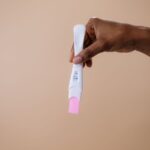
At-home tests use a strip that reacts to hCG in your urine. When urine moves across the strip, the hCG binds to antibodies on it, which produces a visible line or a digital reading.
Most tests show a control line or symbol to confirm the test worked, plus a test line that appears if hCG is present. A digital test shows the words “pregnant” or “not pregnant” instead of lines.
Two things are worth knowing about how these tests are built:
- Each test has a detection limit, meaning it can only register hCG above a certain concentration. A test cannot detect hormone that is present but below that level.
- The control indicator is not a pregnancy result. It only tells you the test functioned correctly. If no control line appears, the test is invalid and should be repeated.
This detection limit is the reason timing matters so much. It is not that the test is faulty when you get an early negative. It is that the hormone level may simply not be high enough yet.
How Early Is Too Early to Test?
Testing before implantation has even occurred will always give a negative result, no matter how sensitive the test is. Implantation happens roughly 6 to 12 days after ovulation, and hCG only starts being produced after that.
So the earliest a test could possibly detect pregnancy is a few days after implantation, once hCG has risen enough to cross the test’s threshold. For many people, that lands around the time of a missed period or slightly before.
Ovulation timing varies from person to person and even from cycle to cycle. Someone who ovulates later in their cycle will have lower hCG at any given calendar date than someone who ovulated earlier. This is a big part of why two people testing on the same day can get different results.
The practical takeaway: the more days that pass after a missed period, the more accurate a negative result becomes. A negative test on the first day of a missed period is fairly reliable, but not perfect. A negative test a week later is much more dependable.



What Can Cause a False Negative or False Positive?
A false negative — a negative result when you are actually pregnant — is the more common error. It usually comes down to testing too early, when hCG is still below the test’s detection limit.
Other things that can affect a negative result:
- Drinking a lot of fluid before testing, which dilutes the urine and lowers hCG concentration.
- Using a test past its expiration date.
- Not following the instructions, such as reading the result too early or too late.
A false positive — a positive result when you are not pregnant — is less common but does happen. Certain medications that contain hCG can trigger a positive result. Some fertility treatments use hCG, so a test shortly after such a treatment may read positive even without a pregnancy. Rare medical conditions can also raise hCG levels.
If a result does not match what you expect, testing again a few days later or talking with a clinician is the sensible path. A blood test can measure hCG directly and is more sensitive than a urine test.
Does the Time of Day You Test Matter?
Testing first thing in the morning is often recommended, especially early on. After a night without drinking, your urine is more concentrated, which means any hCG present is less diluted.
This matters most when hCG levels are still low, such as around the time of a missed period. Once hCG has risen higher, the time of day makes less difference.
If you are testing early and want the best chance of an accurate result, morning urine gives you the most concentrated sample. If you are testing well after a missed period, timing during the day is less important.
What Should You Do With the Result?
A positive at-home test is generally reliable and usually means you are pregnant. The next step is to contact a healthcare provider to confirm the result and begin prenatal care.
A negative test is only meaningful in context. If your period is late and you tested negative, wait a few days and test again. If you keep getting negative results but your period stays absent, or if you have symptoms that concern you, see a clinician. A missed period can have causes other than pregnancy, and a healthcare provider can help sort out what is going on.
Home tests are a screening tool, not a diagnosis. They are accurate when used correctly and at the right time, but they are not a substitute for medical evaluation when something does not add up.
Frequently Asked Questions
Can I take a pregnancy test before my missed period?
Yes, some tests are designed to detect pregnancy a few days before a missed period. However, the earlier you test, the higher the chance of a false negative because hCG may not have risen enough yet.
How accurate is an at-home pregnancy test on the first day of a missed period?
At-home tests are generally very accurate when used on or after the first day of a missed period. Accuracy drops when you test earlier than that.
What if I get a negative result but still think I am pregnant?
Wait a few days and test again, ideally with morning urine. If you keep testing negative but your period remains late, contact a healthcare provider to find out what is going on.
Can medication cause a false positive pregnancy test?
Yes, medications that contain hCG, including some fertility treatments, can cause a false positive. Most common medications do not affect the result.
