
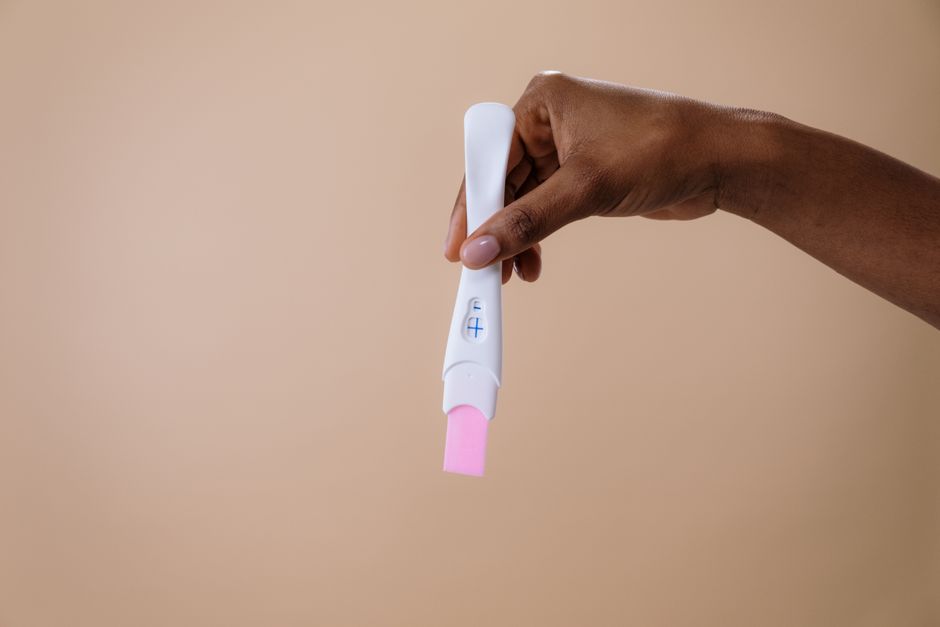
If you are trying to get pregnant, you can usually get a reliable result from a home pregnancy test around the first day of a missed period. That is roughly two weeks after ovulation and about four weeks after the first day of your last menstrual period. Testing earlier than that raises the odds of a false negative because it takes time for the hormone hCG to build up to a level a test can detect.
When Can You Test For Pregnancy After Ovulation?
Most home pregnancy tests can detect hCG in urine starting around 12 to 14 days after ovulation. Some highly sensitive tests claim earlier detection, but earlier testing comes with a real risk of getting a negative result when you are actually pregnant.
Here is what is happening biologically. After a fertilized egg implants in the uterine lining, the cells that will become the placenta begin producing human chorionic gonadotropin, or hCG. This typically happens about 6 to 12 days after ovulation. Once implantation occurs, hCG levels double roughly every 48 to 72 hours in early pregnancy.
A test taken at 8 days after ovulation may catch a pregnancy. A test taken at 14 days is far more likely to be accurate. The difference is not small. Testing too early is one of the most common reasons for a false negative.
If you are tracking ovulation through basal body temperature, cervical mucus changes, or ovulation predictor kits, you have a reasonable estimate of when you ovulated. Add 12 to 14 days to that date for the most reliable early result.
How Do Home Pregnancy Tests Work?
Home pregnancy tests detect hCG in your urine. The hormone is produced only after a fertilized egg implants, which is why timing matters so much. No implantation means no hCG, no matter how sensitive the test is.
There are two main formats. Strip tests and midstream tests work by pulling urine across a reactive pad. Digital tests use the same chemistry but display results as words rather than lines. The underlying detection method is similar.
Tests vary in their sensitivity. Sensitivity is usually described as the lowest concentration of hCG the test can detect, measured in milli-international units per milliliter (mIU/mL). A common threshold is 25 mIU/mL. Some tests claim sensitivity as low as 10 mIU/mL.
Higher sensitivity sounds better, but it has a tradeoff. A very sensitive test used too early may detect a chemical pregnancy — a very early pregnancy that would not have continued. This can be emotionally difficult and does not change the outcome.
What Is the Best Time of Day to Take a Pregnancy Test?
First morning urine is the most concentrated and gives the best chance of detecting hCG early on. If you are testing after a missed period, the time of day matters less because hCG levels are high enough to be detected at any time.
The reasoning is straightforward. When you sleep, you are not drinking fluids, so your urine becomes more concentrated. After you have been drinking water throughout the day, urine is more diluted, which can lower hCG concentration below a test’s detection threshold — especially in very early pregnancy.
If you cannot use first morning urine, try to hold your urine for at least four hours before testing and limit fluids during that window. This is not as reliable as first morning urine but is better than testing on a full bladder of diluted urine.





Can You Test Before a Missed Period?
You can, but the results are less reliable. Some tests are marketed for testing up to five or six days before a missed period. The fine print usually shows that detection rates drop significantly the earlier you test.
Testing before a missed period can produce a false negative if hCG has not yet reached detectable levels. It can also produce a faint positive that is difficult to interpret. If you get a negative result before your missed period, it does not mean you are not pregnant. It means you tested too early.
The most reliable approach is to wait until the first day of your missed period. If you cannot wait, understand that a negative result before that date is not conclusive and should be repeated in two to three days.
What Causes a False Negative or False Positive?
False negatives are far more common than false positives. The most frequent cause is testing too early. Other causes include diluted urine, using an expired test, or not following the instructions correctly.
False positives are rare but do happen. Certain medications that contain hCG, such as some fertility treatments, can cause a positive result. A very early miscarriage, sometimes called a chemical pregnancy, can also produce a brief positive followed by a negative. Some medical conditions and rarely certain tumors can produce hCG.
If you get a positive result and then a negative result a few days later, contact your doctor. This pattern can happen with a chemical pregnancy or an ectopic pregnancy, which requires medical attention.
How Accurate Are Home Pregnancy Tests?
When used correctly and after a missed period, home pregnancy tests are generally accurate. Most manufacturers report accuracy above 99 percent when the test is taken on the day of the missed period. Accuracy drops when testing earlier.
Correct use matters. Read the instructions for your specific test. Do not read the result after the recommended time window, as evaporation lines can appear and be mistaken for a positive. Use a clean container if collecting urine for a strip test.
If you get a positive result, schedule a visit with your healthcare provider. A blood test can confirm the pregnancy and measure hCG levels. An ultrasound later can confirm the location and viability of the pregnancy.
If you get a negative result but still feel pregnant or your period does not come, wait a few days and test again. If you continue to get negative results and your period is still absent, see your doctor. There are other reasons for a missed period besides pregnancy.
Does a Missed Period Always Mean Pregnancy?
No. A missed period can have many causes. Stress, significant weight change, intense exercise, thyroid problems, polycystic ovary syndrome, and perimenopause can all disrupt the menstrual cycle. Some hormonal birth control methods can also stop periods.
This is why a pregnancy test is useful — it answers the pregnancy question directly. If the test is negative and your period remains absent, the next step is figuring out why. A doctor can check hormone levels and look for other causes.
If your cycles are usually regular and you have missed a period, testing is reasonable. If your cycles are irregular, timing a test is harder. In that case, testing based on when you last had unprotected sex — about three weeks after — is a practical approach.
When Should You See a Doctor?
See a doctor if you have a positive test and want to confirm the pregnancy, if you have a negative test but your period is still missing, or if you have symptoms like severe pain, heavy bleeding, or dizziness. Those symptoms can signal an ectopic pregnancy or another problem that needs prompt care.
If you have been trying to conceive for a year without success — or six months if you are over 35 — a doctor can help evaluate possible causes. That timeline is a general guideline, not a rule. Some people seek help sooner based on their history or concerns.
Home tests are a screening tool, not a diagnosis. A healthcare provider can confirm pregnancy, estimate how far along you are, and identify any issues that need attention.
Frequently Asked Questions
How soon after ovulation can I test for pregnancy?
Most home tests can detect pregnancy about 12 to 14 days after ovulation. Testing earlier may give a false negative because hCG levels may not be high enough yet.
Can I get a positive pregnancy test before my missed period?
It is possible but less reliable. Some sensitive tests may detect hCG a few days before a missed period, but the chance of a false negative is higher the earlier you test.
What is the best time of day to take a pregnancy test?
First morning urine is best, especially for early testing, because it is the most concentrated. After a missed period, the time of day matters less.
What should I do if I get a negative test but my period is late?
Wait two to three days and test again with first morning urine. If the result is still negative and your period remains absent, see a doctor to check for other causes.
