
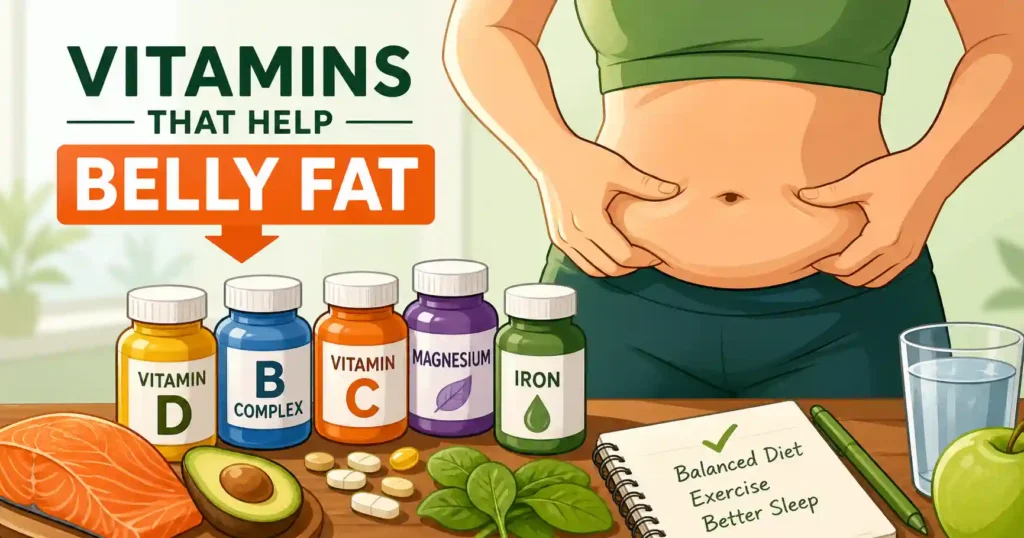
Let’s clear this up first. No vitamin helps in losing belly fat. Not directly.
What they can do is fix things in your body that quietly make fat loss harder — things like poor insulin response, low energy, or hormonal imbalance. When those are off, belly fat tends to stick around.
The ones that come up most often in research are Vitamin D, B vitamins, Vitamin C, magnesium, and iron. But the catch is simple — they only help if you’re low to begin with.
Key Takeaways
- Belly fat is hormonally active — this makes it more resistant to loss than other fat types.
- Vitamin D shows the strongest connection — low levels are linked with higher abdominal fat.
- B vitamins support metabolism — but mainly help when there’s an existing deficiency.
- Vitamin C plays a supporting role — it helps fat burning during exercise, but the effect is modest.
- Hormonal changes affect fat storage — especially in women over 40, shifting where fat accumulates.
- No vitamin directly burns fat — they support processes, but don’t dissolve fat on their own.
Why Belly Fat Is Different (and More Stubborn)
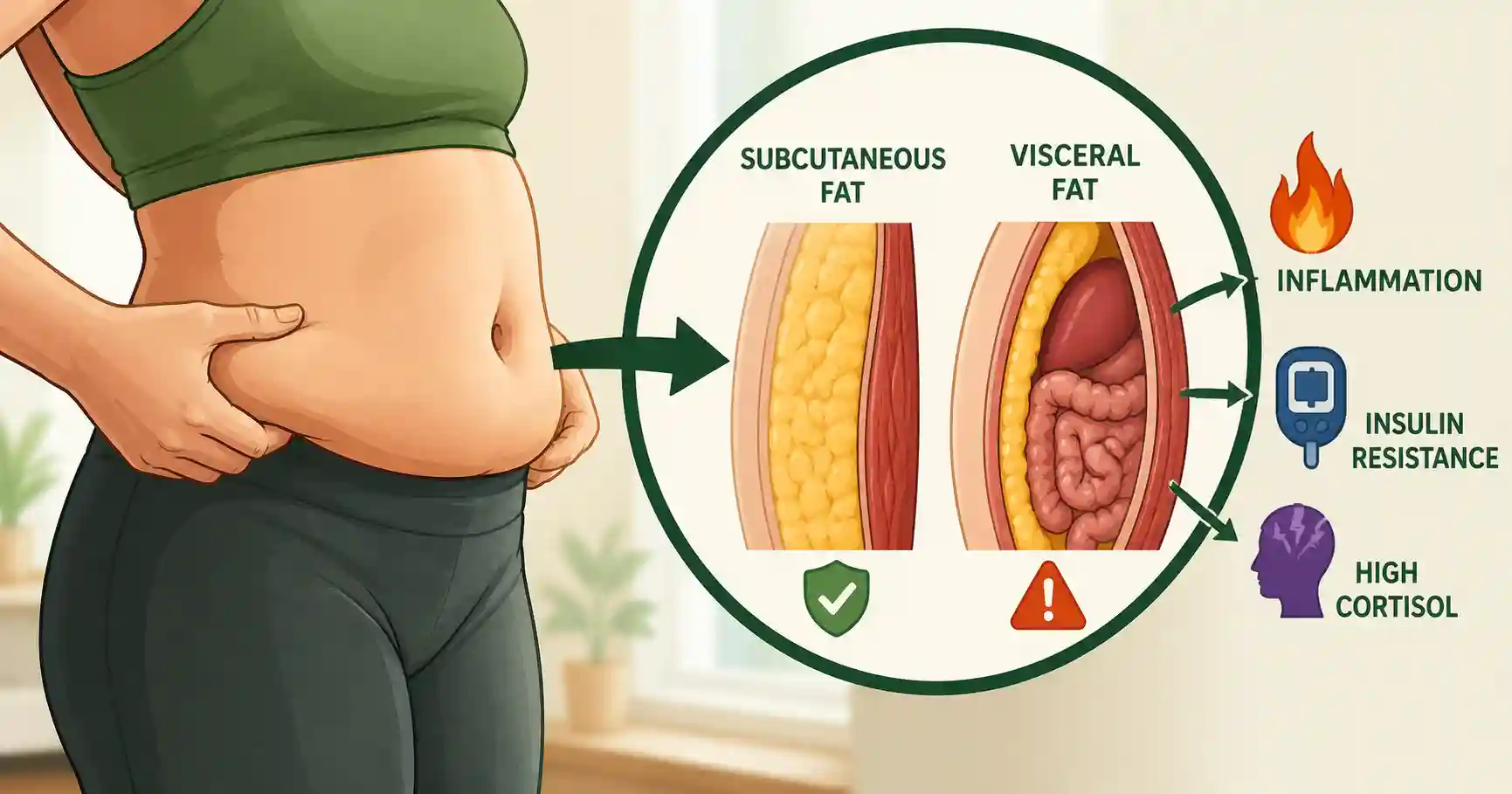
Not all fat behaves the same. Fat on your thighs or hips mostly just sits there. Belly fat doesn’t. The deeper kind — called visceral fat — is active. It messes with hormones. It increases inflammation. It makes insulin work worse.
That combination is what makes it stubborn. There’s a reason people feel like they’re doing everything right, but their stomach won’t budge.
A review in Obesity Reviews linked this type of fat to insulin resistance and chronic inflammation. Both get worse when certain nutrients are low.
So the vitamin angle isn’t about “fat burning.” It’s about removing the stuff that’s slowing you down.
Related Posts
- Does a Fat Person Burn More Calories? What’s Actually True

- Can Rheumatoid Arthritis Cause Weight Loss? The Real Answer
- What is the Best Meal Replacement Shake for Weight Loss?
- Are California Rolls Healthy for Weight Loss? What to Know
- What Can I Eat for Lunch to Lose Belly Fat? A Closer Look
- How to Drink Protein Shakes for Weight Loss? Steps You Can Start Today






So… Which Vitamins Actually Help In Losing Belly Fat?
Here’s the practical version — no hype.
- Vitamin D → helps insulin work properly
- B12 / B6 / other B vitamins → keep your metabolism running efficiently
- Vitamin C → supports fat burning during exercise
- Magnesium → helps control blood sugar and stress hormones
- Iron → supports thyroid function
That’s it. But again — if your levels are already fine, adding more doesn’t suddenly make fat disappear.
Vitamin D and Belly Fat — The One With Real Evidence
If you had to pick one, this is the strongest candidate.
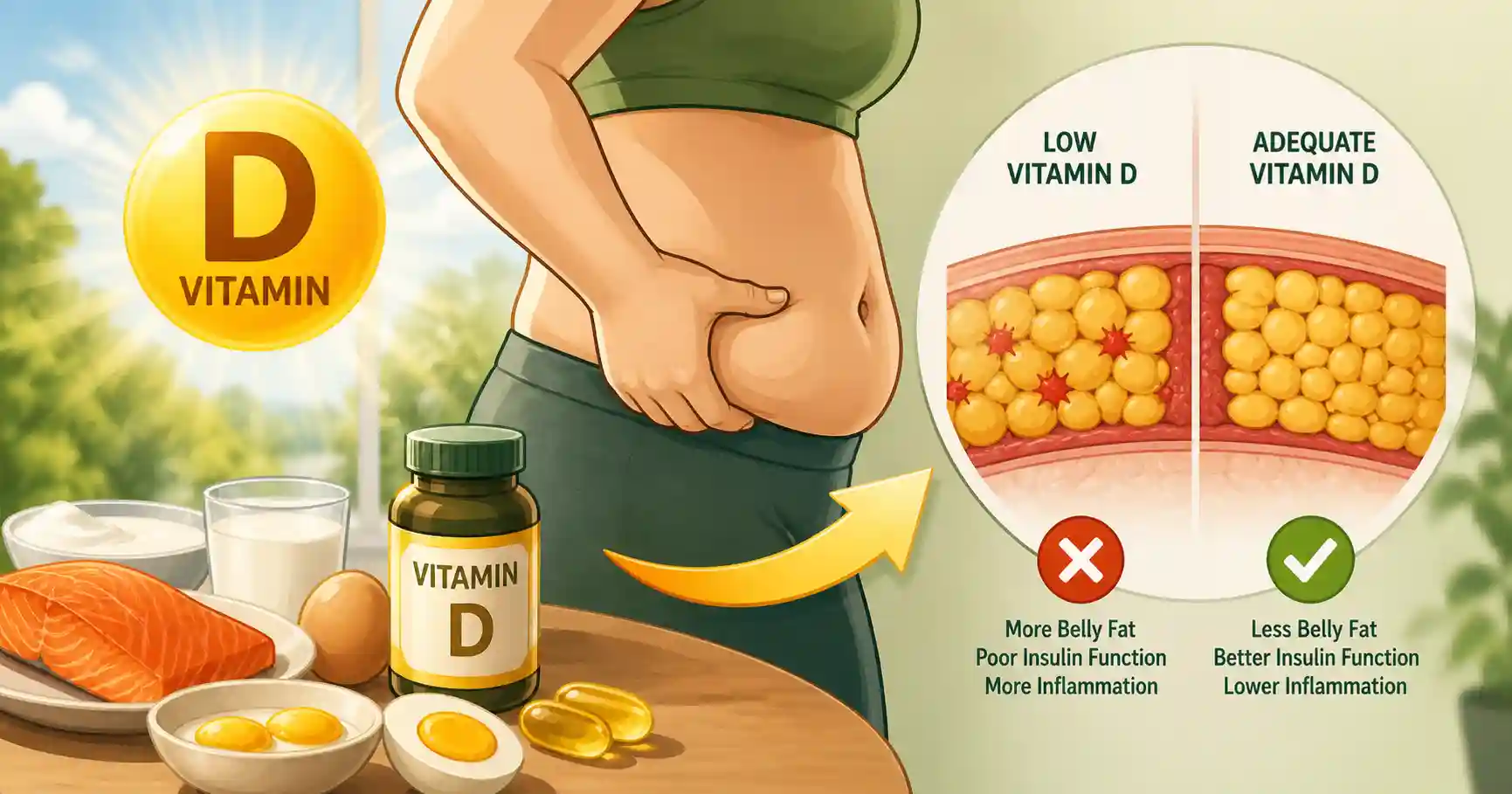
Low Vitamin D levels consistently show up in people with higher belly fat. Not just overall weight — specifically abdominal fat.
A study in the Journal of Clinical Endocrinology & Metabolism found this link even when body weight was controlled.
Why this matters: When insulin isn’t working well, your body stores more fat. And for whatever reason, it tends to store it around the belly first.
Vitamin D plays a role in that insulin response. It also interacts directly with fat cells. That said, don’t expect miracles. Even long-term trials (like the Women’s Health Initiative) showed modest effects, not dramatic fat loss.
Still, deficiency is common. Fixing it is worth it.





What About “Boosting Metabolism”?
This is where B vitamins come in.
They don’t speed up metabolism in some dramatic way. What they do is help your body convert food into energy properly. Without them, everything runs a bit slower.
B12 gets the most attention. Partly because low levels make people tired — and tired people move less. That alone affects fat loss more than most supplements ever will.
Vitamin C is the interesting one here. Your body needs it to produce carnitine — a molecule that helps move fat into cells to be burned for energy. No carnitine, less fat burning.
One small study showed that people low in Vitamin C burned less fat during exercise. Not groundbreaking, but not nothing either.
Belly Fat in Women Over 40 — Different Situation
This part gets ignored way too often.
Around perimenopause, estrogen drops. When that happens, fat distribution shifts. Less to the hips and thighs. More to the belly. This isn’t about discipline. It’s biology.
A few nutrients become more relevant here:
- Magnesium → helps with insulin and stress hormones
- Vitamin B6 → involved in hormone metabolism
- Vitamin D → still important, especially post-menopause
There’s research linking magnesium intake to better insulin levels and Vitamin D status to waist size in postmenopausal women.1Magnesium, insulin resistance and body composition in healthy postmenopausal women, PubMed Central.
None of these “fixes” belly fat overnight. But if something feels off hormonally, deficiencies can make it worse.
What Vitamins Won’t Do (This Part Matters)
A lot of people are looking for a shortcut. There isn’t one. No vitamin dissolves fat. Nothing you swallow breaks down stored fat on its own.
A few myths worth shutting down:
- Fat-soluble vitamins don’t “burn” fat
- Biotin doesn’t boost metabolism unless you’re deficient (which is rare)
- More vitamins ≠ faster fat loss
Vitamins remove friction. That’s it. If diet, sleep, and activity are off, supplements won’t cover that.
FAQ
What vitamin is best for belly fat?
Vitamin D shows the strongest connection. It supports insulin function, which directly affects how fat is stored — especially around the abdomen.
Does Vitamin D reduce belly fat?
Low levels are linked to higher visceral fat. Supplementing may help slightly, especially if you’re deficient, but the effect is modest.
What vitamin speeds up metabolism?
B vitamins help your body process energy more efficiently. Vitamin C also supports fat burning during exercise. But neither works beyond correcting a deficiency.
Are there supplements that dissolve belly fat?
No. That idea is wrong. Supplements can support metabolism, but they don’t break down stored fat on their own.
Which vitamins help women with belly fat?
Vitamin D, magnesium, and B6 are the most relevant. They interact with hormones and insulin — both key factors in belly fat during midlife.
Scientific References
- 1Magnesium, insulin resistance and body composition in healthy postmenopausal women, PubMed Central. ↩︎
