
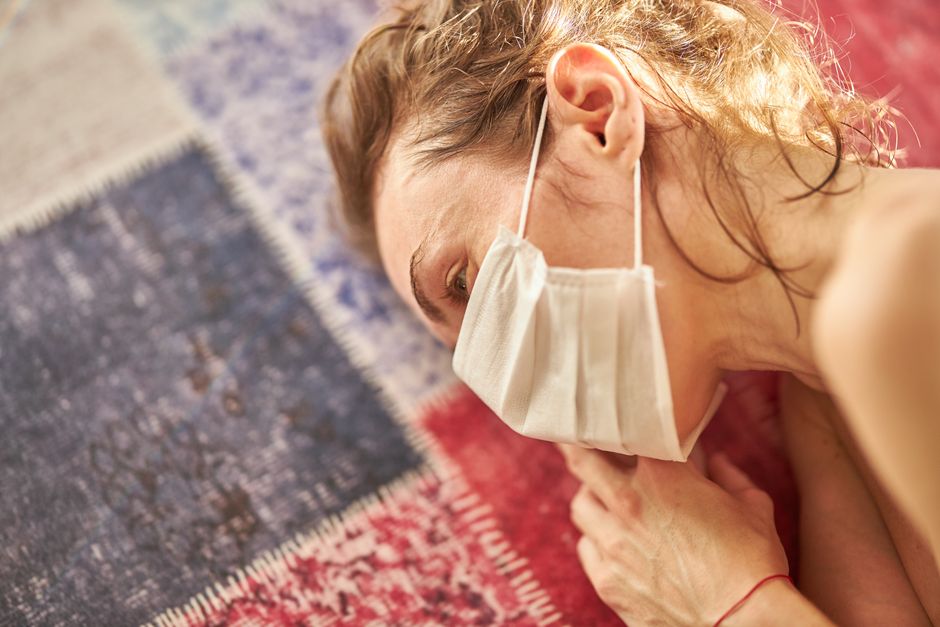
If you test positive for COVID-19, start by isolating yourself from others immediately, even if your symptoms feel mild. The CDC recommends staying home for at least five days from when your symptoms started, or from your positive test if you have no symptoms. Wear a high-quality mask if you must be around others, and contact your doctor about antiviral treatments like Paxlovid if you are at higher risk for severe illness. This is your first step, and taking it quickly matters.
How Do I Know If I Should Isolate and For How Long?
Isolation is about keeping the virus away from other people. The CDC says you should isolate for at least five full days after your symptoms began or after your positive test if you never had symptoms. Day zero is the day your symptoms started or the day you tested positive. Day one is the first full day after that.
After five days, if your symptoms are improving and you have had no fever for 24 hours without fever-reducing medication, you can end isolation. You should still wear a mask around others for another five days when indoors. If you still have a fever or your symptoms are not getting better, keep isolating until both are resolved.
Some people still test positive on rapid tests after day five. Research published in the New England Journal of Medicine found that about 30% of people still have detectable virus at day five. The CDC does not require a negative test to end isolation, but many experts suggest using a rapid test as an extra check. If you still test positive, assume you could still be contagious and keep wearing a mask around others.
What Antiviral Treatments Are Available and Who Should Get Them?
Antiviral treatments for COVID-19 are not for everyone, but they can dramatically reduce the risk of hospitalization in people who are at higher risk. The main options are Paxlovid (nirmatrelvir/ritonavir) and remdesivir (Veklury). There is also molnupiravir, but it is less effective and used only when the other options cannot be taken.
Paxlovid is an oral pill taken at home for five days. A large study in the New England Journal of Medicine showed it reduced the risk of hospitalization by 89% in unvaccinated high-risk adults when started within five days of symptoms. The key window is early treatment. If you wait too long, the benefit drops significantly.
Who qualifies for these treatments? The CDC and NIH define high risk broadly. It includes anyone over 65, anyone with obesity, diabetes, heart disease, lung disease, a weakened immune system, or pregnancy. Even if you are younger but have one of these conditions, you should talk to your doctor about treatment as soon as you test positive. Do not wait for symptoms to get bad.
There is a common misconception that Paxlovid causes a “rebound” of symptoms. Some people do experience a return of symptoms after finishing the pills, but studies suggest this happens in about 5-10% of cases. It is usually mild and resolves on its own. The benefit of preventing severe disease far outweighs the small risk of rebound for most people.
What Can I Do at Home to Manage Symptoms?
Most COVID-19 cases are mild and can be managed at home without needing a hospital. The goal is to support your body while your immune system clears the virus. Over-the-counter medications can help with fever, body aches, and cough, but they do not treat the virus itself.
For fever and pain, acetaminophen (Tylenol) or ibuprofen (Advil, Motrin) are both fine. There was early confusion about ibuprofen making COVID worse, but the CDC and WHO have confirmed there is no evidence for that. Use whichever works for you and follow the label directions.
For cough, honey can be as effective as over-the-counter cough suppressants. A spoonful of honey before bed can reduce nighttime coughing in adults. Do not give honey to children under one year old. For nasal congestion, saline sprays or steam from a hot shower can help. Decongestant sprays like oxymetazoline (Afrin) work quickly but should not be used for more than three days in a row.
Rest is not optional. Your body is fighting an active infection, and pushing through it can delay recovery. Sleep, hydrate with water or electrolyte drinks, and eat when you feel hungry. If you have trouble breathing, chest pain, or confusion, those are signs to seek emergency care immediately.

What Should I Do About Testing After Recovery?
Rapid antigen tests are reliable for telling you if you are infectious. PCR tests are much more sensitive and can stay positive for weeks after you are no longer contagious. That is why the CDC does not recommend using PCR tests to decide when to end isolation.
If you want to be extra cautious, you can use a rapid test after day five. If it is negative, you are very likely not contagious. If it is still positive, you might still be shedding virus. One study from the University of Chicago found that about 50% of people still tested positive on rapid tests at day five. At day ten, that number dropped to under 10%.
A negative rapid test is a good sign, but a positive one does not always mean you are still infectious. The virus detected by rapid tests is mostly whole virus particles, but some of those particles may no longer be able to infect cells. The safest approach is to follow the CDC guidelines and use a rapid test as an extra layer of caution, not as a strict rule.
How Do I Protect Others in My Home While I Recover?
Living with other people while you have COVID requires practical steps to reduce spread. The virus spreads mostly through respiratory droplets and aerosols when you breathe, talk, or cough. Close contact indoors is the highest risk situation.
If you can, stay in a separate room and use a separate bathroom. If you cannot, wear a high-quality mask like an N95 or KN95 whenever you are in shared spaces. Open windows to increase ventilation. A portable HEPA air purifier in your room and in shared spaces can also lower the amount of virus in the air.
Clean high-touch surfaces like doorknobs, light switches, and faucet handles regularly. The virus can survive on surfaces for a few hours to a few days depending on the material, but surface transmission is much less common than airborne transmission. Hand washing is still a good habit, but the main risk is breathing in virus from the air.
If you have children or elderly family members at home, try to keep physical distance as much as possible. This is hard, but even a few days of careful separation reduces their risk. If someone in your home is immunocompromised, talk to your doctor about whether they should take preventive medication like Evusheld, though availability has changed over time.
What Are the Signs That I Need Emergency Care?
Most people with COVID recover at home, but some develop severe illness that requires hospital care. Knowing the warning signs can save your life. Do not wait until you are unable to breathe to seek help.
Seek emergency care if you have trouble breathing, persistent pain or pressure in your chest, new confusion, inability to stay awake or wake up, or pale, gray, or blue-colored skin, lips, or nail beds. These are signs that your oxygen levels may be dangerously low or that your body is struggling to maintain vital functions.
Pulse oximeters can be helpful at home if you have one. A reading consistently below 94% is a reason to call your doctor. A reading below 90% is an emergency. But do not rely only on a device. If you feel like you cannot get enough air, trust that feeling and get help.
People with certain conditions like heart failure, COPD, or diabetes may have different warning signs. If you are unsure, call your doctor or use a telehealth service. It is always better to overreact than to wait too long.
Common Misconceptions About COVID-19 Recovery
One of the most persistent myths is that you should “sweat out” the virus with exercise or a hot sauna. There is no evidence this helps. In fact, exercising while your body is fighting an infection can stress your immune system and prolong illness. Rest is the correct approach.
Another myth is that taking high doses of vitamin C, zinc, or other supplements can cure COVID. While these nutrients are important for immune function, no supplement has been proven to treat an active COVID infection. Large doses can cause side effects like nausea or diarrhea. The NIH does not recommend any supplement for treating COVID.
Some people believe that if they had COVID before, they are immune and do not need to isolate again. That is false. Reinfection happens, especially as new variants emerge. Each infection should be treated with the same precautions. Your previous infection does not protect you from the current one.
Finally, there is a belief that if your symptoms are mild, you are not contagious. This is also false. People with mild or even no symptoms can spread the virus just as easily as those with severe symptoms. Isolation is about protecting others, not just how you feel.
| Action | When to Do It | Why It Matters |
|---|---|---|
| Isolate at home | Immediately after positive test or symptom start | Reduces spread to others by 50% or more |
| Contact doctor for antivirals | Within 5 days of symptoms, sooner is better | Reduces hospitalization risk by up to 89% in high-risk people |
| Use over-the-counter meds | As needed for fever, pain, cough | Relieves symptoms but does not treat the virus |
| Monitor for emergency signs | Throughout illness | Early detection of severe illness saves lives |
| End isolation at day 5 | Only if fever-free and symptoms improving | Balances safety with returning to normal life |
- Wear a high-quality mask around others for at least 10 full days after symptoms start
- Avoid visiting people at high risk for severe illness for at least 10 days
- Do not share towels, cups, or utensils while you are contagious
- Open windows or use air purifiers to improve ventilation in shared spaces
- Wash your hands frequently, especially after coughing or sneezing
Frequently Asked Questions
Can I take Paxlovid if I am pregnant?
Yes, Paxlovid is recommended for pregnant people who are at high risk for severe COVID. Studies have not found harm to the fetus, and the benefit of preventing severe illness outweighs theoretical risks.
Should I take ibuprofen or acetaminophen for COVID fever?
Both are safe and effective for reducing fever and body aches. Use whichever works best for you and follow the label directions for dosing.
How long after COVID can I get vaccinated or boosted?
The CDC recommends waiting until you have recovered and ended isolation, which is usually around 10 days after symptoms start. There is no minimum waiting period beyond that.
Can I go back to work after five days if I still have a cough?
You can end isolation after five days if your symptoms are improving and you have no fever, but you should wear a mask around others for another five days. A lingering cough alone is not a reason to stay home.
