
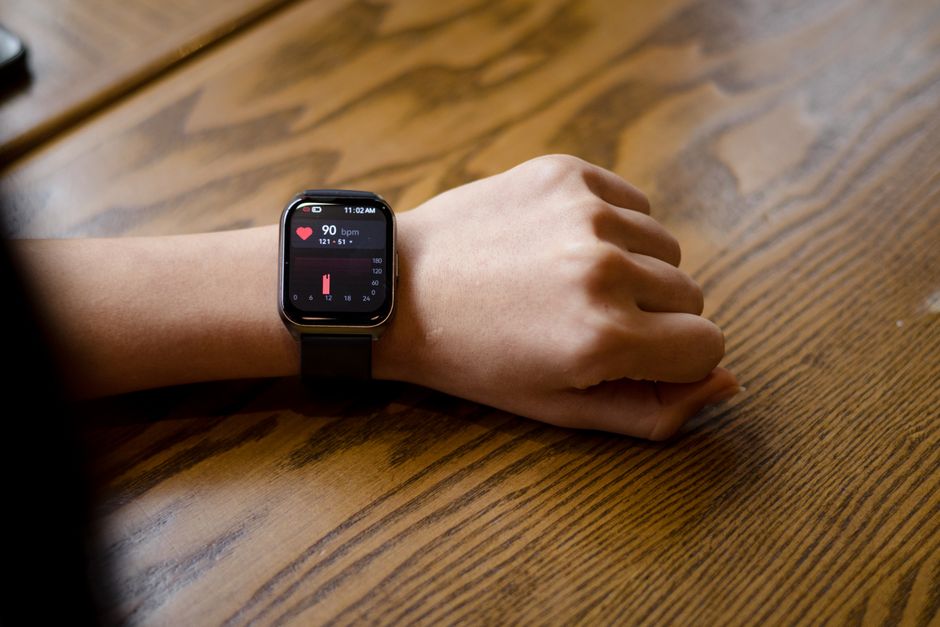
A normal resting pulse rate for adults is between 60 and 100 beats per minute. That is the standard range that doctors and the American Heart Association use. If your heart beats fewer than 60 times per minute while you are sitting still, that is called bradycardia. If it beats more than 100 times per minute at rest, that is called tachycardia. Both can be normal for some people or a sign of an issue for others.
What Is a Normal Pulse Rate by Age?
Age is the biggest factor in what your pulse should be. For newborns, a normal heart rate can be 100 to 160 beats per minute. As children grow, their resting heart rate gradually slows down. By the time you reach adulthood, the standard 60 to 100 range applies.
For older adults, the range stays roughly the same. However, some research suggests that a resting rate closer to 60 or 70 is common for healthy older adults. Athletes and people who exercise regularly often have resting rates in the 40s or 50s. That is not a problem. It usually means their heart pumps blood more efficiently.
Here is a quick breakdown of typical resting heart rates by age group:
- Newborns (0-1 month): 70 to 190 bpm
- Infants (1-11 months): 80 to 160 bpm
- Children (1-10 years): 70 to 130 bpm
- Kids (10-18 years): 60 to 100 bpm
- Adults (18+): 60 to 100 bpm
- Well-trained athletes: 40 to 60 bpm
These numbers come from the National Institutes of Health. They are a general guide, not a strict rule. Your personal normal may sit slightly outside these ranges and still be healthy.
How Do You Measure Your Pulse Rate Correctly?
Taking your pulse is simple, but most people do it wrong. The most accurate way is to use the radial artery on your wrist. Place your index and middle fingers on the inside of your opposite wrist, just below the base of your thumb. Press gently until you feel a pulse.
Count the beats for 30 seconds and multiply by two. That gives you your beats per minute. Do not use your thumb to check your pulse. Your thumb has its own pulse, and it will confuse your count.
For a more precise measurement, count for a full 60 seconds. This is especially useful if your rhythm feels irregular. The best time to check your resting heart rate is first thing in the morning, before you get out of bed. After coffee, exercise, or a stressful meeting, your rate will be higher. That is normal and expected.
Wearable devices like smartwatches and fitness trackers can give you a rough estimate. However, research published in the Journal of the American Medical Association found that consumer wearables are not as accurate as medical-grade devices. They are fine for trends but not for a single precise number.
What Can Cause Your Pulse Rate to Be Too High or Too Low?
A high resting pulse, over 100 bpm, is called tachycardia. Common causes include dehydration, fever, anxiety, caffeine, and lack of sleep. Some medications like decongestants and asthma inhalers can also raise your heart rate. Hyperthyroidism, where your thyroid gland is overactive, is another cause.
A low resting pulse, under 60 bpm, is called bradycardia. For athletes, this is often a sign of fitness. For others, it can be a problem. Causes include hypothyroidism, certain heart medications like beta-blockers, and problems with the heart’s electrical system. Sleep apnea can also cause a low heart rate during sleep.
One non-obvious fact: your pulse rate changes throughout the day. It is lowest during deep sleep. It peaks during exercise or stress. A single high reading does not mean you have a condition. What matters is your consistent resting rate taken under similar conditions each time.




What Does Research Show About Ideal Pulse Rate and Longevity?
Several large studies have looked at the link between resting heart rate and lifespan. A study published in the journal Heart tracked over 50,000 people for more than 20 years. It found that a resting heart rate above 80 bpm was linked to a higher risk of death from all causes. People with rates below 60 bpm had the lowest risk.
Another study from the Copenhagen Male Study followed nearly 3,000 men for 16 years. It found that each increase of 10 beats per minute in resting heart rate raised the risk of death by 16 percent. The researchers controlled for factors like fitness, smoking, and cholesterol. The link between heart rate and longevity was independent of those other risks.
This does not mean you should panic if your resting rate is 85. It means that a consistently high resting pulse is worth discussing with a doctor. It may be a signal that your cardiovascular system is working harder than it should. The evidence does not support the idea that you can artificially lower your heart rate with medication to live longer. The benefits come from improving your overall fitness and health, which then lowers your heart rate naturally.
How Does Fitness Level Change Your Pulse Rate?
Regular exercise is the most effective way to lower your resting heart rate. Your heart is a muscle. When you exercise consistently, it gets stronger. A stronger heart pumps more blood with each beat. That means it does not need to beat as often to move the same amount of blood.
Research from the American College of Sports Medicine shows that moderate to vigorous aerobic exercise for 150 minutes per week can lower resting heart rate by 5 to 10 bpm over several months. That is roughly 30 minutes of brisk walking five days a week. The effect is dose-dependent. More exercise leads to a greater drop, up to a point.
Strength training also helps, though less directly than cardio. Building muscle mass improves your body’s ability to use oxygen efficiently. That reduces the workload on your heart during daily activities. Yoga and deep breathing exercises can lower heart rate in the moment by activating the parasympathetic nervous system, which is your rest-and-digest mode.
One thing to watch: overtraining can raise your resting heart rate. If you exercise very hard without enough recovery, your resting pulse may go up by 5 to 10 bpm. That is a sign your body is stressed and needs rest. Many endurance athletes track their morning resting heart rate as a way to spot early signs of overtraining.
When Should You See a Doctor About Your Pulse Rate?
You should talk to a doctor if your resting pulse is consistently above 100 bpm or below 60 bpm and you are not an athlete. You should also get checked if your pulse feels irregular. A skipped beat here and there is common and usually harmless. But a constant irregular rhythm could be atrial fibrillation, which increases stroke risk.
Other warning signs include feeling dizzy, fainting, shortness of breath, or chest pain along with a high or low heart rate. These symptoms suggest that your heart is not delivering enough blood to your brain and body. Do not ignore them.
The CDC reports that about 2 percent of people under 65 have atrial fibrillation. That number rises to 9 percent for people over 65. Many of them do not know they have it. A simple pulse check at home can catch it. If you notice your pulse is irregular, your doctor can run an electrocardiogram to confirm.
One more thing: medications can change your pulse. Beta-blockers lower it. Some thyroid medications raise it. If you start a new medication and notice your pulse rate change by more than 10 bpm, mention it to your doctor. Do not stop the medication on your own.
Common Misconceptions About Pulse Rate
A big myth is that a pulse rate of exactly 72 is perfect. That number comes from old medical textbooks and has no special meaning. Your normal can be anywhere in the 60 to 100 range and be just fine. Another myth is that a low pulse is always dangerous. For athletes, a low pulse is a sign of fitness. For someone who is sedentary and has symptoms like fatigue, a low pulse may be a problem.
Some people believe that checking your pulse on a smartwatch is always accurate. It is not. A 2020 study in the journal Digital Health found that wrist-based optical sensors can be off by 10 to 20 bpm during exercise. They are better at rest but still not as reliable as a manual check. If your smartwatch says your pulse is high, take it manually to confirm before worrying.
Another misconception is that drinking coffee always raises your pulse. For regular coffee drinkers, the effect is small or nonexistent. The body adapts. For someone who rarely drinks caffeine, it can raise the pulse by 5 to 10 bpm. If you drink coffee daily, your resting pulse is likely not affected much.
What Is Your Pulse Rate Supposed To Be During Exercise?
During exercise, your target heart rate depends on your age and fitness goals. A simple formula is 220 minus your age. That gives you your estimated maximum heart rate. For moderate exercise, aim for 50 to 70 percent of that number. For vigorous exercise, aim for 70 to 85 percent.
Here is an example for a 40-year-old person:
| Exercise Intensity | Heart Rate Zone (bpm) |
|---|---|
| Moderate (50-70%) | 90 to 126 bpm |
| Vigorous (70-85%) | 126 to 153 bpm |
| Maximum (100%) | 180 bpm |
These numbers are estimates. Some people have naturally higher or lower maximum heart rates. The best way to know your actual zones is a stress test done by a doctor. For most people, the talk test works well. If you can talk but not sing during exercise, you are in the moderate zone. If you cannot say more than a few words, you are in the vigorous zone.
Your heart rate should come back down quickly after you stop exercising. A drop of 20 bpm in the first minute after exercise is a sign of good cardiovascular fitness. If your pulse stays high for several minutes after you stop, it may mean your fitness level needs improvement.
Frequently Asked Questions
What is your pulse rate supposed to be for a healthy adult?
For a healthy adult, the normal resting pulse rate is 60 to 100 beats per minute. Athletes may have rates in the 40s or 50s and still be healthy.
Can anxiety raise your pulse rate above normal?
Yes, anxiety can temporarily raise your pulse rate by 10 to 30 beats per minute. This is a normal stress response and usually goes away once the anxiety passes.
Is a pulse rate of 55 dangerous?
A pulse rate of 55 is not dangerous for athletes or active people. For someone who is sedentary and feels dizzy or tired, it may be a sign of an issue and should be checked.
How accurate are smartwatches for measuring pulse rate?
Smartwatches are reasonably accurate at rest but can be off by 10 to 20 beats per minute during exercise. They are best for tracking trends, not for a single precise measurement.
