
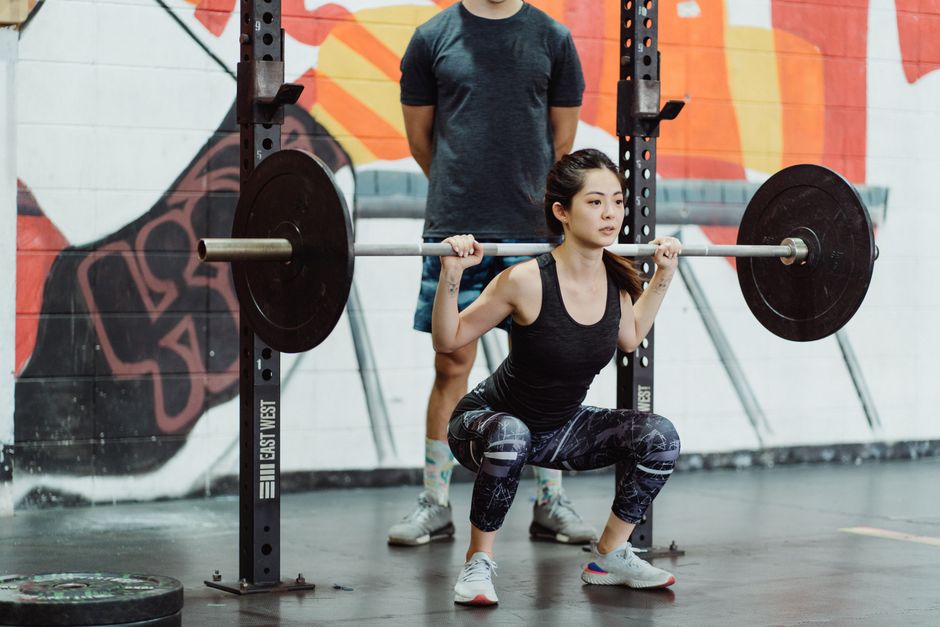
Squats are one of the most studied movements in exercise science, and for good reason. They train the largest muscles in your body, build strength you use every day, and can be done almost anywhere with no equipment. What squats can do goes well beyond leg day.
The move itself is simple. You bend your hips and knees, lower your body, then stand back up. That pattern shows up every time you sit in a chair, get out of a car, or pick something up off the floor. Training it makes those everyday actions easier and safer.
Here is what the research actually supports, what it does not, and how to do squats without wrecking your knees.
What Muscles Do Squats Work?
Squats are a compound movement, meaning they work several muscle groups at once. The primary movers are your quadriceps, glutes, and hamstrings. Your calves, core, and lower back muscles work too, mainly to keep your torso stable as you move.
Electromyography studies, which measure electrical activity in muscles during movement, consistently show high activation in the quads and glutes during a standard squat. Activation in the hamstrings is lower because their main job is bending the knee, not straightening it. That is a detail worth knowing if you are choosing exercises for balanced leg development.
Depth changes which muscles work hardest. A partial squat loads the quads heavily. Going to parallel or below shifts more demand to the glutes and adductors. Both have value. Neither is wrong.
One thing squats do not do well is isolate a single muscle. If your goal is targeting one specific area, other exercises may serve you better. Squats are a team effort.
What Are the Real Benefits of Doing Squats Regularly?
Strength gains come first. Research consistently shows that progressive resistance training increases muscle strength and size, and squats are an efficient way to apply that stimulus to your lower body. You get more total muscle worked per rep than with most single-joint exercises.
Functional capacity follows. Studies on older adults find that lower-body strength training improves measures like walking speed, stair climbing, and time to rise from a chair. These are not abstract numbers. They map directly onto independence and fall risk.
Bone density is another area with real evidence behind it. Weight-bearing resistance exercise is widely recommended to help maintain bone mineral density, particularly as people age. Squats load the hips and spine, two common fracture sites.
Metabolic effects are more modest than fitness marketing suggests. Squats burn calories and build muscle, and more muscle can raise resting energy expenditure slightly. But no single exercise meaningfully changes your metabolism on its own. The total picture of how you move and eat matters far more.
What about the claim that squats boost testosterone or growth hormone? Some studies do show short-term hormonal spikes after heavy resistance training. Whether those transient changes produce lasting effects on muscle growth or health is not established. The strength and muscle benefits are the reliable part.
Can Squats Help With Weight Loss?
Squats contribute to weight loss the same way any resistance exercise does. They build and maintain muscle, which supports a higher resting metabolic rate, and they burn calories during the session. But the calorie burn from a set of squats is small compared to what most people imagine.
The bigger picture matters more. Muscle tissue burns more energy at rest than fat tissue, so preserving muscle while losing weight helps keep your metabolism from dropping as much. Squats are a practical way to send that signal to your lower body.
No exercise routine outruns a poor diet. If weight loss is the goal, squats work best as part of a plan that also addresses what and how much you eat. Exercise alone rarely produces large weight loss, and research on this point is consistent.


How Do Squats Affect Your Knees and Back?
Squats are not inherently bad for your knees. That belief persists, but the evidence does not support it for healthy people using reasonable form and load. In fact, some research indicates that regular squat training can improve knee stability by strengthening the muscles and connective tissues around the joint.
Form and load matter. Letting your knees collapse inward, rounding your lower back under heavy weight, or adding load faster than your tissues adapt are the common culprits behind squat-related pain. The movement itself is rarely the problem.
If you have existing knee or back issues, the picture changes. Some people with patellofemoral pain or disc problems tolerate squats well with modifications. Others do not. This is a case where a physical therapist or physician who knows your history should guide the decision, not a general article.
Depth is individual. Not everyone needs to squat below parallel, and not everyone should. Working within a range you can control without pain is a reasonable starting point.
What Is Proper Squat Form?
Start with your feet about shoulder-width apart, toes pointed slightly out. Keep your weight spread across your whole foot, not just your toes or heels. Brace your core as if you are about to be poked in the stomach.
Push your hips back and bend your knees at the same time, as if sitting into a chair behind you. Keep your chest up and your spine neutral. Lower as far as you can while keeping your heels down and your back from rounding.
Stand by pushing through your feet and driving your hips forward. Squeeze your glutes at the top without overextending your lower back.
- Keep your knees tracking over your toes, not caving inward
- Let your torso lean forward slightly if that feels natural, but avoid rounding your lower back
- Breathe in on the way down, out on the way up
- Start with bodyweight or light load and add resistance gradually
If you can only manage a partial range at first, that is fine. Range of motion usually improves as strength and mobility build.
How Often Should You Do Squats?
General resistance training guidelines suggest working each major muscle group two to three times per week, with at least one day of rest between sessions for the same muscles. That applies to squats.
Beginners often do well with two sessions per week. More experienced lifters may train legs two to three times weekly, adjusting volume and intensity. Rest days are not optional. Muscle adapts during recovery, not during the workout itself.
If you are new to squats, start with bodyweight sets and focus on control. Add resistance only when the movement feels stable and you can complete your sets without your form breaking down. Jumping load too fast is the most common way people get hurt.
Are There Risks or People Who Should Avoid Squats?
For most healthy adults, squats are safe when performed with reasonable form and progression. The main risks come from doing too much too soon, using poor technique, or ignoring pain signals.
Some people should get medical clearance first. That includes anyone with a recent knee, hip, or spine injury, people with certain heart conditions, and those recovering from surgery. Pregnancy is another situation where guidance from a clinician familiar with your case matters, since recommendations vary by trimester and individual health.
If you feel sharp pain during a squat, stop. Discomfort from effort is different from pain that feels wrong. Learning to tell the difference is a skill worth developing.
Squats are not for everyone, and that is fine. Alternatives like leg press, step-ups, or sit-to-stand exercises can train similar patterns with different joint demands.
Frequently Asked Questions
How many squats should I do a day?
There is no single recommended daily number. General resistance training guidance suggests training each muscle group two to three times per week rather than every day, so daily squatting is not required for progress.
Do squats make your thighs bigger?
Squats can increase muscle size in the quads and glutes when combined with enough training volume and calories. Whether your thighs get visibly larger depends on genetics, diet, and how much you train.
Can you do squats every day?
You can, but it is not necessary and may limit recovery. Muscles adapt during rest, so most people do better with at least one rest day between squat sessions.
Are squats bad for your knees?
For healthy people using reasonable form and load, research does not support the idea that squats damage knees. If you have an existing knee condition, check with a clinician before starting.
