
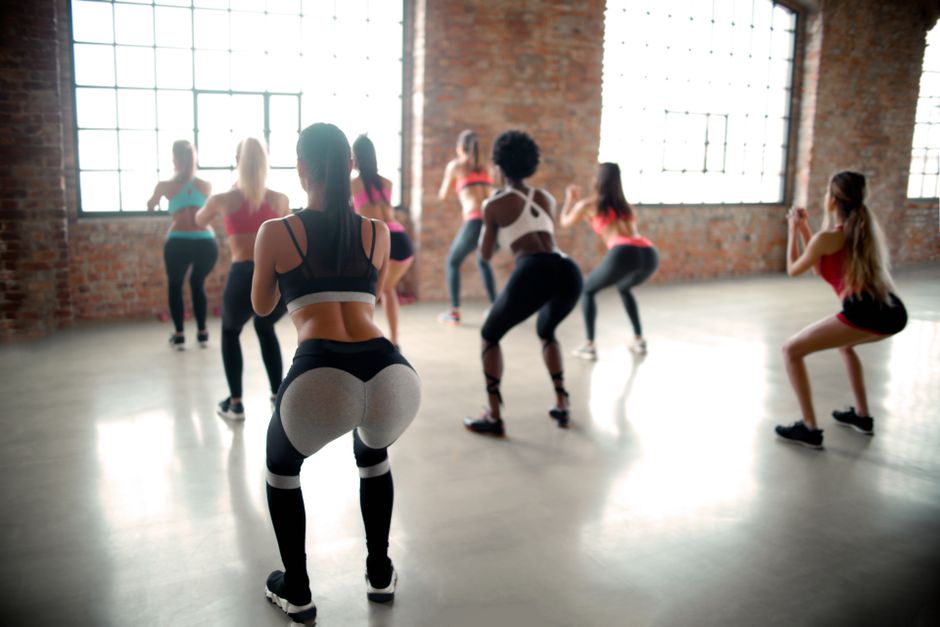
Squats are one of the most effective exercises for building and strengthening your glutes, but they are not the most targeted movement for that muscle group. The glutes—specifically the gluteus maximus—are heavily involved in the squat pattern, but the quadriceps often take on the primary load. If your goal is maximal glute activation, you need to know exactly how to adjust your stance, depth, and technique to shift the work from your thighs to your backside. This guide explains what the research shows about squat mechanics and how to make the exercise work better for your glutes.
Do Squats Actually Activate the Glutes?
Yes. Squats require significant force from the gluteus maximus, particularly during the upward phase when you are extending your hips. The gluteus maximus is the largest muscle in the body, and its primary job is hip extension—straightening your hips from a bent position. Every squat rep includes that movement.
But activation is not the same as emphasis. Electromyography (EMG) studies, which measure muscle electrical activity, consistently show that squats activate the quadriceps and glutes together. The degree of glute activation depends heavily on your specific technique. A standard high-bar back squat tends to be more quad-dominant. A low-bar back squat, a front squat, or a wider stance can shift more of the load toward the posterior chain, which includes the glutes and hamstrings.
The key takeaway is that squats absolutely work your glutes. They just may not work them as intensely as other exercises like hip thrusts or Romanian deadlifts, which isolate hip extension more directly.
What Squat Variations Target the Glutes Best?
If your primary goal is glute development, not every squat is created equal. The evidence points to a few specific adjustments that increase glute involvement.
Stance width matters. A wider stance—roughly shoulder-width or slightly beyond—places the hips in a position that allows for greater hip flexion and less knee travel. This shifts more of the workload to the glutes and adductors (inner thighs). A narrow stance, by contrast, keeps the knees forward and emphasizes the quads.
Depth is critical. Going deeper—below parallel, where your hip crease drops below your knee—requires more hip extension to stand back up. This increased range of motion activates the glutes more than a shallow quarter squat. One important caveat: if you cannot maintain a neutral spine at full depth, you may be better off squatting to a depth you can control safely.
Low-bar positioning. Placing the barbell lower on your traps, near your rear deltoids, forces your torso to lean forward slightly. This changes the mechanics so your hips and glutes take on more of the load. Many lifters report that low-bar squats feel significantly more glute-dominant than high-bar squats.
Front squats. Despite the upright torso, front squats generally require less glute activation than back squats because the movement pattern is more knee-dominant. They are excellent for quad development but not the best choice for glute emphasis.
How Does Squat Depth Affect Glute Growth?
Depth directly influences how much work your glutes perform during a squat. The gluteus maximus is stretched most when your hips are in deep flexion—that is, when your thighs are close to parallel with the floor or lower. A deeper squat means a longer stretch on the glutes and a longer range of motion to push through.
Research has shown that deep squats (below parallel) produce greater glute activation than partial squats. This is not a marginal difference. The gluteus maximus shows significantly higher EMG activity at full depth compared to quarter squats. If you have been doing shallow squats, adding depth is one of the simplest ways to increase glute involvement without changing any other variable.
That said, depth requires mobility. If your ankles, hips, or thoracic spine are tight, you may not be able to reach full depth with a neutral spine. Working on ankle dorsiflexion and hip mobility can help. Squatting to a box or using a heel elevation are common strategies to help you achieve depth safely while you build the necessary flexibility.




Why Hip Thrusts May Activate Glutes More Than Squats
Studies comparing squat and hip thrust patterns have found a clear difference in glute activation. Hip thrusts—where your upper back rests on a bench and you drive your hips upward—consistently produce higher gluteus maximus activation than squats. This makes sense anatomically. Hip thrusts isolate hip extension almost completely, with minimal involvement from the quadriceps.
That does not mean you should abandon squats. Squats build overall lower-body strength and muscle in a way that hip thrusts cannot match. They train your quads, core, and spinal erectors in addition to your glutes. For most people, the best approach is to include both. Use squats as your primary lower-body strength movement and add hip thrusts or glute bridges as accessory work specifically to drive glute growth.
If you have a history of knee pain, hip thrusts may be a more comfortable way to train the glutes because they place minimal stress on the knees. They also allow you to load the glutes heavily without requiring the balance and coordination of a barbell squat.
How Many Squats Should You Do for Glute Growth?
Muscle growth requires progressive overload—gradually increasing the weight, reps, or sets over time. For most lifters, performing 3 to 5 sets of 6 to 12 repetitions per squat session is an effective range for hypertrophy. This aligns with general resistance training guidelines for muscle growth.
Training frequency also matters. Research suggests that training a muscle group twice per week produces similar or better growth than once per week. If you squat on two separate days, you can split your volume—for example, a heavier day with lower reps and a lighter day with higher reps. This approach allows for adequate recovery while providing enough stimulus for the glutes.
One common mistake is doing high-rep squats with light weight and expecting significant glute growth. While this can improve muscular endurance, it does not provide the mechanical tension needed to build substantial muscle. You need to challenge the muscle with progressively heavier loads or high-effort sets close to failure.
Common Squat Mistakes That Reduce Glute Activation
Several technique errors can shift the work away from your glutes and onto your quads or lower back.
- Knees caving inward. This is often a sign of weak glute medius muscles. If your knees collapse during the squat, your glutes cannot generate force efficiently. Focus on pushing your knees outward throughout the movement.
- Rising onto your toes. If your heels lift off the floor, you lose the stable base needed for powerful hip extension. Keep your weight distributed across your entire foot, with emphasis on the heel and midfoot.
- Cutting depth short. Partial squats avoid the deepest portion of the movement where glute activation is highest. If mobility is the issue, address it directly rather than settling for shallow reps.
- Leaning too far forward. An excessive forward lean turns the squat into a good-morning-style movement, placing stress on the lower back. You want a slight forward lean, but your torso should remain relatively upright.
- Not bracing your core. A loose core reduces your ability to transfer force through your hips. Take a deep breath, brace your abdominal muscles, and hold that tension through the entire rep.
How to Structure a Glute-Focused Squat Workout
If squats are your main exercise, structure your session to maximize glute involvement. Start with a squat variation that allows you to move the most weight with good form. For most people, this will be a low-bar back squat or a goblet squat if you are newer to lifting.
After your main squat, add accessory movements that target the glutes from different angles. Hip thrusts, Romanian deadlifts, walking lunges, and cable kickbacks all complement the squat pattern well. The goal is to accumulate enough total glute volume across the session to stimulate growth.
A reasonable template might look like this: 4 sets of 6 to 8 reps of back squats, followed by 3 sets of 10 to 12 reps of hip thrusts, and finished with 3 sets of 12 to 15 reps of Bulgarian split squats or lunges. This combination provides heavy loading, direct glute isolation, and unilateral work to address any imbalances.
Remember that recovery is part of the process. The glutes are large muscles that need time to repair. If you train them hard twice per week, you should see measurable progress in strength and size within 8 to 12 weeks, provided your nutrition supports muscle growth.
Frequently Asked Questions
Are squats enough to grow glutes?
Squats alone can grow your glutes, but they are not the most efficient exercise for that purpose. Adding hip thrusts or other glute-focused movements will produce faster and more noticeable results.
How long does it take to see glute growth from squats?
With consistent training and adequate protein intake, most people notice visible changes in 8 to 12 weeks. Strength gains typically appear earlier, within the first 4 to 6 weeks.
Do squats make your glutes bigger or just toned?
Squats build muscle size if you progressively increase the weight and challenge the muscle. The “toned” look is simply muscle growth combined with low body fat, so squats can absolutely contribute to that appearance.
Can you build glutes with bodyweight squats only?
Bodyweight squats can build glutes in beginners, but they quickly become too easy for continued muscle growth. You will eventually need to add external resistance, such as dumbbells or a barbell, to keep making progress.
