
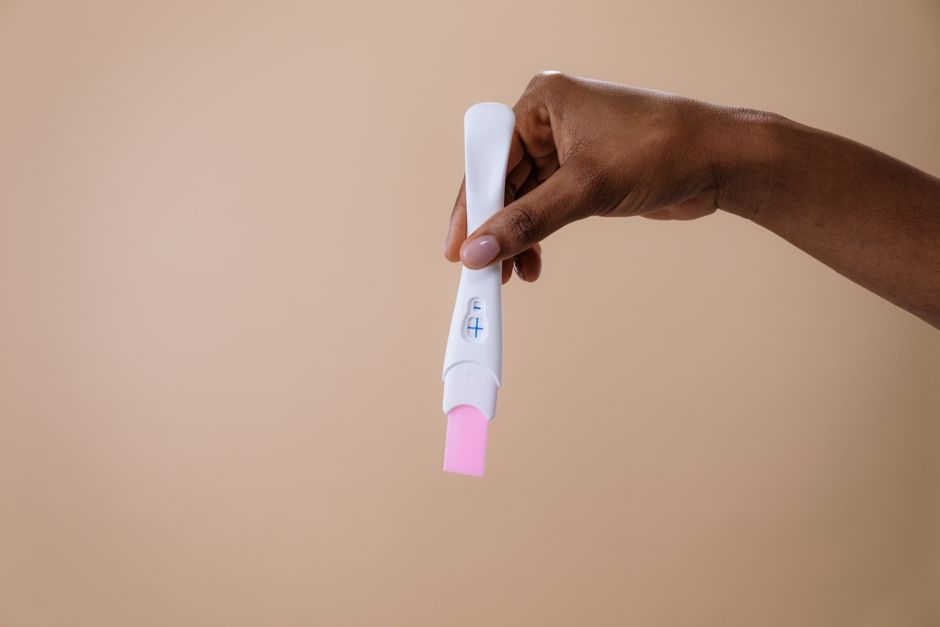
If you are asking which pregnancy test is more accurate, the answer depends on when you test. Both urine and blood tests detect the same hormone, but they do not become positive at the same time. A blood test ordered by a doctor is the most sensitive option and can detect pregnancy earlier, but a urine test is highly accurate when used correctly after a missed period.
How Do Pregnancy Tests Work?
All pregnancy tests measure a hormone called human chorionic gonadotropin, or hCG. The body starts making this hormone after a fertilized egg attaches to the lining of the uterus. That attachment usually happens about 6 to 10 days after ovulation.
HCG levels rise quickly in early pregnancy. They roughly double every 48 to 72 hours during the first several weeks. Urine tests and blood tests both look for this hormone, but they detect it at different levels.
Urine tests used at home are designed to detect hCG at a certain threshold, usually 20 to 25 mIU/mL. Blood tests can detect much lower levels, often around 5 mIU/mL. This difference in sensitivity is why blood tests can return a positive result a few days earlier than most urine tests.
Which Is More Accurate: Urine or Blood?
A blood test is more accurate in one specific sense: it can detect a pregnancy earlier. But for the average person testing after a missed period, a urine test is just as reliable. Once hCG levels are high enough, both tests agree.
Blood tests also provide information that urine tests cannot. A quantitative blood test measures the exact amount of hCG in your blood. Doctors sometimes use this number to track how a pregnancy is progressing. A single hCG level does not tell the whole story, but a series of levels over a few days can help identify some early pregnancy problems.
There is one situation where a urine test can be misleading. If you test too early, before hCG has built up in your urine, you can get a false negative. Testing again a few days later usually solves this. False positives are rare with modern tests but can occur with certain medical conditions or medications that contain hCG.
When Should You Take a Home Pregnancy Test?
Timing matters more than brand when it comes to home test accuracy. Most manufacturers recommend testing on the first day of a missed period. By that point, hCG levels are usually high enough to detect.
Testing earlier than that increases the chance of a false negative. If you test 4 or 5 days before your expected period and get a negative result, that result is not trustworthy. Your hCG levels may simply be too low to register yet.
For the most reliable result, wait until at least the first day of your missed period. If you have irregular cycles, wait at least 21 days after unprotected sex before testing. This gives your body enough time to produce detectable hCG if you are pregnant.
Time of day also matters. First morning urine is the most concentrated, meaning it contains the highest level of hCG. Testing with first morning urine reduces the chance of a false negative, especially in early pregnancy. If you test later in the day, try to hold your urine for a few hours beforehand.


Are Digital Tests More Accurate Than Line Tests?
Digital tests and traditional line tests detect pregnancy with the same underlying technology. Both use antibodies that bind to hCG in your urine. The difference is only in how they display the result.
A line test shows one line for negative and two lines for positive. A digital test displays the words “pregnant” or “not pregnant.” Digital tests remove the guesswork of reading faint lines, but they do not detect pregnancy any earlier or more reliably.
One practical difference exists. Digital tests are generally more expensive. Some people find them worth the cost for the clarity of a written result. If you prefer to save money, a standard line test is equally accurate when used correctly.
One caution about line tests: read the result within the time window stated in the instructions. A faint line that appears after the recommended reading time may be an evaporation line, not a positive result. This is not a false positive in the medical sense, but it can cause confusion.
Can Medications or Medical Conditions Affect Test Results?
Most common medications do not interfere with pregnancy tests. Pain relievers, antibiotics, and birth control pills do not affect hCG levels or test results. Fertility medications that contain hCG, however, can cause a false positive. These are usually given as injections to trigger ovulation.
Certain rare medical conditions can also produce hCG. Some ovarian tumors and other cancers can raise hCG levels in people who are not pregnant. This is uncommon, but it is one reason a positive test should always be confirmed by a doctor.
A chemical pregnancy, where a fertilized egg implants but stops developing early, can produce a positive test followed by a negative one. This is not a false positive. The test detected real hCG, but the pregnancy did not continue. Many people never know they had a chemical pregnancy because the positive test may come and go around the time of an expected period.
What Does a Doctor’s Blood Test Add?
Doctors order blood tests for specific reasons, not just to confirm a pregnancy. A urine test done in the office is often enough for confirmation. Blood tests become useful when there is concern about the pregnancy or when an earlier answer is needed.
A quantitative hCG blood test can help in several situations:
- Confirming a pregnancy before a missed period
- Monitoring early pregnancy when there is a history of miscarriage
- Investigating symptoms like bleeding or severe pain
- Checking whether hCG levels are rising appropriately
No single hCG level can diagnose a normal or abnormal pregnancy. Doctors look at trends over time. In a healthy early pregnancy, hCG levels typically double every 48 to 72 hours. Slower rises can indicate a problem, but they can also occur in normal pregnancies.
Blood tests are not recommended for routine confirmation in most cases. They cost more, require a doctor’s visit, and take longer to produce results. For most people, a home urine test followed by a doctor’s confirmation is the standard path.
How Accurate Are Home Tests After a Missed Period?
Home pregnancy tests are very accurate when used after a missed period. Studies have found that most modern tests detect hCG in more than 99% of pregnant women when used on the day of the expected period. The key phrase is “when used correctly.”
Using the test correctly means following the instructions exactly. Check the expiration date. Use first morning urine. Read the result within the stated time window. Store the test properly before use. Each of these factors can affect the result.
If you get a negative result but your period does not come, wait a few days and test again. A negative result from a test taken too early is not a reliable answer. Repeating the test a few days later gives your body time to produce more hCG if you are pregnant.
Can You Trust a Positive Result?
A positive result on a home pregnancy test is rarely wrong. If the test shows positive, you should assume you are pregnant until a doctor says otherwise. False positives are extremely uncommon with modern tests when used correctly.
The most common cause of a false positive is testing too soon after a miscarriage or childbirth. hCG can remain in your body for several weeks after a pregnancy ends. Testing during this time can produce a positive result even though you are not currently pregnant.
If you get a positive result, contact a healthcare provider. They can confirm the pregnancy and discuss next steps. Early prenatal care is associated with better outcomes for both the pregnant person and the baby.
What Is the Most Accurate Way to Test?
The most accurate approach combines correct timing with correct technique. Wait until the first day of your missed period. Use first morning urine. Follow the test instructions exactly. If the result is negative but your period does not arrive, test again in a few days.
If you need an answer before your missed period, a blood test at a doctor’s office is the most sensitive option. But even a blood test can be negative if taken too early. No test can detect a pregnancy before implantation occurs.
For most people, the practical answer is simple. A home urine test taken after a missed period is accurate enough to trust. The brand matters less than how and when you use it. If you have questions about your results, a healthcare provider can help.
Frequently Asked Questions
Can a home pregnancy test be wrong?
Yes, but false results are uncommon when the test is used correctly after a missed period. False negatives are more likely than false positives and usually happen because the test was taken too early.
How many days after a missed period should I take a pregnancy test?
Testing on the first day of a missed period is the standard recommendation. Testing earlier increases the chance of a false negative because hCG levels may still be too low to detect.
Is a blood test more accurate than a urine test?
A blood test can detect pregnancy earlier because it measures lower levels of hCG. Once a missed period has passed, a urine test is just as accurate for confirming pregnancy.
Can birth control pills affect pregnancy test results?
No, birth control pills do not affect hCG levels or pregnancy test results. Only medications that contain hCG, such as some fertility treatments, can cause a false positive.
