
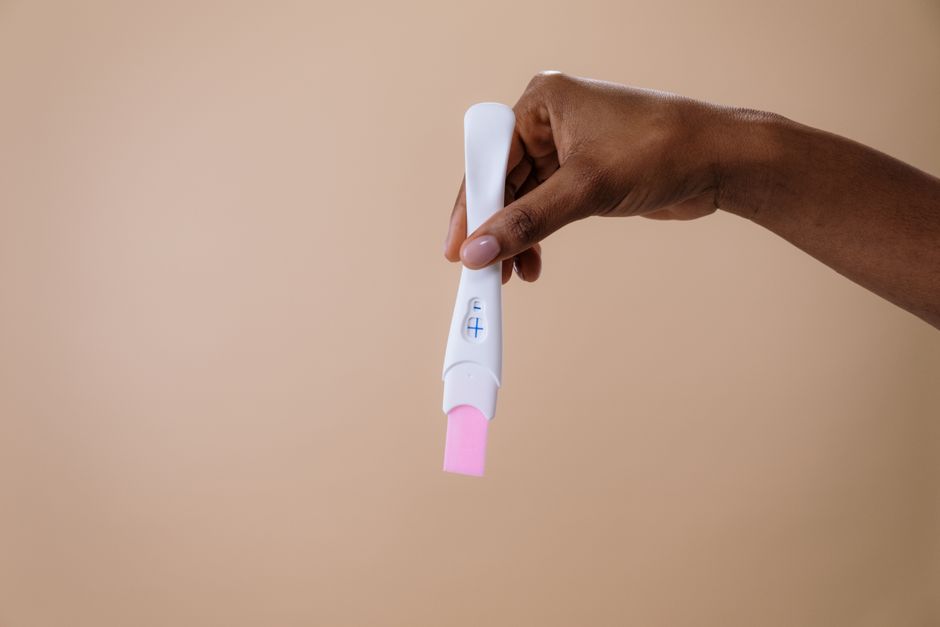
A pregnancy test turns positive when your body makes enough of a hormone called hCG (human chorionic gonadotropin). That hormone only appears after a fertilized egg implants in the uterus. For most people, that happens 6 to 10 days after ovulation. A home urine test can usually detect it by the first day of a missed period, but some sensitive tests can show a positive result a few days earlier. If you test too early, you risk a false negative, so timing matters more than most people realize.
How Soon After Conception Can a Test Turn Positive?
Conception happens when sperm meets the egg, but that is not when the pregnancy test turns positive. The test only detects hCG, and your body does not start making hCG until implantation occurs. Implantation typically happens 6 to 10 days after ovulation, though it can occasionally happen later.
Once implantation occurs, hCG levels double roughly every 48 to 72 hours in early pregnancy. That means a test that is negative one day can become positive two days later. Most home tests claim to detect hCG at 25 mIU/mL, and many reach that threshold around 12 to 14 days after ovulation.
For the most reliable result, wait until the first day of your missed period. At that point, about 99% of pregnancies will produce a positive urine test. Testing earlier increases the chance of a false negative because your hCG may simply not be high enough yet.
What Is a False Negative and Why Does It Happen?
A false negative means the test says you are not pregnant when you actually are. This is far more common than a false positive. The main reason is testing too early.
If you test before implantation has happened, there is no hCG in your urine yet. Even after implantation, hCG starts at very low levels. A test may not pick it up for another few days. Other factors can also cause false negatives:
- Diluted urine from drinking too much fluid before testing
- Testing later in the day instead of first thing in the morning
- A test that is expired or stored improperly
- Not following the test instructions exactly
If you get a negative result but your period does not arrive, wait two to three days and test again. That gives hCG time to rise to a detectable level.
How Sensitive Are Home Pregnancy Tests?
Home pregnancy tests are not all the same. Sensitivity refers to the lowest amount of hCG a test can detect. Tests labeled as “early detection” typically detect hCG at 10 to 20 mIU/mL. Standard tests usually detect at 25 mIU/mL.
That difference matters if you test before your missed period. A more sensitive test can turn positive one to two days earlier. But even the most sensitive test cannot detect a pregnancy before implantation. No test on the market can tell you that you are pregnant on the day of conception.
Blood tests done in a doctor’s office are more sensitive than urine tests. They can detect hCG at levels as low as 5 mIU/mL. That means a blood test can turn positive a few days earlier than a urine test. But for most people, a home urine test is sufficient if you wait until your missed period.




When Will You Get a Positive Pregnancy Test if You Have Irregular Periods?
Irregular periods make this harder to predict. If you do not know when you ovulate, you cannot know when implantation occurred or when your period is actually due. Testing based on a predicted period date may be inaccurate.
If your cycles vary in length, your best option is to track ovulation signs. Basal body temperature, cervical mucus changes, and ovulation predictor kits can help identify when you ovulate. Once you know your ovulation date, add 14 days. That is roughly when your period would be due, and that is the best time to test.
If you have no idea when you ovulated, wait at least 21 days after unprotected sex before testing. That gives enough time for implantation and for hCG to reach detectable levels. A negative test at that point is highly reliable.
Can a Positive Test Appear Before a Missed Period?
Yes, but only in some cases. If implantation happens early, around day 6 after ovulation, hCG can be detectable by day 10 to 12 after ovulation. That is usually three to five days before your expected period.
About half of all pregnancies will have a detectable hCG level by 12 days after ovulation. By 14 days after ovulation, which is typically the day of your missed period, nearly all pregnancies will test positive.
Testing early can also give you a faint line that is hard to read. A faint positive is still a positive. hCG does not need to be high for a test to detect it, just high enough to cross the test’s threshold. If you see any line at all, even a faint one, you should consider the test positive and repeat it in two days to confirm the line is getting stronger.
What Does a Chemical Pregnancy Mean for Test Timing?
A chemical pregnancy is a very early miscarriage that happens shortly after implantation. You may get a positive home test, but then your period arrives a few days later. This is more common than most people realize, and it often goes unnoticed if you were not testing.
If you get a positive test and then bleeding starts, contact your doctor. They can do a blood test to check hCG levels. A chemical pregnancy does not mean you cannot have a healthy pregnancy in the future. Most people go on to have successful pregnancies after one.
This is also why doctors recommend waiting until after your missed period to test. Early testing increases the chance you will detect a pregnancy that would have ended on its own, which can be emotionally difficult.
When Should You See a Doctor After a Positive Test?
Once you get a positive home test, you do not need to rush to a doctor. Most providers will see you around 8 weeks from your last menstrual period. That timing allows for an ultrasound to confirm the pregnancy and estimate a due date.
You should call your doctor sooner if you have any of these symptoms:
- Heavy bleeding, especially with cramping
- Severe pain on one side of your abdomen
- Dizziness or fainting
- A history of ectopic pregnancy, miscarriage, or fertility treatment
These symptoms can indicate an ectopic pregnancy or other complications that need immediate medical attention. Do not wait for your scheduled appointment if you experience any of them.
Does Testing at Night Change the Result?
First-morning urine is the most concentrated, so it contains the highest amount of hCG. That makes it the best time to test, especially if you are testing early.
If you are testing after your missed period, the time of day matters less. By then, hCG levels are usually high enough that a test will detect them regardless of when you urinate. If you are testing early and cannot use first-morning urine, try to hold your urine for at least four hours before testing and avoid drinking large amounts of fluid beforehand.
Some tests are designed to work at any time of day, but the instruction to use first-morning urine applies to nearly all of them. Follow the instructions on the package for the most accurate result.
Can Medications or Medical Conditions Affect the Result?
Most medications do not affect pregnancy test results. Fertility medications that contain hCG, such as those used in some fertility treatments, can cause a false positive. If you have taken an hCG injection, wait at least 10 to 14 days after the injection before testing.
Medical conditions that produce hCG, such as certain rare tumors, can also cause a false positive. This is extremely rare. A false positive from any cause is uncommon compared to false negatives.
If you get a positive test and then later get a negative one, or if you have symptoms of pregnancy but negative tests, see a doctor for a blood test. Blood tests are more accurate and can give you a definitive answer.
Frequently Asked Questions
How many days after ovulation can I get a positive pregnancy test?
Most people can get a positive test 12 to 14 days after ovulation. Some sensitive tests can detect hCG as early as 10 days after ovulation, but testing before 12 days increases the chance of a false negative.
Can a pregnancy test be positive before implantation?
No. A pregnancy test only detects hCG, which your body does not produce until after implantation. Testing before implantation will always be negative, regardless of how sensitive the test is.
Is a faint positive line a real positive?
Yes. Any visible line, even a faint one, means the test detected hCG. Repeat the test in two days to confirm the line is getting stronger, which indicates hCG levels are rising normally.
How long should I wait to test after unprotected sex?
Wait at least 14 days after unprotected sex for a reliable result. If you have irregular periods or do not know when you ovulated, wait 21 days. Testing earlier than 14 days may give a false negative.
