
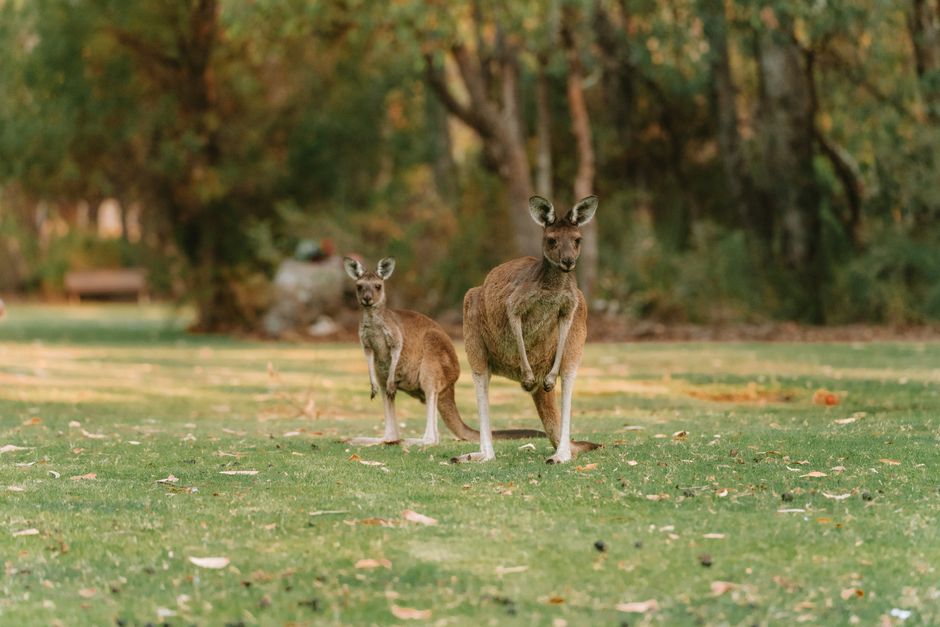
Yes, kangaroos can pause their pregnancy, and the scientific term for this ability is embryonic diapause. This is a biological process where a fertilized egg stops developing and remains in a dormant state inside the mother’s uterus. The pause can last for months, and the pregnancy resumes only when conditions are favorable for the joey to survive.
What Is Embryonic Diapause?
Embryonic diapause is a reproductive strategy used by over 100 species of mammals, including kangaroos, wallabies, and some bears and rodents. In kangaroos, the process begins right after mating. The egg is fertilized, travels to the uterus, and reaches a very early stage—typically a hollow ball of cells called a blastocyst. Then development stops.
The embryo does not die. It simply enters a state of suspended animation. It floats freely in the uterus without attaching to the uterine wall. No nutrients are exchanged. The embryo’s metabolic activity drops to a minimal level, allowing it to survive for extended periods without growing.
This is not the same as a human pregnancy. In humans, a fertilized egg either implants or is shed. Kangaroos have a built-in mechanism to delay implantation almost indefinitely. This allows them to control the timing of their offspring’s birth with remarkable precision.
How Long Can a Kangaroo Pause Its Pregnancy?
The duration of the pause varies by species and environmental conditions. In the eastern grey kangaroo, diapause can last for months. In some wallaby species, the embryo can remain dormant for up to a year or longer.
The pause ends when the mother’s body sends the signal to resume development. That signal is triggered primarily by hormones, which are influenced by the presence of a joey in the pouch. When the older joey leaves the pouch permanently, the dormant embryo receives the hormonal cue to implant and continue growing.
The timing is not random. The mother kangaroo effectively coordinates her reproductive cycle so that a new joey is born around the time the previous one becomes independent. This maximizes the chances of survival for both offspring.
Why Do Kangaroos Have This Ability?
Kangaroos live in environments where food and water availability can change dramatically. Drought, extreme heat, and seasonal changes all affect the survival of young animals. Diapause gives the mother flexibility in challenging conditions.
If food is scarce, the mother can delay the pregnancy without losing the embryo. She can also continue caring for a joey in her pouch while keeping a backup embryo ready. This is sometimes called the “belt and braces” approach to reproduction—having a spare embryo in reserve.
There is also a practical benefit related to the pouch. A kangaroo mother cannot raise two joeys of very different ages at the same time. The pouch has one teat that produces milk suited to a newborn, and another teat producing milk for an older joey. The mother can produce two different types of milk simultaneously. But she still needs to manage the timing carefully so that the younger joey does not compete with the older one for space and resources.
Diapause allows her to pause the development of the next offspring until the current joey is ready to leave the pouch. This ensures that each joey receives focused maternal care during its most vulnerable stage.





How Does the Pause End?
The resumption of pregnancy is controlled by hormones. In kangaroos, the suckling stimulus from a joey in the pouch suppresses the release of certain reproductive hormones. This suppression keeps the embryo dormant.
When the joey stops suckling—either because it leaves the pouch or because it suckles less frequently—the hormonal inhibition lifts. The embryo then implants in the uterine wall and resumes development. The new joey is typically born about 30 days later, depending on the species.
Interestingly, the mother can also terminate diapause if she loses her joey. If a joey dies or is removed from the pouch, the dormant embryo can resume development quickly. This allows the mother to replace a lost offspring without needing to mate again.
This is a highly efficient system. The mother does not waste energy on a pregnancy she cannot support. She also does not lose the genetic contribution from a previous mating if conditions change.
Do All Kangaroos Pause Their Pregnancies?
No. The ability is not universal across all kangaroo species. The red kangaroo and the eastern grey kangaroo are well-known for using embryonic diapause. The western grey kangaroo, however, does not appear to use this strategy in the same way.
There are also differences in how the pause is triggered. In some species, diapause is linked to the presence of a suckling joey, as described above. In others, it may be triggered by seasonal or environmental factors such as day length or rainfall.
It is also worth noting that not every pregnancy involves diapause. A female kangaroo that mates when she has no joey in her pouch may carry the pregnancy straight through without a pause. Diapause is an option, not an obligation. The mother’s body decides based on her current circumstances.
Is This the Same as Delayed Implantation in Other Animals?
The basic mechanism is similar to delayed implantation seen in other mammals, but there are important differences. In bears, for example, the fertilized egg pauses before implanting, and the timing is linked to the mother’s body condition and the season. In seals, delayed implantation helps synchronize births so that all pups are born at the same time each year.
In kangaroos, the pause is primarily linked to lactation and the presence of a joey in the pouch. This makes it a more flexible, on-demand system rather than a seasonal one. The mother can pause or resume the pregnancy based on immediate conditions rather than a fixed annual cycle.
This distinction matters because it shows that diapause is not a single phenomenon. It is a suite of similar strategies that evolved independently in different animal groups to solve different reproductive problems.
What Does This Mean for Science and Medicine?
Embryonic diapause has attracted significant scientific interest. Researchers study it to understand how embryos can survive in a dormant state for long periods. This has implications for fertility research, including efforts to improve embryo storage and transfer in humans and livestock.
Some research has focused on the molecular signals that control diapause. Scientists have identified certain genes and proteins that appear to regulate the dormant state. However, the full picture is not yet clear, and much of the research is still in early stages.
It is important to be clear: kangaroo diapause does not mean humans can pause their pregnancies. The mechanisms are species-specific and involve hormonal and physiological systems that humans do not possess. No clinical evidence suggests that a similar process can be induced in human pregnancy.
Understanding diapause in kangaroos helps scientists learn more about reproductive biology in general. But translating that knowledge into medical applications for humans remains speculative at this point.
Common Myths About Kangaroo Pregnancy
One common myth is that a kangaroo can be permanently pregnant. That is not accurate. The female has a cycle, and diapause is a temporary state, not a permanent one. The embryo either resumes development or, if conditions never improve, it is eventually reabsorbed or lost.
Another myth is that the embryo “waits” consciously for the right moment. The process is entirely hormonal and involuntary. The mother does not make a decision. Her body responds to physiological signals from the joey, the pouch, and her own nutritional state.
Some people also believe that kangaroos can pause their pregnancy at any stage. In reality, diapause only occurs at the very early blastocyst stage, before implantation. Once the embryo implants and development resumes, the pregnancy cannot be paused again.
Frequently Asked Questions
Can kangaroos delay giving birth?
Yes, kangaroos can delay the development of an embryo before it implants in the uterus. This delay can last for months and is controlled by hormones linked to the presence of a joey in the pouch.
How long can a kangaroo embryo stay dormant?
In some wallaby species, the embryo can remain dormant for up to a year or longer. In eastern grey kangaroos, the pause typically lasts several months.
Do all kangaroo species have embryonic diapause?
No, not all species use this strategy. The red kangaroo and eastern grey kangaroo commonly use it, while the western grey kangaroo does not appear to rely on it in the same way.
Is embryonic diapause the same as delayed implantation?
The mechanism is similar, but the triggers differ. In kangaroos, the pause is linked to lactation and suckling, while in other animals like bears, it is linked to season and body condition.
