
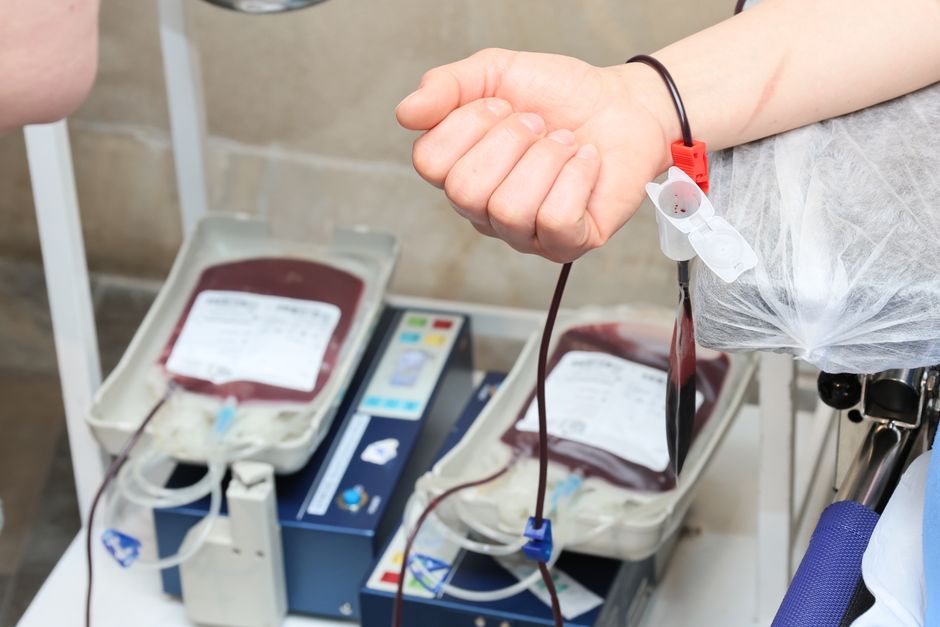
When a patient needs blood in an emergency, there isn’t time to check their blood type before starting the transfusion. In those critical moments, hospitals rely on the universal blood type. The universal donor blood type is O negative. Because O negative red blood cells lack the A, B, and Rh antigens, they can be given to patients of any blood type without triggering an immediate immune reaction.
What Makes O Negative Blood So Special?
Blood types are determined by antigens. These are proteins and sugars that sit on the surface of your red blood cells. Think of them as identification tags.
If you have type A blood, you have A antigens. Type B blood has B antigens. Type AB blood has both. Type O blood has neither.
The Rh factor is another antigen. If you have it, you are Rh positive. If you do not, you are Rh negative. Most people are Rh positive.
O negative blood lacks all three major antigens: A, B, and Rh. When a patient receives blood that does not match their own antigens, their immune system attacks the donor cells as foreign invaders. This can be life-threatening. Because O negative cells have no A, B, or Rh antigens to trigger this attack, they are safe for almost everyone.
Why Is Type O Negative Called the Universal Donor?
In a perfect world, every patient would receive blood that exactly matches their type. In reality, trauma centers and emergency rooms do not always have that luxury. When a patient is bleeding heavily and every minute counts, doctors cannot wait for a blood typing test.
O negative blood is the standard choice in these situations. It buys critical time. Once the patient is stable, the hospital can complete a full blood type and crossmatch to switch them to their specific type if needed.
This practice is well established in emergency medicine. The American Red Cross and major hospital systems maintain O negative reserves specifically for these urgent cases.
Who Can Receive O Negative Blood?
In theory, everyone can receive O negative red blood cells. This includes patients with type A, B, AB, and O blood, regardless of their Rh status.
There is an important exception for women of childbearing age. If an Rh-negative woman receives Rh-positive blood, her immune system may produce antibodies against the Rh antigen. This usually does not harm her, but it can cause problems in a future pregnancy if the baby is Rh positive. For this reason, hospitals often give Rh-negative women O negative blood even when they could safely receive other types.
For men and for women past childbearing age, O positive blood is often used in emergencies if O negative is in short supply. O positive is not universal, but it can be given to any Rh-positive patient, which covers about 85 percent of the population.





What Is the Universal Plasma Donor?
Red blood cells are not the only component used in transfusions. Plasma, the liquid part of blood, has its own universal donor rules.
Type AB positive is the universal plasma donor. This is because AB plasma contains no anti-A or anti-B antibodies. These antibodies are the opposite of the antigens on your red cells. A person with type A blood has anti-B antibodies in their plasma. A person with type O blood has both anti-A and anti-B antibodies.
AB plasma has neither antibody, so it can be given to patients of any blood type without causing a reaction. This is why AB plasma is valuable for trauma patients who need volume replacement quickly.
This is a common point of confusion. O negative is the universal red blood cell donor. AB positive is the universal plasma donor. They are not interchangeable.
What Blood Type Is the Universal Recipient?
The opposite of a universal donor is a universal recipient. For red blood cells, that is AB positive.
People with AB positive blood have A and B antigens, plus the Rh antigen. Their immune systems recognize all of these as “self.” They will not attack blood that carries any of these antigens.
This means an AB positive patient can receive red blood cells from any donor type: A, B, AB, or O, positive or negative. In practice, hospitals still match blood types whenever possible. The universal recipient status matters most in emergencies when the patient’s exact type is unknown but their AB positive status is already on record.
How Rare Is O Negative Blood?
O negative is not the rarest blood type, but it is not the most common either. It is present in about 7 percent of the U.S. population. This varies by ethnic background. For example, O negative is more common in people of European descent and less common in Asian populations.
The rarest major blood type is AB negative, found in about 1 percent of the population. However, the demand for O negative is far higher than its supply. Because O negative is used in emergencies for all patients, blood banks constantly work to keep adequate reserves.
This is why blood drives often emphasize O negative donors. A single O negative donation can save multiple lives because the blood can be separated into red cells, plasma, and platelets.
Does Rh Negative Blood Matter Beyond Emergencies?
Yes. Rh status matters significantly in pregnancy, even outside of transfusion settings.
If an Rh-negative mother carries an Rh-positive baby, some of the baby’s red blood cells can enter the mother’s bloodstream. Her immune system may treat these cells as foreign and produce antibodies against the Rh antigen. This is called Rh sensitization.
Sensitization usually does not affect a first pregnancy. It becomes dangerous in subsequent pregnancies if the next baby is also Rh positive. The mother’s antibodies can cross the placenta and attack the baby’s red blood cells, causing hemolytic disease of the newborn. This condition can lead to severe anemia, jaundice, and in severe cases, brain damage or death.
This problem is largely preventable. Rh-negative pregnant women receive an injection of Rh immunoglobulin, commonly known as RhoGAM, at specific points in pregnancy. This injection prevents the mother’s immune system from producing Rh antibodies. This is standard prenatal care in the United States.
Can Blood Type Change Over Time?
Your blood type is determined by your genes and does not change during your lifetime. It is fixed from birth.
There are rare exceptions. A bone marrow transplant can change a patient’s blood type because the new marrow produces blood cells with the donor’s antigens. Some cancers and infections can temporarily weaken antigen expression, but these cases are unusual and do not affect routine blood typing.
If you have had a bone marrow transplant, you should always inform medical staff. Their typical blood type records may no longer apply.
Why Is Blood Type Matching Still Important?
Even with the universal donor system, blood type matching matters for routine transfusions. It is safer and more efficient.
O negative blood is a limited resource. Using it only for emergencies preserves supply for patients who truly need it. When a patient’s type is known, hospitals give them their exact type. This reduces the risk of any reaction and conserves universal blood for critical situations.
Another reason is that O negative blood can still cause problems in certain patients. While O negative red cells lack A, B, and Rh antigens, they can carry other minor antigens. In patients who have been transfused many times or who have had multiple pregnancies, antibodies to these minor antigens may develop. This is why crossmatching remains standard practice for non-emergency transfusions.
Frequently Asked Questions
What is the universal blood type for transfusions?
O negative is the universal donor blood type for red blood cell transfusions. It lacks A, B, and Rh antigens, so it is safe for patients of any blood type in emergencies.
Why is O negative blood so important?
O negative blood can be given to any patient when there is no time to determine their blood type. Only about 7 percent of the U.S. population has it, making it a scarce and vital resource in trauma care.
Is AB positive the universal donor?
AB positive is the universal plasma donor, not the universal red blood cell donor. AB plasma has no anti-A or anti-B antibodies, so it can be given to patients of any blood type.
Can O negative patients receive any blood type?
No. O negative patients can only receive O negative red blood cells. Because their blood has both anti-A and anti-B antibodies, receiving A, B, or AB blood would trigger a severe immune reaction.
