
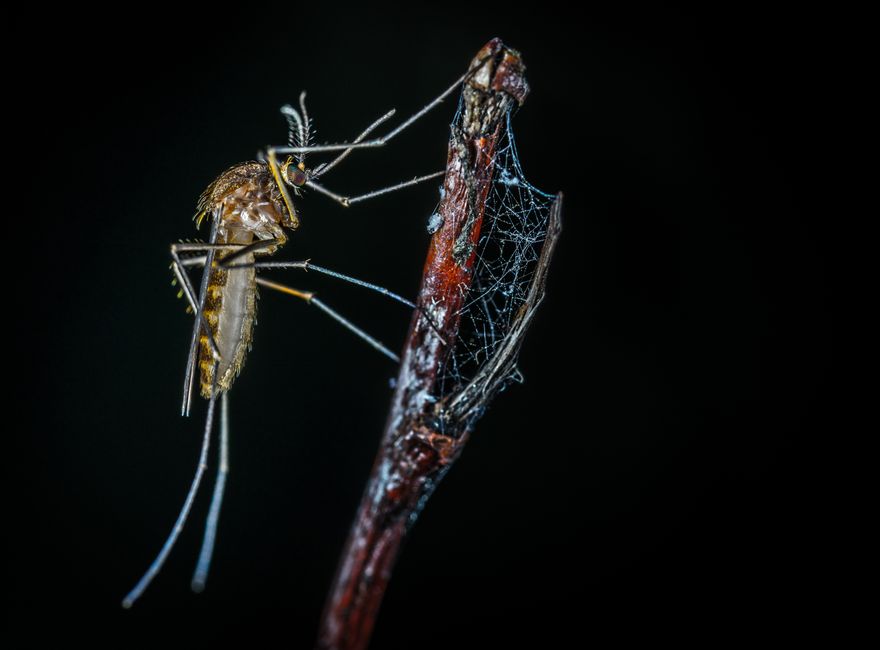
If you have ever spent a summer evening swatting while the person next to you seems untouched, you have probably wondered whether your blood is the problem. The short answer: mosquitoes do not seek out a specific blood type on purpose. What they detect is a mix of carbon dioxide, body heat, skin chemicals, and visual cues. Blood type can play a small role, but it is not the main reason you get bitten.
Here is where the blood type idea comes from. Some research has found that certain mosquito species land more often on people with type O blood than on people with type A blood under controlled laboratory conditions. That finding is real, but it is narrow. It comes from small studies using specific mosquito species and specific setups, not from real-world neighborhoods. It also does not mean mosquitoes can somehow sense your blood type from across a yard. What they may detect is a chemical signal on your skin that correlates with blood type.
What Blood Type Are Mosquitoes Most Attracted To?
Type O blood shows up most often in studies that look at blood type and mosquito landing rates. In one often-cited line of research, mosquitoes landed on type O volunteers more frequently than on type A volunteers, with type B falling somewhere in between.
That said, the effect is modest, and it does not hold evenly across every mosquito species or every study. Aedes aegypti, the mosquito that spreads dengue, Zika, and yellow fever, is the species most studied in this context. Anopheles mosquitoes, which spread malaria, have their own preferences and behaviors. Extrapolating from one species to another is a mistake.
The reason type O may attract more attention is not that mosquitoes crave O-positive plasma. It is that people with different blood types secrete different amounts of certain sugars and proteins in their sweat and on their skin. About 80% of people are “secretors,” meaning they release blood-type antigens into bodily fluids like sweat and saliva. These antigens are the actual signal mosquitoes may pick up on. A non-secretor with type O blood may not attract the same attention as a secretor with type O blood.
So the honest answer is: type O is the most commonly cited, but the effect is small and easily overwhelmed by stronger factors like carbon dioxide output and body heat.
What Do Mosquitoes Actually Use to Find You?
Mosquitoes navigate using a layered set of cues, and blood type is near the bottom of the list. The dominant signals are ones you cannot change much.
- Carbon dioxide. This is the primary long-range cue. Mosquitoes can detect CO2 plumes from a distance and follow them toward a host. Larger bodies and higher metabolic rates produce more CO2.
- Body heat. Once a mosquito is close, warmth helps it zero in. This is why mosquitoes often target exposed skin.
- Skin odor and chemicals. Lactic acid, ammonia, uric acid, and certain fatty acids in sweat all draw mosquitoes in. Skin bacteria convert sweat into compounds that make you more or less attractive.
- Visual cues. Mosquitoes are drawn to dark colors and high contrast against a background. Wearing dark clothing can make you easier to find.
Blood type fits into the skin chemistry category. It is one small variable among many. If you are type O and get bitten a lot, it is more likely that your CO2 output, body heat, or skin microbiome is doing the heavy lifting.
Why Do Some People Get Bitten More Than Others?
Individual variation in mosquito attraction is real and well documented. Two people in the same room can have very different bite counts, and blood type explains only a sliver of that difference.
Factors that consistently show up in research include:
- Body size and metabolism. More CO2 and heat means more attention from mosquitoes.
- Skin microbiome. The types and amounts of bacteria on your skin affect how attractive you are. Some people naturally host bacteria that produce more attractive compounds.
- Pregnancy. Pregnant women tend to attract more mosquitoes, likely due to higher CO2 output and body temperature.
- Alcohol consumption. Drinking beer has been associated with increased mosquito landings in at least one study, though the mechanism is not fully clear.
- Clothing color. Dark colors attract more mosquitoes than light colors.
- Exercise. Physical activity raises CO2, heat, and lactic acid — all attractive to mosquitoes.
Genetics likely play a role too, but the exact mechanisms are still being worked out. What is clear is that blood type is not the deciding factor.





Does Blood Type Affect How Mosquitoes Bite or Feed?
No. Once a mosquito lands, blood type does not change how it feeds or how long it stays. The bite itself is the same regardless of your blood type.
What blood type might influence is the likelihood of being chosen as a host in the first place. Even that effect is small. A mosquito that lands on you is not checking your blood type before it decides to bite. It has already been drawn in by CO2, heat, and skin chemicals.
One clarification worth making: mosquitoes do not “prefer” blood type in the way a person might prefer a flavor. They are responding to chemical cues, and those cues happen to correlate with blood type in some people. It is not a conscious choice.
Can You Change How Attractive You Are to Mosquitoes?
You cannot change your blood type, and you cannot change your CO2 output much. But you can reduce the other signals mosquitoes use to find you.
- Use EPA-registered repellents. DEET, picaridin, IR3535, and oil of lemon eucalyptus are the active ingredients with the strongest evidence behind them. Follow label instructions.
- Wear light-colored clothing. Dark colors make you easier to spot.
- Reduce exposed skin. Long sleeves and pants help, especially at dawn and dusk when many mosquito species are most active.
- Control sweat. Showering after exercise removes lactic acid and reduces skin bacteria that attract mosquitoes.
- Use screens and nets. Physical barriers are still the most reliable protection, especially in areas where mosquito-borne diseases are a concern.
Some people try taking vitamin B1 or eating garlic to repel mosquitoes. The evidence for these is weak. No large human trial has confirmed that either works. If you are in an area with mosquito-borne disease, do not rely on them.
Does Blood Type Matter for Mosquito-Borne Disease Risk?
This is a different question from attraction, and the evidence is more interesting. Some studies suggest that blood type may influence susceptibility to certain mosquito-borne infections, but the findings are not consistent across diseases.
For malaria, research has looked at whether blood type affects the severity of infection. Some studies suggest type O may be somewhat protective against severe malaria, while other blood types may carry different risks. The evidence is mixed, and no public health agency recommends blood-type-based prevention.
For dengue and other viral infections spread by Aedes mosquitoes, the picture is less clear. Some research points to possible associations, but the findings are not strong enough to change clinical guidance.
What matters most for disease risk is not your blood type. It is whether you are in an area where the disease is circulating, whether you take steps to avoid bites, and whether you seek care if you develop symptoms.
What About the Claim That Mosquitoes Prefer Certain Blood Types?
The claim is not false, but it is often overstated. Some studies do show a preference for type O under controlled conditions. But the effect is small, and it does not mean you can predict your bite risk from your blood type alone.
What often gets lost in the retelling is that the studies use specific mosquito species, specific conditions, and small numbers of volunteers. Real-world mosquito behavior is messier. Your CO2 output, your skin bacteria, your clothing, and whether you are standing near a stagnant water source all matter more than whether you are type O or type A.
If you are type O and feel like a mosquito magnet, your blood type may be part of the story. It is not the whole story. And if you are type A and still get eaten alive, that does not mean the research is wrong. It means other factors are at work.
Frequently Asked Questions
What blood type are mosquitoes most attracted to?
Type O blood is the most commonly cited in studies that measure mosquito landing rates, though the effect is small. Type A tends to attract the fewest landings in those same studies, with type B in between.
Do mosquitoes prefer type O blood over other types?
Some studies show a modest preference for type O under controlled conditions, but the effect is easily outweighed by carbon dioxide, body heat, and skin chemicals. Real-world bite rates are not predictable from blood type alone.
Can mosquitoes tell your blood type?
Mosquitoes cannot detect blood type directly. They may respond to blood-type antigens that some people secrete in their sweat and on their skin, which is a chemical signal rather than a conscious detection of blood type.
Why do mosquitoes bite me more than other people?
Carbon dioxide output, body heat, skin bacteria, clothing color, and activity level all affect how attractive you are to mosquitoes. Blood type is a minor factor compared to these.
