
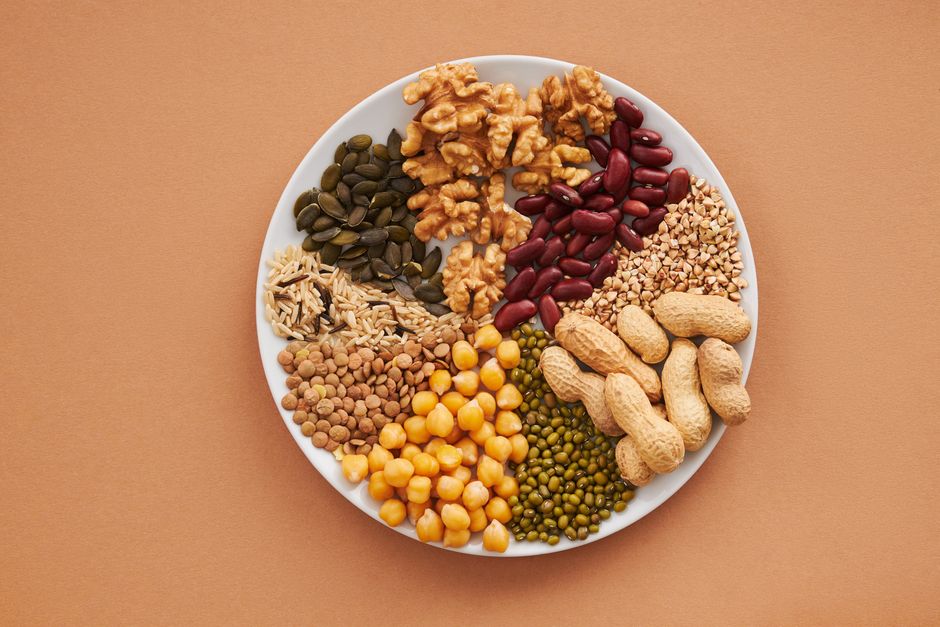
If you measure protein density by how much protein a food delivers per calorie, dried egg whites sit at the top of the list. They provide roughly 80 grams of protein per 100 grams of powder, with almost no fat and very few carbohydrates. That works out to about 3.5 grams of protein for every 10 calories.
But “most protein dense” can mean different things depending on how you frame it. Protein per calorie, protein per gram of food, and protein per serving each point to different winners. Understanding which measure matters to you is the real key to this question.
What Does Protein Density Actually Mean?
Protein density is a ratio, not a single number. It compares the amount of protein in a food to either its weight or its calorie content. That distinction changes everything.
A food can be high in protein per calorie but low in protein per bite. Cooked chicken breast is a good example. It has about 31 grams of protein per 100 grams and roughly 165 calories. That is a protein-to-calorie ratio of about 7.5 grams per 100 calories, which is strong but not the highest.
Dried egg whites, by contrast, pack about 80 grams of protein into 100 grams of powder. They contain almost no fat and minimal carbohydrate. Per calorie, that is one of the densest protein sources that exists in a whole-food form.
When most people ask about protein density, they usually mean protein per calorie. That is the measure that matters if you are trying to hit a protein target without exceeding a calorie budget. It is also the measure that separates genuinely dense foods from ones that just happen to be high in protein because the serving is large.
What Is The Most Protein Dense Food You Can Eat?
Dried egg whites are the most protein dense food by calorie. No other unfortified whole food matches their protein-to-calorie ratio. They are made by separating egg whites from yolks and dehydrating them into a powder.
The nutrition profile is striking. Per 100 grams of powder, you get roughly 80 grams of protein, about 1 gram of fat, and around 7 grams of carbohydrate. That is approximately 350 calories for 80 grams of protein, or about 23 grams of protein per 100 calories.
Compare that to other high-protein foods:
| Food (100g) | Protein | Calories | Protein per 100 cal |
|---|---|---|---|
| Dried egg whites | ~80g | ~350 | ~23g |
| Whey protein isolate | ~90g | ~370 | ~24g |
| Cooked chicken breast | ~31g | ~165 | ~19g |
| Canned tuna (in water) | ~25g | ~116 | ~22g |
| Cooked lentils | ~9g | ~116 | ~8g |
Whey protein isolate is technically denser than dried egg whites, but it is a supplement, not a food in the traditional sense. If you limit the question to whole foods, dried egg whites win. If you include supplements, whey isolate edges them out slightly.
One clarification worth making: protein density and protein quality are not the same thing. Egg whites score very high on digestibility and amino acid profile. So do whey and casein. A food can be dense in protein but poorly absorbed, though that is not an issue with egg whites.
How Do Other High-Protein Foods Compare?
Several foods come close, and the ranking shifts depending on whether you measure by weight or by calorie.
By weight, dried egg whites and whey isolate lead because they are dehydrated. Water is heavy and contains no protein. Remove the water and the protein concentration rises. That is why powders dominate weight-based rankings.
By calorie, the picture is more useful for most people. Canned tuna in water, cooked chicken breast, and white fish like cod all deliver strong protein-to-calorie ratios. Cod offers about 23 grams of protein per 100 calories. Shrimp is similar.
Plant sources tend to rank lower on density. Tofu has about 8 grams of protein per 100 grams and around 76 calories, giving roughly 10 grams per 100 calories. Tempeh is slightly denser. Seitan, made from wheat gluten, is higher still at around 25 grams of protein per 100 grams, though its amino acid profile is lower in lysine.
The practical takeaway: animal-based and dehydrated foods tend to be the most protein dense. Plant foods can still meet protein needs, but they require larger portions or more careful planning.



Does Protein Density Matter for Weight or Muscle?
Protein density matters most when you are managing calories and protein at the same time. That situation comes up during weight loss, body recomposition, and healthy aging.
Research consistently shows that higher protein intake supports muscle retention during calorie restriction. The exact amount is debated, but common clinical guidance suggests somewhere in the range of 1.2 to 1.6 grams of protein per kilogram of body weight per day for adults trying to preserve muscle while losing fat. Some clinicians recommend higher amounts for older adults or athletes.
Dense protein sources make that target easier to hit without overshooting calories. If you needed 120 grams of protein per day on a 1,500-calorie diet, you would need protein to make up a large share of your intake. Foods like lentils or tofu would require careful portioning. Dense sources like egg whites, tuna, and chicken make it more manageable.
That said, density is not the only consideration. Satiety, taste, cost, and micronutrient content all matter. A diet built entirely on the densest protein sources would be monotonous and likely low in fiber and certain vitamins. Most nutrition guidance favors variety.
Are There Risks to Eating Very Dense Protein Foods?
For most healthy adults, there is no established harm from eating protein-dense foods within normal dietary patterns. The evidence does not support the idea that high protein intake damages healthy kidneys in people without existing kidney disease.
People with chronic kidney disease are a different case. Reduced protein intake is often medically recommended for them, and that guidance should come from a doctor or dietitian, not a general article.
Dried egg whites specifically are generally well tolerated. Some people experience digestive discomfort from large amounts of egg white protein, and egg whites are a common allergen. Anyone with an egg allergy should avoid them.
There is also a practical caution about very high protein intake overall. Extremely high intakes can crowd out other nutrients if they replace fruits, vegetables, and whole grains. The goal is a balanced diet that happens to include dense protein sources, not a diet built on protein alone.
How Can You Add Dense Protein to Everyday Meals?
You do not need powders to eat densely. Several everyday foods deliver strong protein-to-calorie ratios with minimal preparation.
- Canned tuna or salmon in water, mixed into salads or grain bowls
- Cooked chicken or turkey breast, sliced for sandwiches or wraps
- Plain Greek yogurt, which has roughly 10 grams of protein per 100 grams
- Cottage cheese, similar in density to Greek yogurt
- Shrimp, which cooks in minutes and is very lean
- Egg whites, either liquid from a carton or dried and reconstituted
Dried egg whites are versatile. You can add the powder to smoothies, oatmeal, or baked goods to raise the protein content without adding much fat or many calories. That is the main reason they show up in fitness-focused recipes.
If you want the single most protein dense option and you are open to supplements, whey protein isolate is the answer by a small margin. If you prefer whole foods, dried egg whites take the top spot. And if you want the densest option that requires no powder at all, canned tuna in water and cooked chicken breast are close behind.
Frequently Asked Questions
What food has the most protein per calorie?
Dried egg whites and whey protein isolate are the most protein dense foods per calorie, each providing roughly 23 to 24 grams of protein per 100 calories. Among whole foods without supplements, dried egg whites lead.
Is egg white powder better than whey protein?
Whey isolate is slightly denser in protein per calorie, but egg white powder is a whole-food option with a comparable amino acid profile. The better choice depends on your dietary preferences and any allergies.
How much protein do I need per day?
General guidance for healthy adults is about 0.8 grams of protein per kilogram of body weight per day. People trying to preserve muscle during weight loss or who are older often need more, commonly cited in the range of 1.2 to 1.6 grams per kilogram.
Can you eat too much protein?
For healthy adults with normal kidney function, there is no established evidence that high protein intake causes harm. People with chronic kidney disease may need to limit protein, and that guidance should come from a doctor.
