
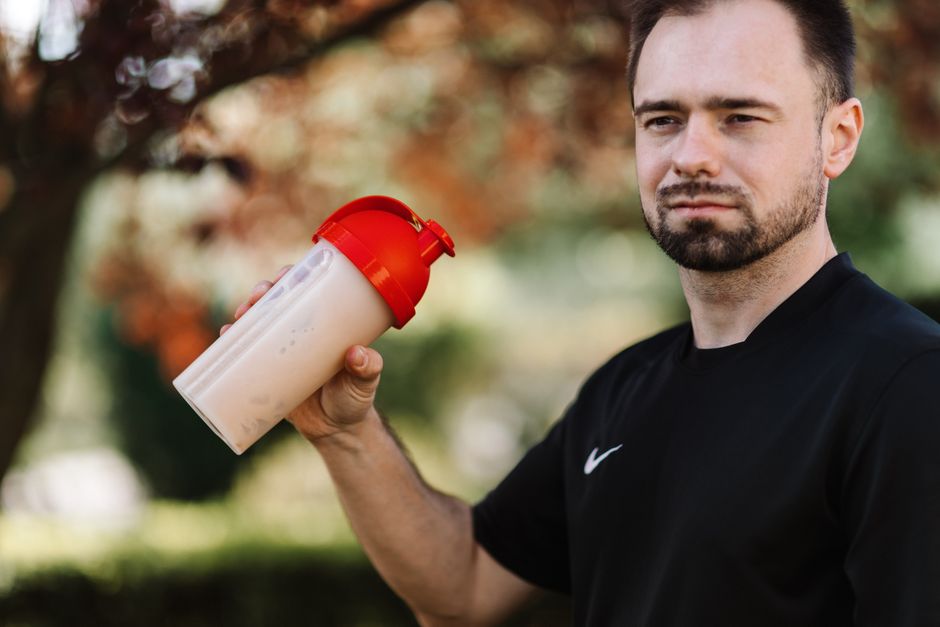
Protein powder shakes work best when they fit around your meals, not instead of them. The timing matters less than most people think, but it does matter in a few specific situations. For most healthy adults, a shake consumed within a few hours of a meal, or as part of one, delivers the same muscle-building benefit as one sipped at a precise moment. What changes with timing is digestion comfort, appetite control, and how well the shake supports your overall daily protein target.
Does the timing of a protein shake actually matter?
For general health and muscle maintenance, the answer is no — not nearly as much as supplement marketing suggests. Total daily protein intake is the strongest predictor of muscle protein synthesis, the process your body uses to build and repair muscle. When you eat that protein across the day matters far less than whether you eat enough of it.
The idea of a narrow “anabolic window” — a short period after exercise when protein must be consumed or the workout is wasted — has been overstated. Early research on this window was often done in fasted trainees, which is not how most people train. When people eat a normal meal within a few hours before or after training, the window effectively stays open. Some studies suggest a modest benefit to consuming protein soon after resistance exercise, but the effect is small compared to hitting your daily total.
What timing does affect is more practical:
- How full or bloated you feel during and after a workout
- Whether the shake blunts your appetite for a real meal you actually need
- How evenly your protein is spread across the day, which may support muscle maintenance better than one large dose
Spreading protein across three or more eating occasions is a reasonable approach. It is not a strict rule, and no single shake placement will make or break your results.
How To Consume Protein Powder Shakes Food Timing Around Meals
The simplest and most reliable approach is to treat the shake as one part of a meal, not a separate event. A shake blended with milk, yogurt, or fruit and eaten alongside other food digests more slowly than a shake in water on an empty stomach. That slower digestion tends to keep you full longer and may reduce the blood sugar spike you would get from a shake alone.
If you are using a shake to hit a protein target you cannot reach through food, placing it between meals works well. A mid-afternoon shake, for example, can bridge the gap between lunch and dinner without leaving you too full to eat dinner. Placing it right before a meal, however, often backfires — it fills you up, and you eat less of the whole food that carries fiber, vitamins, and minerals a powder does not.
A few general patterns:
- With breakfast: works well for people who struggle to eat enough protein early in the day
- Between meals: useful for hitting a daily target without crowding out real food
- Before bed: some evidence suggests a slow-digesting protein before sleep may support overnight muscle repair, though the effect is modest
- Right before a large meal: usually not ideal, because it reduces how much you eat
None of these are rules. They are starting points you can adjust based on how your body responds.
Should you drink a protein shake before or after a workout?
Either works for most people. If you trained fasted — meaning you had not eaten for several hours — a shake soon after training is a sensible choice, because your body is primed to use that protein. If you ate a meal containing protein within a few hours before training, the timing of the shake becomes far less important.
Some people find a shake before training sits heavy and causes cramping or nausea. Others find it settles well and provides steady energy. This is individual and worth testing for yourself rather than following a universal rule.
What matters more than the exact minute is consistency. A shake consumed somewhere in the hours around your workout, combined with enough total protein across the day, does the job. Chasing a precise 30-minute window adds stress without adding much benefit for most recreational exercisers.





Can you drink a protein shake on an empty stomach?
Yes, and many people do. A shake on an empty stomach empties from the stomach relatively quickly, which is why it is often used right after a workout. For some people, though, a shake on an empty stomach causes bloating, gas, or loose stools.
The most common culprit is lactose, a sugar found in milk-based powders like whey and casein concentrate. If you are lactose intolerant, a whey isolate or a plant-based powder may sit better, since isolates contain much less lactose. Some people also react to sugar alcohols or added fibers in certain powders.
If a shake on an empty stomach bothers you, try one of these:
- Mix it with water instead of milk
- Choose a whey isolate or a plant-based protein
- Drink it with or after a small amount of food
- Sip it slowly rather than drinking it fast
Persistent digestive symptoms after protein shakes are worth mentioning to a doctor, since they can have causes unrelated to the powder.
How much protein do you actually need each day?
The general adult recommendation for protein is about 0.8 grams per kilogram of body weight per day — this is the amount needed to prevent deficiency in most healthy adults, not necessarily the amount that is optimal for muscle. People who resistance train or are older often benefit from more, and many researchers suggest a range closer to 1.2 to 1.6 grams per kilogram per day for active adults.
These are general figures. Individual needs vary with body size, activity level, age, and health conditions. People with kidney disease, for example, may need to limit protein, and that decision should come from a doctor, not a supplement label.
The practical takeaway: figure out your daily target first, then decide whether a shake helps you reach it. If you already hit your target through food, a shake is optional. If you fall short, a shake is a convenient way to close the gap — regardless of exactly when you drink it.
What about protein shakes for weight loss or appetite control?
Protein tends to be more filling than carbohydrates or fat, so a shake can help curb hunger between meals. That can support weight loss if it helps you eat less overall — but it can also work against you if the shake adds calories on top of your normal meals.
The evidence on protein and appetite is mixed. Some studies show that higher-protein diets increase feelings of fullness and reduce later calorie intake. Other studies show smaller effects. Protein is not a magic appetite suppressant, and a shake is not a weight-loss tool on its own.
If weight loss is your goal, the more useful question is whether the shake replaces something or adds to it. A shake that stands in for a high-calorie snack may help. A shake added on top of your usual eating is unlikely to.
Who should be careful with protein powder shakes?
Most healthy adults tolerate protein powder well. Certain groups should be more cautious or check with a doctor first.
- People with kidney disease: protein intake often needs to be monitored, and supplements should not be added without medical guidance
- People with liver disease: protein metabolism can be affected, so medical advice matters
- Pregnant or breastfeeding women: no clinical guidelines specifically cover protein powder use in this group, so it is best to discuss with a doctor before adding supplements
- Children and teens: no established dosing guidelines exist for protein powder in this population, and whole food is generally preferred
- People with food allergies: powders can contain milk, soy, egg, or other allergens, so check labels carefully
Protein powders are also supplements, not foods, which means they are not held to the same manufacturing standards as drugs in the United States. Some third-party testing programs verify content and screen for contaminants, but not all products carry that verification. This is a genuine limitation worth knowing about.
Frequently Asked Questions
Is it better to drink a protein shake before or after a workout?
For most people, either timing works about equally well. If you trained fasted, a shake soon after exercise is a reasonable choice.
Can I drink a protein shake with a meal?
Yes, and this is often the most practical approach because it slows digestion and keeps you full longer. Just watch that the shake does not crowd out the whole food you need.
Does a protein shake count as a meal replacement?
It can replace a snack or a light meal, but it does not provide the fiber, vitamins, and minerals of whole food. It is better used to fill a protein gap than to replace most meals.
How long after a protein shake can I eat?
There is no required waiting period. You can eat whenever you feel hungry, though a shake may reduce your appetite for a while afterward.
