
If you are looking for plant protein, legumes lead the pack. Soybeans, lentils, and beans contain more protein per cooked cup than any other vegetable. Green peas, edamame, and lima beans follow closely behind. Leafy greens and root vegetables do contain protein, but in much smaller amounts.
That short answer hides a useful detail. “Vegetable” is not a strict scientific category. It is a culinary and grocery term. That means foods like lentils and soybeans get grouped with vegetables even though botanists classify them as legumes. For anyone building a plant-based diet, this grouping matters, because it puts the highest-protein plant foods in the same shopping aisle as spinach and carrots.
Which Vegetables Contain The Most Protein?
Soybeans top the list. One cup of cooked soybeans provides roughly 29 grams of protein. That is more protein than a cup of most cooked meats, ounce for ounce, and it comes with fiber and no cholesterol.
Lentils are next in line. One cup of cooked lentils delivers about 18 grams of protein. They are cheap, shelf-stable, and easy to cook, which is why they show up in diets around the world.
Other legumes cluster just below lentils. Cooked kidney beans, black beans, pinto beans, and chickpeas each land in the range of roughly 14 to 16 grams per cup. Edamame, which are immature soybeans, provide around 18 grams per cup when shelled.
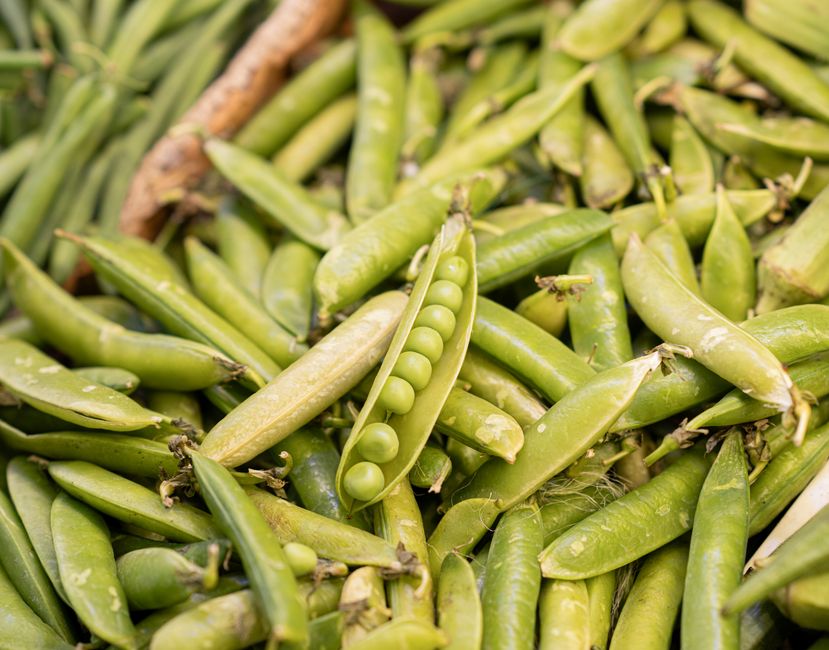
Green peas are a genuine standout among true vegetables. One cup of cooked green peas contains about 8 to 9 grams of protein. That is unusually high for something most people think of as a side dish.
Here is a comparison of protein content per cooked cup, based on standard nutrient databases:
| Food (1 cup cooked) | Protein |
|---|---|
| Soybeans | ~29 g |
| Lentils | ~18 g |
| Edamame (shelled) | ~18 g |
| Kidney, black, pinto beans | ~14–16 g |
| Chickpeas | ~14 g |
| Green peas | ~8–9 g |
| Spinach | ~5 g |
| Broccoli | ~3–4 g |
These numbers come from standard food composition data, and they can shift a little depending on variety, cooking method, and how firmly you pack the measuring cup. The ranking, though, is stable.
Are Beans and Lentils Really Vegetables?
Not in the botanical sense. Beans, lentils, peas, and soybeans are legumes. Botanically, they are the seeds or pods of plants in the Fabaceae family. A vegetable, strictly speaking, is another part of a plant, such as a leaf, root, or stem.
Nutritionally, though, legumes are usually counted as vegetables because they are eaten the way vegetables are eaten. They appear in salads, soups, and side dishes. Government dietary guidance places them in both the vegetable group and the protein group, which is a practical way of saying they do double duty.
This matters for one reason. If you are searching for high-protein vegetables and you skip legumes, you will miss almost all of the real protein. The true vegetables, meaning leaves, roots, and stems, simply do not contain much. A cup of cooked spinach has about 5 grams. A cup of chopped raw carrots has less than 1 gram. A cup of cucumber has well under 1 gram.
So the honest answer to the search is this. The most protein-rich “vegetables” are legumes. Among foods that are unambiguously vegetables, green peas and spinach lead.
How Does Vegetable Protein Compare to Meat Protein?
Per gram, plant and animal proteins are not identical. Most plant proteins are lower in one or more essential amino acids, the building blocks your body cannot make on its own. Grains tend to be low in lysine. Legumes tend to be low in methionine. Soy is the exception. Soy protein is a complete protein, meaning it contains all essential amino acids in adequate amounts.
This does not mean plant proteins are inferior in a practical diet. If you eat a variety of plant foods across the day, you get all the essential amino acids you need. The old idea that you had to carefully combine foods at every single meal, like rice and beans eaten together, has been largely set aside. Your body maintains a pool of amino acids and draws on it over time.
What plant proteins do not do is match the protein density of meat. A three-ounce serving of cooked chicken delivers about 26 grams of protein. You would need roughly a cup and a half of cooked lentils to match that. For people with high protein needs, that volume can be hard to eat.

Does Cooking Change the Protein in Vegetables?
Cooking does not destroy protein. It does not create it either. The protein content of a vegetable stays essentially the same whether it is raw, steamed, boiled, or roasted.
What cooking does change is water content. Boiling adds water, which makes a food heavier and less protein-dense by weight. Roasting removes water, which concentrates everything, including protein, into a smaller mass. This is why two cups of raw spinach and one cup of cooked spinach can contain similar protein. The cooked version is simply more compact.
One genuine caution applies to dried beans and lentils. They must be cooked before eating. Raw or undercooked beans contain compounds that can cause severe digestive illness. Canned beans are already cooked and safe to eat cold.
How Much Protein Do You Actually Need?
For most adults, the recommended daily allowance is about 0.8 grams of protein per kilogram of body weight. For a 150-pound adult, that works out to roughly 54 grams per day. This is the amount needed to prevent deficiency, not necessarily the amount that is optimal, and the two are not the same thing.
Protein needs rise in certain situations. People who are pregnant, recovering from illness or surgery, or doing heavy resistance training often need more. Older adults may also benefit from higher intake to help preserve muscle mass, though the exact optimal amount is still debated in nutrition research.
Can you meet these needs from vegetables alone? Yes, but it takes planning. A day built around lentils, beans, soy, and whole grains can reach 50 to 60 grams of protein without much difficulty. A day built around lettuce, tomatoes, and zucchini will not come close.
What About Protein in Leafy Greens and Other Vegetables?
Leafy greens and other true vegetables do contain protein, just not much. Spinach is the leader at about 5 grams per cooked cup. Kale, collard greens, and mustard greens fall in the range of 2 to 3 grams per cup. Broccoli, Brussels sprouts, and cauliflower land around 3 grams per cup.
These numbers are not trivial. If you eat several cups of vegetables a day, the protein adds up. Someone eating five cups of mixed vegetables might get 10 to 15 grams of protein from them alone. But that is a supplement to your diet, not a foundation.
There is also a subtlety worth naming. Some foods get marketed as high-protein vegetables when they are not. Certain “protein” snack products made from chickpea or pea flour may list a high protein number on the label, but that number usually comes from added isolated protein, not from the vegetable itself. The vegetable contributes the flavor, not the protein.
If protein is your goal, build meals around legumes and soy. Use green peas and spinach as supporting players. Treat other vegetables as what they are, which is valuable for fiber, vitamins, and minerals, but not a meaningful protein source.
Frequently Asked Questions
Which vegetable has the most protein?
Soybeans contain the most protein of any food commonly grouped with vegetables, at roughly 29 grams per cooked cup. Lentils and edamame follow at about 18 grams per cup.
Is broccoli a good source of protein?
Broccoli contains about 3 to 4 grams of protein per cooked cup, which is modest. It is a valuable food for fiber and vitamins, but it is not a meaningful protein source on its own.
Can you get enough protein from vegetables only?
Yes, if you build your diet around legumes, soy, and whole grains rather than relying on leafy greens. Meeting protein needs on a plant-only diet requires planning and attention to variety.
Do peas have more protein than beans?
No. Green peas contain about 8 to 9 grams of protein per cooked cup, while most beans provide roughly 14 to 16 grams. Peas are high for a true vegetable, but beans are higher.
