
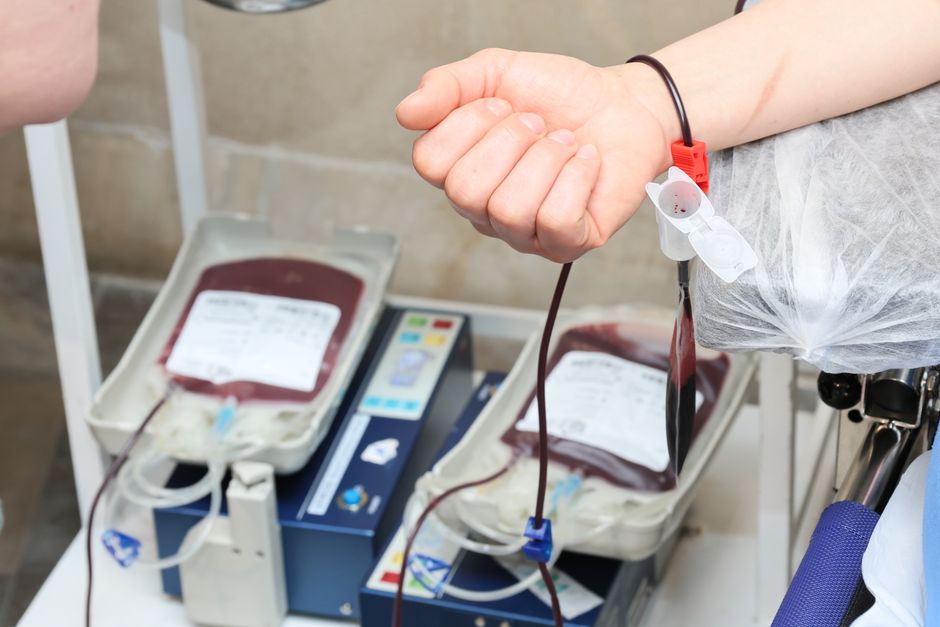
Mixing blood types is a life-saving medical procedure in controlled settings like transfusions, but doing so carelessly can trigger a dangerous immune reaction. When you mix incompatible blood types, your immune system attacks the foreign blood cells, leading to a potentially fatal response called a transfusion reaction. The key to safety lies in understanding which blood types are compatible with each other and why your body reacts so strongly against mismatched blood.
What Happens When You Mix Two Different Blood Types?
The immediate result depends entirely on whether the types are compatible. If you mix compatible types, like type O blood with type A, the transfusion works normally. The donated red blood cells circulate and do their job carrying oxygen.
If you mix incompatible types, your immune system treats the donated blood as an invader. Your body produces antibodies that attack the foreign red blood cells. This causes them to burst open, a process called hemolysis. The CDC reports that acute hemolytic transfusion reactions are rare but can be fatal. Symptoms often include fever, chills, back pain, dark urine, and a drop in blood pressure.
In a laboratory setting, mixing blood types outside the body is a common test. Blood bank technicians mix donor red blood cells with recipient plasma to check for reactions. This is called a crossmatch test. If clumping occurs, the blood is not compatible.
Can You Mix Blood Types What Happens When You Do in a Transfusion?
In a medical transfusion, mixing blood types is strictly controlled. Hospitals follow a system to ensure only compatible blood is given. The American Red Cross states that type O negative blood is the universal donor for red blood cells. This means it can be given to almost anyone in an emergency.
Type AB positive is the universal recipient. People with AB positive blood can receive red blood cells from any donor type. For plasma, the rules flip. AB plasma is the universal donor, and O plasma is the universal recipient. This system exists because of the A and B antigens on red blood cells and the antibodies in plasma.
Mixing the wrong types in a transfusion causes the recipient’s immune system to activate. The severity of the reaction varies. Some people experience mild symptoms. Others can go into shock or develop kidney failure. Medical staff are trained to stop the transfusion immediately at the first sign of a reaction.
What Are the Different Blood Types and Their Antigens?
Blood types are determined by the presence or absence of specific markers on the surface of your red blood cells. These markers are called antigens. The two most important are antigen A and antigen B. Your blood type is based on which of these antigens you have.
There are four main blood types in the ABO system:
- Type A has the A antigen on red blood cells and B antibodies in the plasma.
- Type B has the B antigen on red blood cells and A antibodies in the plasma.
- Type AB has both A and B antigens on red blood cells and no A or B antibodies in the plasma.
- Type O has no A or B antigens on red blood cells and both A and B antibodies in the plasma.
The Rh factor is another key antigen. If you have the Rh antigen, you are Rh positive. If you lack it, you are Rh negative. This gives us the eight common blood types: A+, A-, B+, B-, AB+, AB-, O+, and O-. Research published in the journal Transfusion shows that the distribution of these types varies by population, with O positive being the most common overall.





How Does the Rh Factor Affect Mixing Blood Types?
The Rh factor is separate from the ABO system but equally important. If you are Rh negative and receive Rh positive blood, your body can develop antibodies against the Rh antigen. This is not usually a problem the first time. The reaction is delayed and often mild.
Problems arise with future exposures. Once your body has made Rh antibodies, a second transfusion of Rh positive blood can cause a severe reaction. This is particularly dangerous for pregnant women. An Rh negative mother carrying an Rh positive baby can develop antibodies that attack the baby’s red blood cells.
This condition is called hemolytic disease of the newborn. It can cause jaundice, anemia, or even stillbirth. The CDC notes that Rh immunoglobulin shots given during pregnancy can prevent this by stopping the mother from making antibodies. For transfusions, Rh negative patients ideally receive Rh negative blood to avoid this complication entirely.
What Does the Research Say About Mixing Blood Types in Emergencies?
In life-threatening emergencies, doctors sometimes give O negative blood to patients of unknown blood type. This is standard practice because O negative red blood cells lack A, B, and Rh antigens. They are less likely to cause a reaction in most people. Research from the American Association of Blood Banks supports this approach as safe and effective.
However, giving O negative blood to everyone is not a long-term solution. Type O blood is the most needed in hospitals because of its universal use. The Red Cross reports that O negative blood is often in short supply. Once a patient’s blood type is known, doctors switch to type-specific blood to conserve universal donor units.
Some studies suggest that using O positive blood in Rh negative men and postmenopausal women may be safe in extreme emergencies. This is controversial. Most hospitals stick to O negative for all patients until the blood type is confirmed. The risk of a delayed reaction is lower than the risk of dying from blood loss without a transfusion.
Common Misconceptions About Mixing Blood Types
A common myth is that mixing blood types always causes an immediate, dramatic reaction. This is not true. Many reactions are delayed and subtle. A person might only feel tired or have a mild fever. Medical tests are needed to detect some reactions, making them easy to miss without monitoring.
Another misconception is that blood type determines personality or diet. There is no reliable evidence linking blood type to personality traits. The blood type diet, popularized by books, has been tested in studies. A 2014 review in the American Journal of Clinical Nutrition found no evidence that it works. The benefits people report likely come from eating healthier foods in general.
Some people believe that mixing blood types in a lab test is dangerous. It is not. The crossmatch test is done on a small sample in a controlled environment. It is a routine and safe procedure that prevents harmful reactions during actual transfusions. The test is one of the most important safety steps in blood banking.
Blood Type Compatibility at a Glance
The table below summarizes which red blood cell types can be safely mixed in a transfusion. The donor blood type is listed on the left. The recipient blood types that can safely receive it are listed on the right.
| Donor Blood Type | Compatible Recipient Blood Types |
|---|---|
| O Negative | All types (universal donor) |
| O Positive | O+, A+, B+, AB+ |
| A Negative | A-, A+, AB-, AB+ |
| A Positive | A+, AB+ |
| B Negative | B-, B+, AB-, AB+ |
| B Positive | B+, AB+ |
| AB Negative | AB-, AB+ |
| AB Positive | AB+ (universal recipient) |
What Should You Do If You Need a Blood Transfusion?
If you are scheduled for a transfusion, your blood type will be tested beforehand. This is a standard procedure. The hospital will also perform a crossmatch test to confirm compatibility with the donor blood. You do not need to do anything special to prepare.
Tell your doctor if you have had a previous transfusion or if you are pregnant. These factors can affect your immune response. Women who have been pregnant may have developed antibodies to certain blood antigens. This can make finding compatible blood more difficult but not impossible.
If you have a rare blood type, your doctor may recommend donating blood for yourself before a planned surgery. This is called autologous donation. It eliminates the risk of a transfusion reaction entirely. Most hospitals also have access to rare donor registries through organizations like the American Red Cross.
Frequently Asked Questions
Can you mix blood types in a test tube?
Yes, this is a routine lab test called a crossmatch that checks for compatibility between donor and recipient blood. It is safe and performed in controlled conditions.
What happens if you receive the wrong blood type?
Your immune system attacks the foreign blood cells, causing a transfusion reaction that can range from mild fever to kidney failure or death. Immediate medical treatment is required.
Is type O blood really universal?
Type O negative red blood cells are considered universal for transfusions because they lack A, B, and Rh antigens. However, O negative plasma is not universal and must be matched carefully.
Can mixing blood types ever be safe outside a hospital?
No, mixing blood types should only be done under strict medical supervision with proper testing. Attempting it at home or in unregulated settings is dangerous and potentially fatal.
