
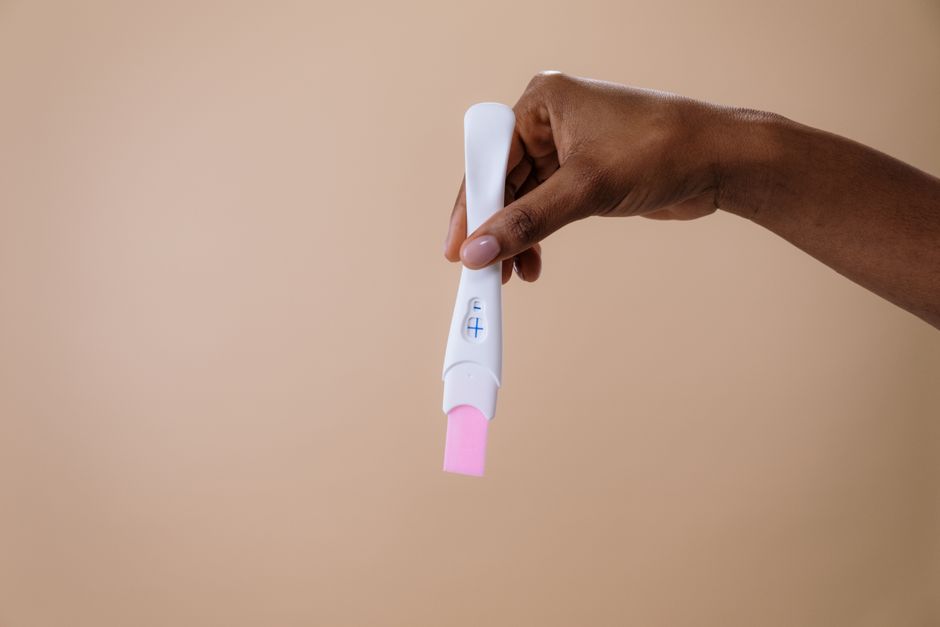
Most home pregnancy tests can detect pregnancy as early as 10 to 14 days after conception, which is roughly 4 days before your expected period. For the most accurate result, testing on the first day of a missed period is the standard recommendation. Some highly sensitive tests claim to work up to 6 days before a missed period, but the accuracy at that early stage is less reliable.
How Pregnancy Tests Actually Work
Pregnancy tests detect a hormone called human chorionic gonadotropin (hCG). Your body only produces this hormone after a fertilized egg implants in the uterine lining. Before implantation happens, there is no hCG in your system, and no test can detect a pregnancy.
Implantation typically occurs 6 to 10 days after ovulation. Once implantation happens, hCG levels double roughly every 48 to 72 hours in early pregnancy. The test becomes positive when hCG reaches a level high enough to be detected, which depends on the sensitivity of the specific test.
This timeline explains why testing too early gives false negatives. The pregnancy exists, but the hormone levels are simply too low for the test to pick up.
What Is The Earliest You Can Test Positive For Pregnancy
The earliest realistic window for a positive home test is about 10 days past ovulation. At this point, implantation has likely occurred and hCG is rising. However, testing this early carries a meaningful risk of a false negative result.
Only about half of women will get a positive result at 10 days past ovulation. By 12 days past ovulation, roughly 75 percent of pregnant women will test positive. By 14 days past ovulation, which is around the time of a missed period, the accuracy climbs to over 95 percent.
These numbers come from clinical research tracking hCG levels in early pregnancy. They explain why many doctors recommend waiting until a missed period before testing.
Understanding Test Sensitivity and Early Detection Claims
Home pregnancy tests list their sensitivity in milli-international units per milliliter (mIU/mL). A test that detects 10 mIU/mL is more sensitive than one that detects 25 mIU/mL. More sensitive tests can detect lower levels of hCG earlier.
Some brands advertise “6 days early” detection. This claim is based on detecting hCG at very low levels. The reality is more complicated. HCG levels vary widely between women at the same stage of pregnancy. One woman may have detectable hCG at 9 days past ovulation while another does not until day 13.
Using first morning urine is the most reliable approach. Urine is most concentrated after sleep, which makes it easier to detect low hormone levels. Testing with diluted urine later in the day can delay a positive result by a day or two.


Blood Tests vs. Home Urine Tests
A blood test at a doctor’s office can detect pregnancy earlier than any home urine test. A quantitative blood test measures the exact amount of hCG in your blood and can detect levels as low as 1 to 2 mIU/mL. This can turn positive as early as 8 to 10 days after ovulation.
Blood tests are not typically used just to confirm pregnancy. They are more commonly ordered when there are concerns about miscarriage risk, ectopic pregnancy, or when monitoring hCG levels over time is medically necessary.
For most women, a home urine test provides the same practical answer within a few days. The difference in detection time is usually only 2 to 3 days.
Why Testing Too Early Gives False Negatives
A false negative means the test says “not pregnant” when you actually are. This happens when hCG levels are below the test’s detection threshold at the time of testing.
There are two common reasons for this. First, ovulation may have occurred later than you think. If you miscalculate ovulation by even a few days, the embryo may not have implanted yet when you test. Second, some women naturally produce lower hCG levels in early pregnancy, and a less sensitive test may miss it.
The emotional cost of a false negative is real. Many women stop testing after one negative result and assume they are not pregnant. If your period does not arrive, test again in 2 to 3 days. HCG levels rise quickly, and a repeat test often provides a different answer.
Digital Tests and Line Tests: Is One Better
Digital tests display the words “Pregnant” or “Not Pregnant” on a screen. Standard line tests show one or two lines. Both work using the same hormone detection method.
The difference is in how they read the result. Digital tests are less prone to misinterpretation. There is no question about whether a faint line counts as positive. However, digital tests are generally less sensitive than the most sensitive line tests. They require higher hCG levels to register a positive result.
If you are testing very early, a high-sensitivity line test may detect the pregnancy first. If you want a clear, unambiguous answer, a digital test is easier to read but may take a day or two longer to turn positive.
When To Take a Test for the Most Reliable Result
The most reliable time to test is the first day of your missed period. By this point, hCG levels are high enough for virtually all home tests to detect a pregnancy. Testing before this point risks a false negative, even if you are pregnant.
If you have irregular periods, determining the “missed period” date is harder. In that case, wait at least 21 days after unprotected sex before testing. This allows enough time for implantation and rising hCG levels regardless of your cycle length.
Testing in the morning with first urine gives the most concentrated sample. Avoid drinking large amounts of fluid before testing, as this can dilute the urine and lower the detectable hCG concentration.
Chemical Pregnancy and Early Positive Results
A chemical pregnancy is a pregnancy that ends very early, usually before 5 weeks. The pregnancy test turns positive, but the embryo stops developing and the pregnancy is lost, often around the time of the expected period.
Chemical pregnancies are more likely to be noticed when testing early. Women who test at 10 days past ovulation may detect a pregnancy that would have gone unnoticed if they had waited for a missed period. This is not a reason to avoid early testing, but it explains why early positives do not always lead to ongoing pregnancies.
Studies suggest that chemical pregnancies are common. Many occur before a woman even knows she is pregnant. The emotional impact can be significant, even though early pregnancy loss is biologically common.
Frequently Asked Questions
Can a pregnancy test be positive at 7 days past ovulation?
A positive result at 7 days past ovulation is very unlikely because implantation has usually not occurred yet. Most women who are pregnant will not have detectable hCG levels before 9 to 10 days past ovulation.
How many days before a missed period can a test detect pregnancy?
Some sensitive tests can detect pregnancy up to 5 days before a missed period, but accuracy improves significantly closer to the missed period. Testing 4 to 5 days early has a higher chance of a false negative result.
Why did I get a negative test but miss my period?
A negative test with a missed period can mean your ovulation date was later than expected, or hCG levels are still too low to detect. Wait 2 to 3 days and test again with first morning urine.
Does a faint positive line count as pregnant?
Yes, any visible line on a pregnancy test indicates a positive result, even if it is faint. A faint line means hCG is present in your urine, which only happens during pregnancy.
