
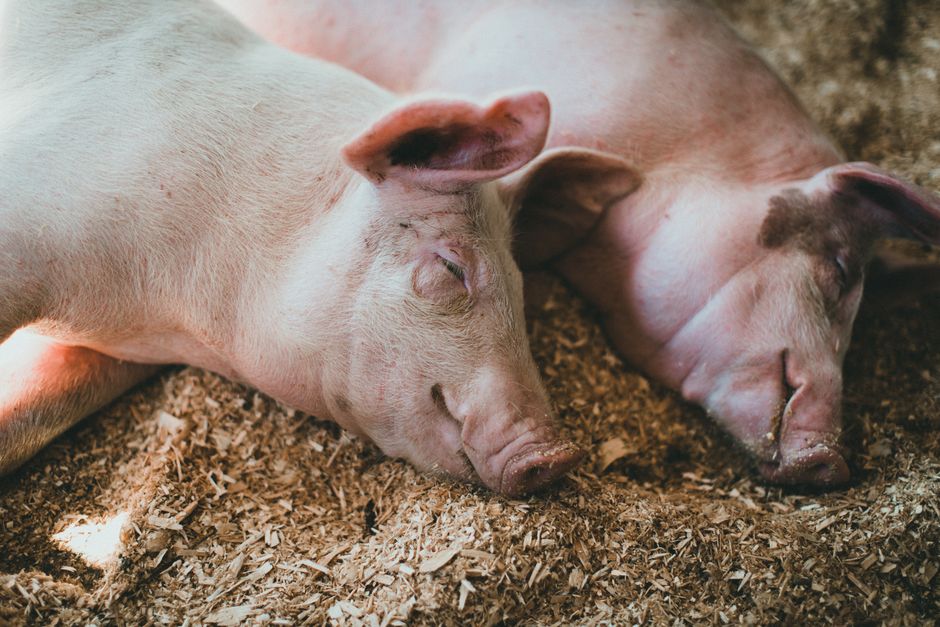
The correct order of a swine’s digestive tract is: mouth, esophagus, stomach, small intestine, cecum, large intestine, rectum, and anus. Accessory organs — the salivary glands, liver, gallbladder, and pancreas — support this tract but are not part of the tube itself. Pigs are monogastric animals, meaning they have a single-chambered stomach rather than the multi-chambered stomach of cattle, sheep, and goats.
This matters more than most people realize. A pig’s digestive anatomy shapes what it can eat, how efficiently it grows, and why feeding practices on farms look the way they do. Understanding the sequence also helps explain why pigs and humans share some digestive similarities — and where they sharply diverge.
What Is the Correct Order of a Swine’s Digestive Tract?
The tract is a continuous tube that runs from the head to the tail. Food moves through it in one direction, and each section has a specific job.
- Mouth — where mechanical breakdown begins through chewing and mixing with saliva
- Esophagus — a muscular tube that pushes swallowed food to the stomach
- Stomach — a single-chambered organ where acid and enzymes start protein digestion
- Small intestine — made up of three parts: duodenum, jejunum, and ileum; this is where most nutrient absorption happens
- Cecum — a pouch at the junction of the small and large intestine where some microbial fermentation occurs
- Large intestine — also called the colon; absorbs water and some minerals
- Rectum — stores waste before elimination
- Anus — the exit point
The order never changes. What changes is how long food spends in each section, which depends on the pig’s age, diet, and health.
How Does Digestion Actually Work in a Pig?
Digestion starts before the pig even swallows. The sight and smell of food trigger saliva production, which contains enzymes that begin breaking down starches. Pigs also have a strong chewing instinct — they grind food thoroughly, which is one reason they can handle a wide range of feed textures.
Once food reaches the stomach, hydrochloric acid drops the pH to a very acidic range. This kills many pathogens and activates pepsin, an enzyme that starts breaking proteins into smaller pieces. The stomach of a pig is not a fermentation vat like a cow’s rumen. It is a mixing and sterilizing chamber.
From there, partially digested food — now called chyme — enters the small intestine. This is where the real work happens. The pancreas releases enzymes that break down fats, proteins, and carbohydrates. The liver produces bile, stored in the gallbladder, which helps emulsify fats. The walls of the small intestine are lined with tiny finger-like projections called villi, which dramatically increase surface area for absorption.
By the time chyme reaches the cecum, most nutrients are already absorbed. The cecum and large intestine handle what is left: water, electrolytes, and some fiber fermentation by resident bacteria. This fermentation is modest compared to what happens in a ruminant, but it is not negligible.
Why Is a Pig’s Digestive System Different From a Cow’s?
A pig has one stomach. A cow has four. That single difference explains almost everything about how these animals eat and what they can survive on.
Cows are ruminants. Their multi-chambered stomach allows them to ferment fibrous plant material with the help of microbes before it ever reaches the small intestine. They can extract energy from grass and hay that a pig simply cannot use efficiently.
Pigs are monogastric, like humans, dogs, and horses. They cannot break down large amounts of cellulose on their own. They rely on a diet that is more concentrated in energy and protein — grains, soy, and other feedstuffs that are easier to digest.
This is not a flaw. It is a different evolutionary strategy. Pigs are omnivores with a digestive system built for flexibility. They can eat plant and animal matter, and they extract nutrients from a wide range of foods. But they cannot live on grass alone.
-
 Where in the Digestive Tract Are Amino Acids Absorbed?
-
Is Appendix Part of Digestive System? What’s Actually True
-
What is the Main Purpose of the Digestive System? What Most People Don’t Know
-
Would You Feel Cuts or Tears in the Digestive Tract?
-
Gut Save Reviews 2026: Legit or Scam? We Checked [FACTS]




How Long Does Food Take to Move Through a Pig?
Total transit time in pigs is typically measured in hours, not days. The stomach empties relatively quickly, and most of the digestive process happens in the small intestine.
Exact transit times vary widely based on diet composition, particle size, feed intake, and the pig’s age and weight. Finely ground feed moves faster than coarse feed. High-fiber diets tend to slow things down. Younger pigs generally have faster transit than older ones.
Rather than memorize a number, it helps to understand the principle: the pig’s digestive tract is designed for relatively rapid processing. This is one reason pigs grow quickly when fed well-balanced diets. It is also why sudden diet changes can cause digestive upset — the gut bacteria and enzyme systems need time to adjust.
What Role Do the Accessory Organs Play?
The liver, pancreas, and gallbladder are not part of the digestive tube, but digestion would fail without them.
The liver produces bile and processes nutrients absorbed from the intestine. It also detoxifies harmful substances that make it past the gut barrier. In pigs, the liver is proportionally large and metabolically active.
The gallbladder stores and concentrates bile, releasing it into the small intestine when fatty food arrives. Pigs do have a gallbladder — this is worth noting because horses do not.
The pancreas releases digestive enzymes and bicarbonate into the small intestine. The bicarbonate neutralizes stomach acid so that intestinal enzymes can work at their optimal pH.
Salivary glands also count as accessory organs. Pig saliva contains amylase, an enzyme that starts starch digestion in the mouth. This is similar to humans but different from cattle, whose saliva is primarily for buffering and lubrication.
Does a Pig’s Digestive Tract Resemble a Human’s?
In broad structure, yes. Both are monogastric. Both have a small intestine dominated by the duodenum, jejunum, and ileum. Both rely on pancreatic enzymes and bile for digestion. Both absorb most nutrients in the small intestine.
But the similarities have limits. Pigs have a more developed cecum than humans, and they can ferment more fiber in the large intestine. Their stomach pH is also more acidic on average, which reflects their scavenging, omnivorous diet.
These similarities are one reason pigs are sometimes used in medical research on digestion and nutrition. But pigs are not perfect stand-ins for humans, and researchers are careful about where the comparison holds.
What Can Go Wrong With a Pig’s Digestive Order?
The order itself does not change. But the function of each section can be disrupted.
Gastric ulcers are common in pigs, particularly in intensive production settings. Stress, fine feed particles, and irregular feeding schedules are among the factors that contribute. The ulcers typically form in the stomach, not the intestine.
Intestinal infections — bacterial, viral, or parasitic — can damage the villi in the small intestine and reduce nutrient absorption. This shows up as poor growth, diarrhea, or both.
In pigs raised for food, these issues matter economically. In pet pigs or backyard pigs, they matter for welfare. In all cases, the underlying anatomy is the same. The order is fixed. What varies is how well each part does its job.
Frequently Asked Questions
What is the correct order of a swine’s digestive tract?
The order is mouth, esophagus, stomach, small intestine, cecum, large intestine, rectum, and anus. The small intestine includes the duodenum, jejunum, and ileum.
Do pigs have one stomach or four?
Pigs have a single-chambered stomach. They are monogastric animals, unlike cattle, sheep, and goats, which have four-chambered stomachs.
How long does food stay in a pig’s digestive system?
Transit time is typically measured in hours and varies with diet, age, and feed particle size. Finely ground feed moves faster than coarse or high-fiber feed.
Can pigs digest grass like cows?
No. Pigs cannot efficiently break down large amounts of cellulose because they lack a rumen. They need more concentrated sources of energy and protein in their diet.
