
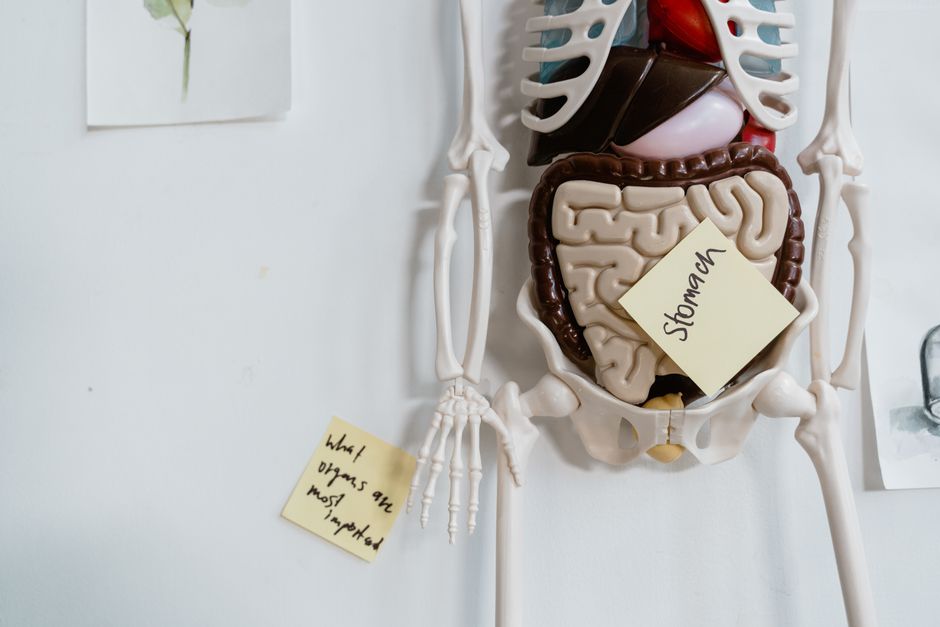
The appendix is part of the digestive system, but it does not help you digest food. It is a small, finger-shaped pouch attached to the first part of your large intestine, near where the small intestine empties into it. It sits in the lower right part of your belly. So the answer is yes to the anatomy question and basically no to the function question.
That mismatch is why the appendix confuses people. It lives in the gut, it can get infected, and surgeons remove it by the tens of thousands each year. Yet it seems to do nothing you would miss. Here is what is actually established about this odd little organ.
Where Is the Appendix and What Does It Connect To?
The appendix is a blind-ended tube, usually a few inches long, that branches off a pouch called the cecum. The cecum is the beginning of the large intestine, and it sits where the small intestine delivers the watery contents of digestion.
Anatomists classify the appendix as part of the gastrointestinal tract. That makes it part of the digestive system by location and structure. It is attached to the gut, lined with gut tissue, and shares the same blood supply region as the cecum.
Its position is why appendicitis causes pain where it does. The appendix usually points down and toward the right hip, though its exact angle varies a lot from person to person. That variation helps explain why appendicitis pain does not always start in the same spot. Early pain is often felt around the belly button, then settles in the lower right. This happens because the appendix’s nerve supply shares pathways with the small intestine, so the brain first reads the signal as coming from the middle of the abdomen.
Is the Appendix Part of the Digestive System If It Doesn’t Digest Anything?
Yes, and this is where the confusion comes from. Being part of an organ system is about anatomy and development, not about whether a structure pulls its weight in digestion.
The appendix forms from the same embryonic tissue as the rest of the gut. It has the same basic layers as the intestines. It just does not absorb nutrients or move food along in any meaningful way.
Think of it like a small room attached to a large building. It is inside the building. It is built from the same materials. But nothing essential happens in it. The appendix is a genuine part of your digestive tract that contributes essentially nothing to digestion.
One clarification worth making: some sources describe the appendix as a “vestigial organ,” meaning a leftover from evolution with no function. That label is now debated. The structure is real and part of the gut, but whether it has a useful job is a separate question from whether it belongs to the digestive system. It does belong. The function question is the unsettled one.
Does the Appendix Have a Purpose?
The appendix appears to have some immune tissue, and it may serve as a reservoir for gut bacteria. Neither role is firmly proven in humans, and neither is essential to health.
The appendix contains lymphoid tissue, which is part of the immune system. This tissue is more prominent in childhood and tends to shrink with age. Some researchers have proposed that the appendix acts as a safe house where beneficial gut bacteria can survive a bout of severe diarrhea, then repopulate the colon afterward. The idea is plausible and has some supporting evidence from animal and laboratory work. It has not been confirmed as a meaningful function in people.
Here is the honest position. No study has shown that people without an appendix are worse off in any measurable way. Millions of people live full, healthy lives after appendectomy. If the appendix has a role, it is redundant enough that its absence causes no known harm.
You will see claims online that the appendix “boosts immunity” or is “essential for gut health.” Those claims go beyond the evidence. The lymphoid tissue is real. What it accomplishes for the whole body is not established.





What Happens When the Appendix Gets Blocked?
The appendix can become inflamed, a condition called appendicitis. It is the most common reason the appendix is removed, and it is a medical emergency when it happens.
The usual cause is a blockage of the appendix’s opening. This can come from hardened stool, swollen lymphoid tissue, or, less often, a small object. Once blocked, the appendix cannot drain. Pressure builds, blood flow to the tissue drops, and bacteria multiply. If the pressure continues, the wall can weaken and eventually rupture.
Symptoms typically include:
- Pain that often begins near the belly button and moves to the lower right abdomen
- Pain that worsens with movement, coughing, or pressing on the area
- Loss of appetite
- Nausea or vomiting
- Low-grade fever
Not everyone follows this pattern. The appendix’s position varies, and in some people the pain shows up higher, lower, or on the left. This is more common in pregnancy and in people whose appendix sits in an unusual spot. Because appendicitis can look like other conditions, diagnosis relies on physical exam, imaging such as ultrasound or CT, and sometimes blood tests. No single symptom confirms it.
A ruptured appendix is serious. It can spread infection through the abdomen, a condition called peritonitis. This is why sudden worsening pain, a rigid belly, or a high fever should prompt immediate medical care. Do not wait to see if it passes.
Can You Live Normally Without an Appendix?
Yes. People live normal, healthy lives without an appendix, and removing it does not require any special diet or lifestyle change afterward.
The colon continues to do its job of absorbing water and forming stool. Digestion is unaffected because the appendix was not doing digestive work to begin with. Recovery from surgery takes time, but long-term function is not compromised.
Appendectomy is one of the most common emergency abdominal surgeries. Some cases of uncomplicated appendicitis are now treated with antibiotics instead of surgery, and this approach is used in some settings. Whether antibiotics alone or surgery is the better choice depends on the individual case, and this is a decision for a clinician, not something to self-manage. The evidence comparing the two approaches is still evolving, and recurrence after antibiotic treatment is a known possibility.
Common Myths About the Appendix
The appendix has attracted more than its share of folklore. Here is what the evidence actually supports.
Myth: The appendix is completely useless. It may have minor immune and bacterial-reservoir roles, though these are not firmly established in humans. “No known essential function” is more accurate than “useless.”
Myth: You can prevent appendicitis with diet. No diet has been shown to reliably prevent appendicitis. Some research has looked at fiber intake and appendicitis risk, but the findings are not consistent enough to support a prevention recommendation.
Myth: A ruptured appendix is always obvious. Rupture can develop without dramatic warning signs, especially in older adults and young children, whose symptoms can be milder or atypical. This is one reason appendicitis is taken seriously even when symptoms seem modest.
Myth: The appendix causes appendicitis only in young people. Appendicitis is most common in children and young adults, but it can happen at any age. Older adults can develop it too, sometimes with less typical symptoms.
Frequently Asked Questions
Is the appendix part of the digestive system?
Yes. The appendix is attached to the large intestine and is classified as part of the gastrointestinal tract. It does not contribute to digestion, but it is anatomically part of the digestive system.
What is the main function of the appendix?
No essential digestive function has been established. It contains immune tissue and may serve as a reservoir for gut bacteria, but these roles are not confirmed as meaningful in humans.
Can you live a normal life without an appendix?
Yes. Removing the appendix does not affect digestion or require any special diet. People without an appendix live normal, healthy lives.
When should appendix pain be taken seriously?
Pain that moves to the lower right abdomen, worsens with movement, or comes with fever, nausea, or loss of appetite should be checked by a doctor promptly. A ruptured appendix is a medical emergency.
