
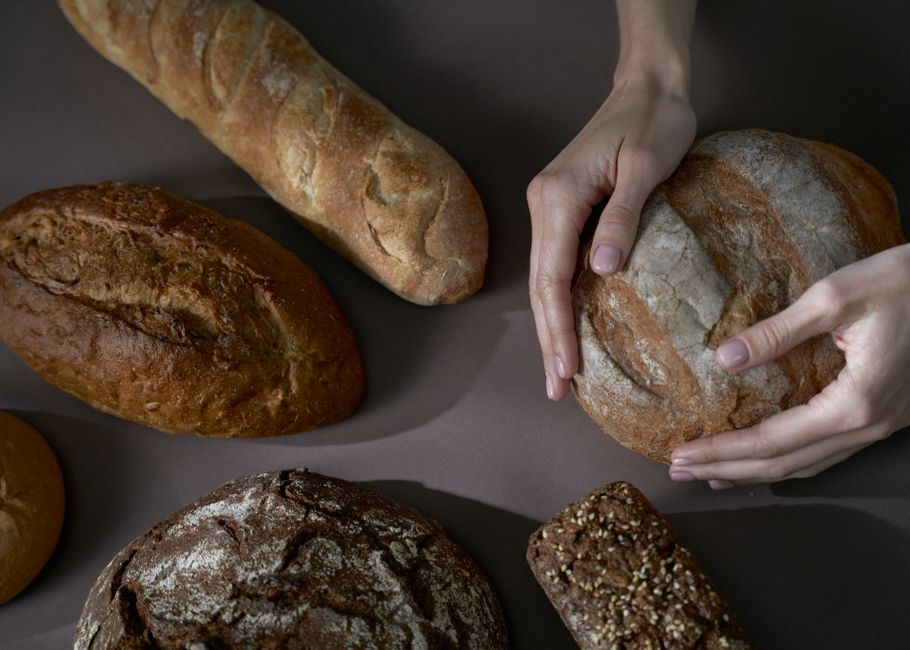
Sourdough bread is bread made through a natural fermentation process that uses a starter culture of wild yeast and bacteria instead of commercial baker’s yeast. This starter, often called a “levain,” is a living mixture of flour and water that captures wild microorganisms from the environment. The fermentation breaks down sugars and gluten in the dough, giving sourdough its distinctive tangy flavor, chewy texture, and longer shelf life compared to conventional bread.
What Is Sourdough Bread Made Of?
Sourdough bread requires only three basic ingredients: flour, water, and salt. The fourth ingredient is time. The starter itself is simply flour and water that has been left to ferment, allowing natural yeasts and bacteria to colonize it.
Most traditional sourdough uses wheat flour, but rye, spelt, and whole grain flours are common. The type of flour directly affects the flavor and fermentation speed. Rye ferments faster because it has more available nutrients for the microorganisms. White flour produces a milder tang.
Commercially made sourdough often adds commercial yeast, vinegar, or dough conditioners to speed production. This is not real sourdough in the traditional sense. True sourdough relies entirely on the wild fermentation from the starter. The ingredient list should be short. If you see “yeast” or “vinegar” on the label, it is not traditional sourdough.
What Is Sourdough Bread’s Fermentation Process?
The process starts with a starter that is regularly fed with fresh flour and water. When you mix starter with new flour and water to make dough, the microorganisms wake up and begin feeding. The wild yeasts produce carbon dioxide gas, which makes the dough rise. The bacteria, mostly Lactobacillus species, produce lactic and acetic acids.
These acids are what give sourdough its sour taste. The longer the fermentation, the more acid builds up, and the tangier the bread becomes. A typical sourdough fermentation at room temperature takes 12 to 24 hours. Commercial bread using baker’s yeast rises in 1 to 2 hours.
This slow fermentation is the key difference. It is not just about flavor. The acids also break down phytic acid, a compound in grains that can block absorption of minerals like iron, zinc, and magnesium. A study published in the Journal of Agricultural and Food Chemistry found that sourdough fermentation reduces phytic acid by up to 62% compared to conventional bread.
The bacteria also produce organic acids that act as natural preservatives. This is why sourdough stays fresh longer and is less prone to mold than standard bread.
Is Sourdough Bread Healthier Than Regular Bread?
Research published in Nutrients in 2021 found that sourdough fermentation increases the availability of certain nutrients. The breakdown of phytic acid means your body can absorb more of the minerals present in the grain. This matters most for people who eat a lot of whole grains.
Sourdough also has a lower glycemic index than many commercial breads. A study in the British Journal of Nutrition showed that sourdough bread produces a smaller blood sugar spike compared to bread made with baker’s yeast. The organic acids slow down how quickly starches are digested.
Some people with mild gluten sensitivity report fewer symptoms with sourdough. The fermentation partially breaks down gluten proteins. However, sourdough is not gluten-free. People with celiac disease cannot eat sourdough made from wheat, rye, or barley. There is no clinical evidence that sourdough is safe for celiac patients.
The health benefits also depend on what flour is used. A sourdough made with refined white flour is still a refined grain product. Whole grain sourdough provides more fiber, vitamins, and minerals. The fermentation does not add nutrients that were not there to begin with. It makes existing nutrients more available.
| Factor | Traditional Sourdough | Commercial Bread |
|---|---|---|
| Fermentation time | 12-24 hours | 1-2 hours |
| Rising agent | Wild yeast + bacteria | Commercial baker’s yeast |
| Phytic acid reduction | Up to 62% | Minimal |
| Glycemic response | Lower | Higher |
| Preservatives needed | No | Often yes |
| Shelf life | 5-7 days | 2-3 days |



What Does the Tangy Flavor of Sourdough Depend On?
The sourness of sourdough is not random. It depends on which strains of bacteria dominate your starter. Lactobacillus sanfranciscensis is a common species found in San Francisco sourdough and produces high levels of acetic acid. That is the sharp, vinegar-like tang.
Temperature, hydration, and feeding schedule all influence flavor. A wetter starter with more water favors lactic acid production, which gives a milder, yogurt-like sourness. A stiffer starter with less water produces more acetic acid and a sharper tang. Fermenting at cooler temperatures, around 70°F, also increases acetic acid.
Some people report that their sourdough tastes different depending on the season or where they live. This is true. The wild yeast and bacteria in the air vary by location. A starter made in Seattle will not taste identical to one made in Arizona. That said, after a few weeks, the starter’s own microbial ecosystem becomes stable and the local environment matters less.
If your sourdough is not sour at all, the fermentation is likely too short or too warm. Letting the dough ferment longer in the refrigerator, called cold retardation, builds more acid and develops a stronger tang.
How Do You Make Sourdough Bread at Home?
Making sourdough requires patience, not skill. The hardest part is the starter. Mix equal parts flour and water in a jar. Leave it loosely covered at room temperature. Feed it daily with fresh flour and water. After 5 to 10 days, it should become bubbly and smell pleasantly sour, not rotten.
Once the starter is active, the basic process is straightforward:
- Mix starter with flour, water, and salt to form a shaggy dough.
- Rest for 30 minutes to let the flour absorb water.
- Fold the dough several times during the first few hours of bulk fermentation to develop gluten.
- Bulk ferment at room temperature for 4 to 8 hours until the dough has visibly risen and is puffy.
- Shape the dough into a round or oval loaf.
- Proof in a basket in the refrigerator for 8 to 12 hours.
- Bake in a preheated Dutch oven at 450°F to 500°F for about 45 minutes.
The most common mistake beginners make is under-fermenting. The dough needs to double in size during bulk fermentation. If it does not, the bread will be dense and gummy. Over-fermented dough will be sticky and collapse. A properly fermented dough feels alive, jiggly, and has visible bubbles on the surface.
What Are Common Misconceptions About Sourdough Bread?
A widespread claim on social media is that sourdough is completely gluten-free. This is false. The fermentation breaks down some gluten but not all. People with celiac disease should not eat sourdough made from wheat, rye, or barley. There is no clinical evidence that sourdough is safe for them.
Another myth is that sourdough starter must be fed every day forever. If you bake weekly, keeping the starter in the refrigerator and feeding it once a week is fine. If you bake less often, you can dry the starter or freeze it for months. A starter is hardy, not fragile.
Some people believe that sourdough has no impact on blood sugar because it is “natural.” This is misleading. Sourdough has a lower glycemic index than many commercial breads, but it still raises blood sugar. The effect is smaller, not zero. Portion size still matters, especially for people with diabetes.
There is also a claim that sourdough is a probiotic food because it contains live bacteria. The bacteria in sourdough are mostly killed during baking at high temperatures. The final bread does not contain significant live probiotics. The health benefits come from the fermentation byproducts and the changes to the grain structure, not from live bacteria in the finished loaf.
What to Avoid When Buying Sourdough Bread
Grocery store sourdough is often not real sourdough. Many commercial bakeries add yeast, vinegar, or dough conditioners to mimic the flavor and texture without the long fermentation. Check the ingredient list. If it contains “yeast” or “vinegar,” it is not traditional sourdough.
Look for bread labeled “naturally leavened” or “made with a sourdough starter.” Some brands are honest about their process. Others use the term “sourdough” as a flavor descriptor, not a method. If the bread is soft and fluffy like sandwich bread, it is likely not real sourdough. Real sourdough has a denser crumb and a chewier crust.
Farmers markets and local bakeries are better sources. Ask the baker how long the fermentation takes. A 24-hour fermentation is a good sign. If they cannot tell you, the bread may not be traditional. Price is another clue. Real sourdough costs more because it takes more time and labor. A $3 loaf at a big box store is almost certainly not genuine.
Frozen sourdough is a reasonable alternative if you cannot find fresh. Some bakeries freeze their bread immediately after baking. The fermentation benefits remain intact. Thaw it at room temperature and reheat in the oven for the best texture.
Frequently Asked Questions
Can I eat sourdough bread if I have celiac disease?
No. Sourdough made from wheat, rye, or barley is not safe for people with celiac disease. The fermentation does not remove enough gluten.
How long does homemade sourdough bread stay fresh?
Homemade sourdough stays fresh at room temperature for 5 to 7 days. The natural acids act as preservatives and slow mold growth.
Why is my sourdough bread so dense and heavy?
Dense sourdough usually means the dough was under-fermented or the starter was not active enough. Let the dough bulk ferment longer until it doubles in size.
Does sourdough bread contain probiotics?
No. The heat from baking kills the live bacteria in sourdough. The health benefits come from fermentation byproducts, not live probiotics in the finished bread.
