
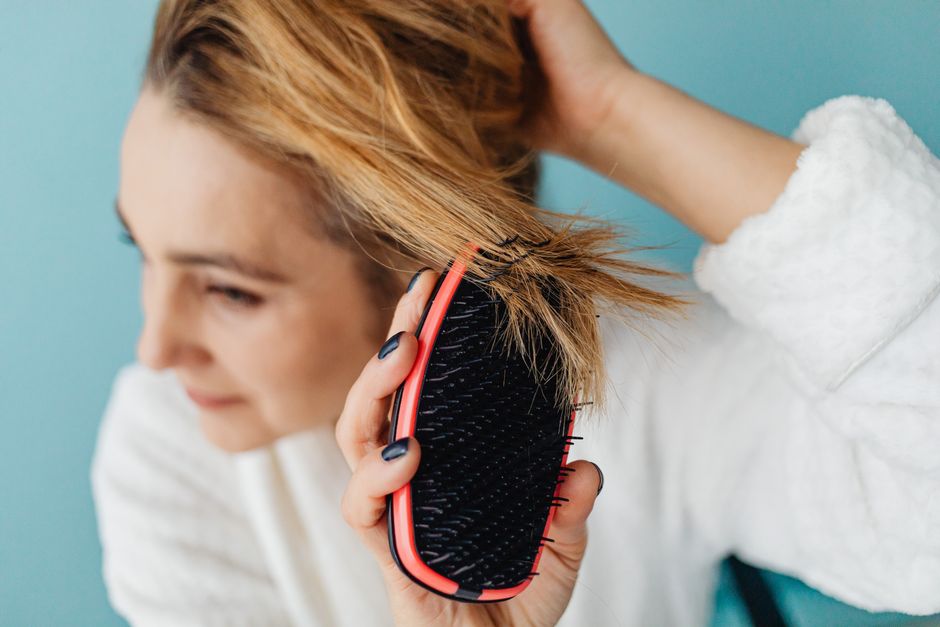
Hair cracking is a term for tiny breaks along the hair shaft that make hair feel rough and look frayed. It is not the same as split ends, though people often confuse them. The main causes are mechanical damage from brushing or styling, chemical damage from dyes or relaxers, and environmental stress like sun or heat. The risks are that cracking can travel up the hair shaft and cause more breakage over time. Prevention focuses on gentler handling, less heat, and keeping hair properly moisturized.
What Exactly Is Hair Cracking?
Hair cracking refers to small fractures in the outer layer of the hair called the cuticle. When the cuticle gets damaged, it lifts up and exposes the inner part of the hair called the cortex. This makes the hair weaker and more likely to snap.
Think of it like a tiny crack in a windshield. At first you barely see it. But over time it spreads. With hair, those cracks make strands feel rough and look dull. They can also cause hair to break off at different lengths, which makes hair look thinner and less healthy.
Hair cracking is common in people who color their hair, use heat tools daily, or have naturally curly or coarse hair. The American Academy of Dermatology notes that hair damage from styling is one of the most common reasons people visit a dermatologist for hair concerns.
What Causes Hair Cracking?
The main cause is mechanical stress. This means physical actions that pull, twist, or rub the hair. Brushing wet hair too hard is a big one. Wet hair is more elastic and stretches more, but it is also weaker. When you brush wet hair aggressively, you can create tiny cracks that add up over time.
Chemical treatments are another major cause. Hair dyes, bleaches, and relaxers change the structure of the hair. They break down the bonds that hold hair together. Research published in the Journal of Cosmetic Science found that bleach can reduce the strength of a single hair strand by up to 45 percent. That makes cracking much more likely.
Heat styling is also a problem. Flat irons and curling wands can reach 400 degrees Fahrenheit or higher. At those temperatures, water inside the hair turns to steam and expands. This creates bubbles and cracks in the hair shaft. The damage is cumulative — each time you use heat, it gets a little worse.
Environmental factors play a role too. Sun exposure breaks down the proteins in hair. Chlorine from pools and salt from ocean water can dry hair out. Dry hair is brittle hair. Brittle hair cracks more easily.
What Are the Risks of Hair Cracking?
The biggest risk is that hair cracking leads to breakage. Once the crack is there, the hair is weaker at that spot. Every time you brush, wash, or even touch your hair, that spot gets stressed. Eventually the hair snaps off.
Breakage from cracking often happens at different points along the hair shaft. This creates uneven lengths and a frizzy appearance. Unlike split ends which happen at the tip, cracking can happen anywhere. That makes it harder to trim away.
Another risk is that cracking makes hair look thinner. If you have fine hair, losing even a small amount of length from breakage can make your hair look significantly less full. People sometimes think they are losing hair when they are actually just experiencing breakage from cracking.
There is also the risk of more damage from trying to fix it. Some people see rough hair and reach for more products or more heat to smooth it down. This can make the cracking worse. The American Academy of Dermatology advises against using high heat on already damaged hair because it increases the risk of permanent breakage.


How Is Hair Cracking Different From Split Ends?
People use these terms interchangeably but they are different problems. Split ends happen at the very tip of the hair. The tip splits into two or more pieces. You can see it clearly if you look closely. Trimming split ends removes them completely.
Hair cracking happens along the shaft. It is not at the tip. It looks like a small fracture or a rough patch. You might not see it with the naked eye. You feel it when you run your fingers down a strand and it catches on a rough spot.
Here is a quick comparison:
| Feature | Hair Cracking | Split Ends |
|---|---|---|
| Location | Anywhere along the shaft | Only at the tip |
| Appearance | Rough patch or tiny fracture | Tip splits into two or more pieces |
| Cause | Mechanical, chemical, or heat stress | Usually dryness and wear over time |
| Fix | Prevention and gentle care | Trimming |
Some people report that hair cracking can turn into split ends if the crack travels down to the tip. Strong evidence for this is limited, but it makes sense mechanically. A crack weakens the hair and the tip is already the oldest and most worn part.
What Does Research Say About Prevention?
Research points to three main strategies that actually work. The first is reducing mechanical stress. A study in the International Journal of Trichology found that brushing hair less frequently and using a wide-tooth comb reduced breakage by about 30 percent in participants. The key was being gentle, especially on wet hair.
The second strategy is managing moisture. Hair that has the right amount of water is more flexible and less likely to crack. The trick is balance. Too much water can swell the hair and weaken it. Too little makes it brittle. Research from the Journal of Cosmetic Science shows that using conditioners with ingredients like cetyl alcohol or shea butter helps hair hold onto moisture without getting waterlogged.
The third strategy is heat protection. A study published in the Annals of Dermatology showed that using a heat protectant spray before blow drying reduced surface damage by up to 50 percent. The protectant creates a barrier that spreads heat more evenly and prevents the steam bubbles that cause cracking.
Some people claim that certain oils like coconut oil or argan oil can prevent cracking. Research does show that coconut oil can penetrate the hair shaft and reduce protein loss. That helps strengthen hair overall. But no oil can completely prevent cracking if you are still using high heat or harsh chemicals. Oils help but they are not a shield.
As of 2026, there is no clinical evidence that any supplement, vitamin, or special shampoo can reverse hair cracking once it has happened. Prevention is the only proven approach. Products that claim to “repair” cracked hair are mostly smoothing the surface temporarily. The crack is still there.
What Should You Avoid If You Have Hair Cracking?
Avoid brushing your hair when it is soaking wet. If you must detangle wet hair, use a wide-tooth comb and start from the bottom. Work your way up slowly. Do not yank through knots.
Avoid high heat settings on styling tools. If you use a flat iron, keep it below 350 degrees Fahrenheit. For fine or damaged hair, stay below 300 degrees. Many people think they need high heat to get straight hair, but lower temperatures with multiple passes cause less damage than one pass at high heat.
Avoid tight hairstyles that pull on the hair shaft. Ponytails, buns, and braids that are pulled tight create tension on the hair. Over time, that tension can cause cracking at the point where the hair bends. The Cleveland Clinic notes that traction alopecia from tight hairstyles is a real and common problem.
Avoid sleeping on cotton pillowcases. Cotton absorbs moisture from your hair and creates friction as you move. This friction can worsen existing cracks. Silk or satin pillowcases cause less friction and help hair stay smoother. This is widely claimed and there is some evidence it helps reduce breakage, though large clinical trials are lacking.
Avoid over-washing. Washing hair every day strips natural oils that protect the hair shaft. The American Academy of Dermatology recommends washing hair no more than every other day for most people. If your hair is dry or damaged, twice a week may be enough.
What Are Practical Steps You Can Take Now?
Start by checking your hair for rough spots. Run a strand between your thumb and index finger from root to tip. If you feel a rough patch, that is likely a crack. Note where it is so you can watch for changes.
Switch to a microfiber towel or an old cotton t-shirt to dry your hair. Regular towels have loops that catch on hair and cause friction. Microfiber is smoother and absorbs water without roughing up the cuticle.
Use a leave-in conditioner after every wash. Look for products with ingredients like glycerin, panthenol, or hydrolyzed proteins. These help fill in gaps in the hair shaft temporarily and reduce the feeling of roughness. They do not fix cracks permanently but they make hair less likely to break during the day.
Trim your hair regularly even if you are trying to grow it out. Trimming removes the oldest, most damaged parts of the hair. This stops cracks from spreading down the shaft. A trim every 8 to 12 weeks is a good starting point for most people.
Here is a quick checklist of things to do:
- Use a wide-tooth comb on wet hair only
- Keep heat tools below 350 degrees
- Apply a heat protectant before any heat styling
- Sleep on a silk or satin pillowcase
- Wash hair less often and use conditioner every time
- Get a trim every 8 to 12 weeks
If you have tried these steps for a few months and still see cracking, consider seeing a dermatologist. They can check if there is an underlying issue like a protein deficiency or a scalp condition that is making your hair weaker. Most cracking is preventable with the right habits.
Frequently Asked Questions
Can hair cracking be reversed?
No, once a crack forms in the hair shaft it cannot be permanently repaired. Trimming the damaged section and preventing further cracks is the only effective approach.
Does hair cracking mean my hair is unhealthy?
Not necessarily. It often means your hair has been exposed to more stress than it can handle. Changing your styling habits usually stops the problem.
Is hair cracking the same as split ends?
No. Split ends happen only at the tip of the hair. Hair cracking happens anywhere along the shaft and looks like a rough patch or fracture.
Can brushing cause hair cracking?
Yes, especially when brushing wet hair or using a brush with tight bristles. Gentle brushing with a wide-tooth comb reduces the risk significantly.
