
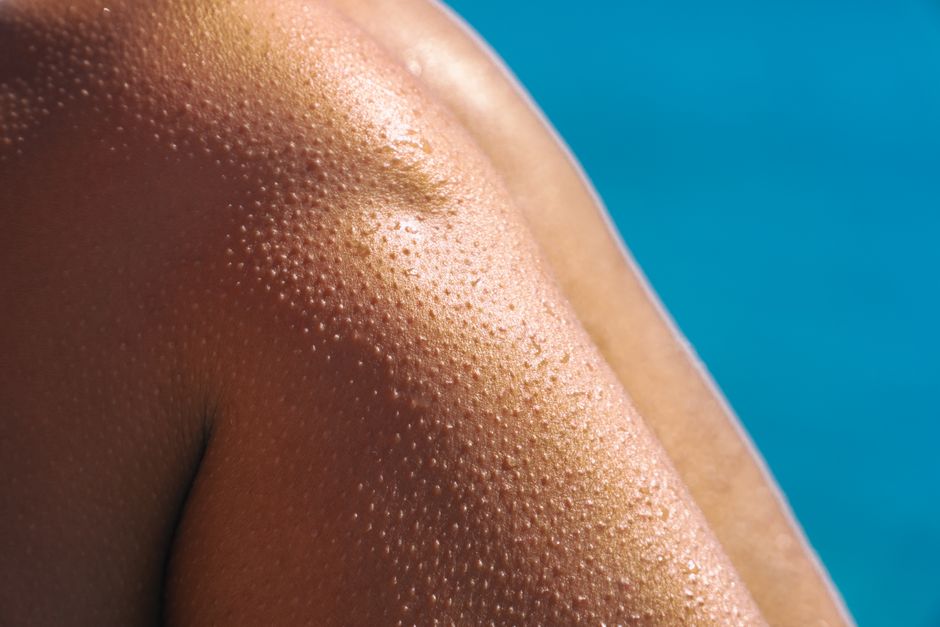
Heat alone does not make your skin permanently darker. What people often call “heat darkening” is usually a mix of sun exposure, inflammation, or post-inflammatory pigmentation. The real cause is almost always UV radiation or skin irritation — not the temperature itself. Let’s look at what actually happens when your skin gets hot.
What Actually Causes Skin to Darken From Heat?
Your skin darkens when it produces more melanin. Melanin is the pigment that gives skin its color. Heat can trigger melanin production, but usually not on its own.
The most common cause is something called post-inflammatory hyperpigmentation (PIH). When your skin gets irritated from heat — like from a burn or prolonged friction — it responds by making extra melanin. This leaves dark patches that can last weeks or months.
Another cause is something called erythema ab igne. This is a medical condition from repeated exposure to heat that is not hot enough to burn. Think of people who sit too close to a space heater or use heating pads daily. The skin develops a red or brown网状 pattern. It is real and it is caused by heat alone, but it takes weeks or months of repeated exposure to develop.
Most people who worry about heat darkening are actually dealing with sun exposure. Heat and sunlight come together. You feel hot in the sun, so you blame the heat. But UV rays are what trigger melanin production most strongly. Heat just makes it worse by increasing blood flow and inflammation in the skin.
Does Heat Make Your Skin Darker Causes Prevention: What Research Shows
Research published in the Journal of Investigative Dermatology has shown that heat can stimulate melanocytes — the cells that make melanin. But the effect is much weaker than UV exposure. In one study, researchers applied heat to skin at 42°C (about 107°F) for 30 minutes. They saw a small increase in melanin production. But it was not enough to cause visible darkening in most people.
The bigger finding was that heat and UV together caused more darkening than UV alone. So heat acts like a booster. It does not start the process, but it makes it stronger if UV is already there.
Some studies suggest that infrared radiation — the heat you feel from the sun — can also generate free radicals in the skin. Free radicals damage cells and can trigger melanin production as a protective response. But again, the effect is small compared to UV.
The American Academy of Dermatology states that UV radiation is the primary cause of skin darkening and hyperpigmentation. Heat is a secondary factor. If you protect your skin from UV, heat alone is unlikely to cause significant darkening.
What Conditions Are Commonly Mistaken for Heat Darkening?
Many people believe heat darkens their skin because they see dark patches after being in warm environments. But these are often other conditions.
| Condition | What It Actually Is | Heat’s Role |
|---|---|---|
| Melasma | Hormonal pigmentation, often from pregnancy or birth control | Sunlight makes it worse, not heat alone |
| Post-inflammatory hyperpigmentation | Dark spots after acne, rash, or friction | Heat from inflammation triggers melanin, but the cause is the injury, not heat itself |
| Sun tan | UV exposure triggers melanin production | You feel heat, but UV is the real cause |
| Erythema ab igne | Repeated heat exposure without burning | Heat alone causes this, but it is rare and takes weeks of daily exposure |
| Friction hyperpigmentation | Rubbing or pressure on skin | Heat from friction may contribute, but pressure is the main factor |
If you notice darkening after being in a hot car or near a heater, check if the pattern matches the heat source. Erythema ab igne has a distinct lace-like pattern. Other causes look more like patches or spots.




How to Prevent Skin Darkening in Hot Environments
Prevention starts with knowing what you are actually dealing with. If you are in the sun, UV protection is the priority. If you are near a heat source without UV, the risk is much lower.
- Wear broad-spectrum sunscreen every day, even when it is cloudy. UV passes through clouds. SPF 30 or higher is recommended by the American Academy of Dermatology.
- Use physical barriers like hats, long sleeves, and umbrellas. These block both heat and UV.
- Avoid direct heat sources on the same skin area for long periods. Move heating pads around. Do not sit inches from a space heater for hours.
- Keep skin cool with fans, cool water, or ice packs after heat exposure. This reduces blood flow to the skin and can calm melanocyte activity.
- Moisturize regularly. Dry skin is more prone to irritation. Irritation can trigger pigmentation. A simple fragrance-free moisturizer helps.
- Use antioxidants like vitamin C serums. They neutralize free radicals from heat and UV before they can trigger melanin production. Research in the Journal of Clinical and Aesthetic Dermatology supports this.
If you already have dark patches, do not assume heat is the cause. Look at your full routine. Are you using any products that irritate your skin? Are you on medications that increase sun sensitivity? Some antibiotics, birth control pills, and acne medications make skin more prone to pigmentation from UV.
What Treatments Actually Help Reverse Heat-Related Darkening?
If you have dark patches you suspect are from heat, the first step is to stop the exposure. The skin can heal on its own over time. But that can take months.
For faster results, topical treatments are the most studied option. Hydroquinone is a prescription cream that blocks melanin production. It is effective but should only be used under a doctor’s supervision. Long-term use can cause side effects.
Azelaic acid and kojic acid are over-the-counter options. Research shows they reduce pigmentation by inhibiting tyrosinase, an enzyme needed for melanin production. They work slowly but are safer for long-term use.
Chemical peels with glycolic acid or lactic acid can speed up cell turnover. This helps dark skin cells shed faster. But peels can also irritate skin and make pigmentation worse if done incorrectly. See a dermatologist for this.
Laser treatments like Q-switched lasers target melanin directly. They break up pigment particles so the body can clear them. These are effective for many types of hyperpigmentation, including erythema ab igne. But they are expensive and require multiple sessions.
Some people report success with natural ingredients like licorice extract, vitamin C, and niacinamide. Evidence for these is moderate. They are unlikely to cause harm, but do not expect dramatic results.
Common Misconceptions About Heat and Skin Darkening
One common myth is that sweating makes your skin darker. Sweat itself does not contain melanin. It does not stain the skin. What happens is that sweat can irritate skin, especially if you rub it off aggressively. That irritation can trigger pigmentation. But the sweat is not the direct cause.
Another myth is that heat from cooking or hair styling tools darkens your face. Brief exposure to a hair dryer or oven heat is not enough to cause pigmentation. You would need hours of direct contact. The real concern with styling tools is burning your scalp or skin, not darkening.
Some people believe that drinking hot liquids causes skin darkening. There is no evidence for this. Internal body temperature does not affect melanin production. Your skin is not a thermometer.
A widespread claim on social media is that heat “activates” melanin permanently. This is not accurate. Melanin production is a response to stimuli. Once the stimulus stops, melanin production slows down. Existing pigment fades as skin cells turn over. The process takes time, but it is not permanent.
The most harmful misconception is that sunscreen is only needed when it is hot. UV rays are present year-round, even in cold weather. Snow reflects up to 80% of UV, increasing exposure. Heat and UV are separate. Do not rely on how hot you feel to decide when to protect your skin.
Frequently Asked Questions
Does sitting in a hot car darken your skin?
Brief exposure will not. Hours of direct skin contact with a hot seat or window could cause erythema ab igne, but this is rare. UV through car windows is a bigger concern.
Can heat from a space heater cause hyperpigmentation?
Yes, if you sit very close for hours daily over weeks. This is called erythema ab igne. Move away from the heater or use it on a timer.
Does heat make melasma worse?
Indirectly yes. Heat increases blood flow and can worsen inflammation, which may trigger melasma. But UV and hormones are the main causes.
How long does heat-related skin darkening last?
It depends on the cause. Mild darkening from a single heat exposure may fade in weeks. Erythema ab igne can take months or years to fully resolve.
