
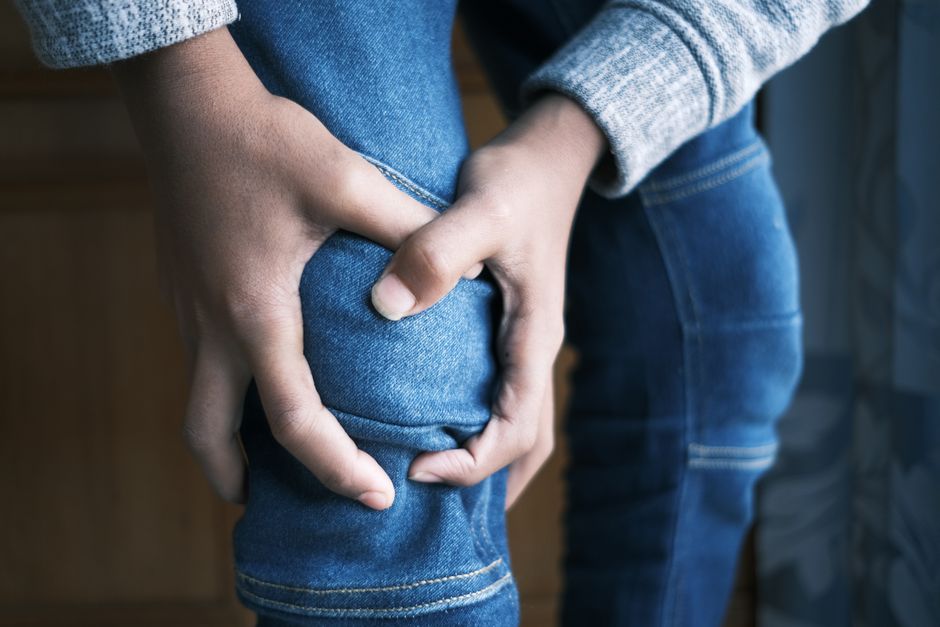
Knee joint pain has many causes, and what helps depends heavily on which one you have. For most people with the common forms of knee pain, the strongest evidence supports exercise, weight management when it applies, and simple pain relief — not supplements or passive treatments. Surgery helps a smaller group of people with specific problems, such as a torn ligament or advanced arthritis.
That is the honest, research-backed answer. It is also less exciting than most ads you will see. Below is what actually holds up, what is uncertain, and what is mostly marketing.
What usually causes knee joint pain?
Knee pain is not one condition. It is a symptom that can come from several different problems, and the cause changes what will help.
Osteoarthritis is the most common cause in adults over 50. The cartilage that cushions the joint gradually wears down, and the joint can become inflamed. This produces pain that tends to worsen with activity and ease with rest, along with stiffness after sitting.
Injuries are common in younger and active people. These include tears of the meniscus (the cartilage pad inside the knee), damage to the anterior cruciate ligament (ACL), and patellofemoral pain, which is pain around the kneecap. Tendon problems, such as patellar tendinitis, also cause pain at the front of the knee.
Inflammatory conditions such as rheumatoid arthritis and gout can affect the knee too. So can being overweight, because every extra pound adds load across the joint with each step.
Some knee pain has no clear structural cause. Imaging often shows arthritis or tears in people who have no pain at all. That is a real finding and worth knowing, because it means a scan result does not always explain the pain.
What is good for knee joint pain?
Exercise is the single best-supported treatment for the most common forms of knee pain. This is not a soft recommendation. It is the conclusion of a large body of research and the consistent position of major clinical guidelines.
The right kind of exercise builds the muscles around the knee, especially the quadriceps at the front of the thigh. Stronger muscles take load off the joint and improve stability. Exercise also reduces pain sensitivity and improves how the joint functions day to day.
Land-based exercise, water-based exercise, and strength training all show benefit. The best program is one you will actually keep doing. A physical therapist can tailor a plan to your specific problem, which matters because the exercises for kneecap pain differ from those for osteoarthritis.
Weight management helps when a person carries extra weight. Losing weight reduces the force across the knee with every step. Even modest weight loss can reduce pain and improve function, though the effect varies between people.
Pain relief has a role. Over-the-counter medications such as acetaminophen and topical or oral nonsteroidal anti-inflammatory drugs (NSAIDs) can reduce pain enough to let you move and exercise. They treat the symptom, not the underlying problem, and they carry their own risks — especially with long-term use, stomach problems, or kidney and heart conditions. Talk to a clinician or pharmacist before using them regularly.
Heat and cold can ease discomfort for some people. The evidence is not strong, but they are low-risk and worth trying.
What does not work as well as people hope?
This is where honesty matters most, because a lot of money is spent here.
Glucosamine and chondroitin are the best-known knee supplements. The evidence is mixed and generally disappointing. Some studies suggest a small benefit for some people; larger and better-designed trials have generally found no meaningful difference from a placebo. If you take them, know that the case is weak.
Collagen supplements are heavily marketed for joint health. The evidence is early and limited. Several small studies suggest possible benefit, but the trials are short, often industry-funded, and not large enough to draw firm conclusions. No clinical evidence currently confirms that collagen rebuilds cartilage in human knees.
Turmeric and curcumin products are popular. Curcumin has anti-inflammatory activity in laboratory studies, but human trials for knee pain are small and results vary. Absorption from supplements is poor, which is why many products add other ingredients to improve it. The evidence is not strong enough to recommend it as a treatment.
Hyaluronic acid injections are given by some clinicians for knee osteoarthritis. The evidence is mixed, and guidelines differ on whether to use them. Some patients report relief; the average benefit in trials is small. This is a case where common practice and strong evidence do not fully line up.
Cortisone injections can reduce pain in the short term. They do not change the course of arthritis and are generally used sparingly.
Platelet-rich plasma (PRP) injections have grown in popularity. The evidence for knee osteoarthritis and tendon problems is mixed, with studies pointing in different directions. It is not a settled treatment.





Do supplements ever help knee pain?
For most people, no supplement has strong evidence behind it for knee pain. That is the plain answer.
Vitamin D matters for bone health, and severe deficiency can cause bone and muscle pain. If you are deficient, correcting it is worthwhile. But taking vitamin D when your levels are normal has not been shown to relieve knee pain.
Omega-3 fatty acids from fish oil have anti-inflammatory properties. Some studies suggest modest pain relief in inflammatory arthritis, but results for osteoarthritis are mixed and the effect is small at best.
If you want to try a supplement, treat it as an experiment with a clear timeline. If it does not help within a reasonable period, stop. And tell your clinician what you take, because supplements can interact with medications.
When is surgery the right answer?
Surgery helps specific problems, not knee pain in general. The cause determines whether it is appropriate.
A torn ACL in an active person often needs reconstruction to restore stability. A large meniscus tear that locks or catches the knee may need surgical repair. Advanced osteoarthritis that has not responded to exercise, weight management, and pain relief may be a candidate for partial or total knee replacement.
What does not hold up well is routine arthroscopic surgery for the wear-and-tear type of knee arthritis. Multiple studies have found that this surgery generally offers little or no benefit over non-surgical treatment for most people with osteoarthritis. Some clinicians still perform it, but the evidence does not support it as a routine option.
The decision should rest on your specific diagnosis, your goals, and how much your knee limits your life — not on a scan alone.
How does knee pain change with age?
Knee pain becomes more common with age, largely because osteoarthritis becomes more common. Cartilage does not regrow the way skin does, so wear accumulates over decades.
That does not mean pain is inevitable or untreatable. Many older adults with arthritis on imaging have little or no pain. Function and muscle strength often matter more than what a scan shows.
Staying active is protective. Muscle mass declines with age if you do not use it, and weaker legs mean more load on the knee. Strength work and regular movement help at every age.
What else can you do day to day?
Small changes add up. None of these replace exercise, but they can make daily life easier.
- Choose low-impact activity. Walking, swimming, cycling, and water aerobics put less stress on the knee than running or jumping.
- Use a cane on the opposite side from the painful knee. This reduces load across the joint.
- Wear supportive, well-cushioned shoes. Avoid worn-out soles.
- Support the joint if needed. A brace or sleeve helps some people feel more stable, though the evidence for pain relief is limited.
- Pace yourself. Spreading activity through the day often works better than one long burst.
- Keep moving. Resting completely tends to make the knee stiffer and weaker over time.
One thing worth knowing: the goal is usually management, not cure. For most people with knee pain, the realistic aim is less pain and better function, not a return to a brand-new joint. That is not a defeat. It is how the condition actually works.
Frequently Asked Questions
What is the best exercise for knee joint pain?
Strengthening the muscles around the knee, especially the quadriceps, is the best-supported approach. Low-impact options like walking, swimming, and cycling are good choices because they load the joint less than running or jumping.
Do glucosamine and chondroitin really work for knee pain?
The evidence is mixed and generally disappointing, with larger trials finding little difference from a placebo. Some people report benefit, but it is not a reliably effective treatment.
Is walking good or bad for knee joint pain?
Walking is generally good for knee pain and is one of the safest ways to stay active. If it flares your pain, shorten the distance or split it into shorter walks through the day.
Can knee joint pain go away on its own?
Some knee pain, especially from minor injuries or overuse, improves on its own within weeks. Pain that lasts longer, or comes with swelling, locking, or giving way, should be checked by a clinician.
