
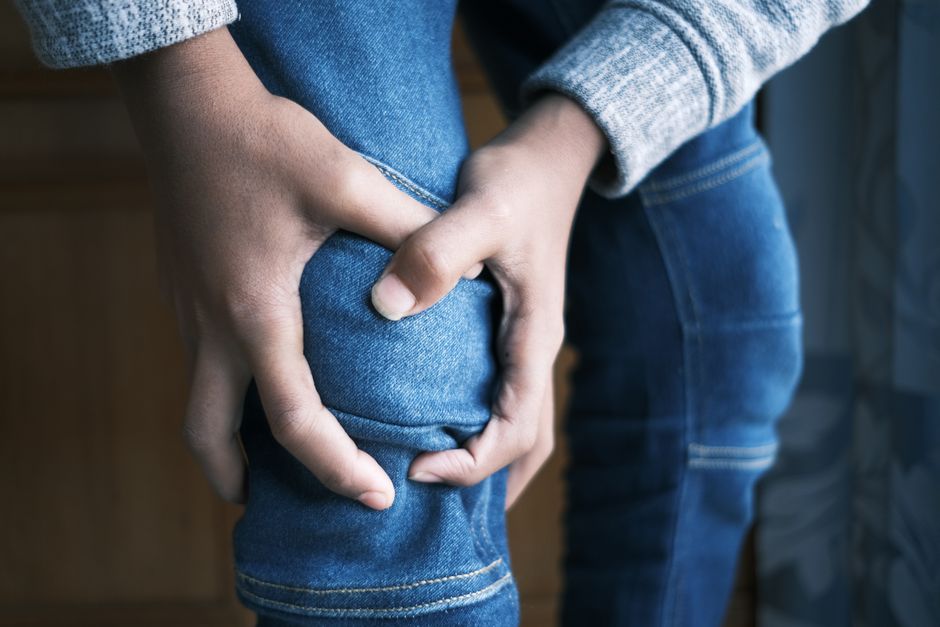
Knee joint pain is one of the most common reasons adults see a doctor, and the honest answer is that most cases are managed rather than cured. Experts recommend a combination of weight management, targeted strengthening of the muscles around the knee, low-impact activity, and short-term pain relief when needed. Surgery helps a specific group of people, but it is not the first step for most.
This guide explains what actually works, what the evidence says about supplements and injections, and when knee pain signals something that needs urgent medical attention.
What Usually Causes Knee Joint Pain?
The knee is a hinge joint where the thigh bone, shin bone, and kneecap meet. Cartilage cushions the ends of those bones, ligaments hold the joint steady, and the quadriceps and hamstring muscles control movement. Pain can come from any of these structures, and the location of the pain often points to the source.
Osteoarthritis is the most common cause in adults over 45. It involves gradual breakdown of cartilage and changes in the bone and joint lining. Research consistently shows that osteoarthritis pain does not always match what an X-ray shows. Some people with significant cartilage loss on imaging report little pain, and some with mild changes report a lot. That disconnect matters, because it means pain is not simply a measure of joint damage.
Other common causes include:
- Patellofemoral pain syndrome — pain around or behind the kneecap, often worse with stairs, squats, or sitting for long periods
- Meniscus tears — a cartilage pad inside the knee that can tear with twisting or with age-related wear
- Ligament injuries — such as an ACL or MCL sprain, usually after a specific incident
- Tendon problems — such as patellar tendinopathy, common in people who jump or run
- Inflammatory arthritis — including rheumatoid arthritis and gout, which tend to cause swelling, warmth, and morning stiffness
- Bursitis — inflammation of the fluid sacs that reduce friction around the joint
Age-related wear and prior injury are the strongest risk factors for osteoarthritis. Being overweight increases load across the knee with every step. Physically demanding jobs that involve kneeling, squatting, or heavy lifting are also associated with higher rates of knee osteoarthritis.
How to Get Rid of Knee Joint Pain: What Experts Recommend
No treatment removes osteoarthritis from a joint. What experts aim for is reducing pain, improving function, and slowing the loss of activity. For many people, that combination works well enough that pain becomes a background issue rather than a daily one.
Exercise is the most supported treatment. This surprises people who assume rest is better. Land-based exercise programs — strength training, walking, cycling, and balance work — reduce knee pain and improve function in adults with osteoarthritis. The evidence for this is strong and consistent across many trials.
Strengthening the quadriceps matters most. Those muscles absorb force before it reaches the joint. Weak quads are linked to more pain and worse function. A physical therapist can build a program around your specific knee, which is more useful than a generic routine.
Weight loss helps if you carry extra weight. Every pound of body weight puts roughly three to four pounds of force through the knee during walking. Losing weight reduces that load and is associated with less pain and better function. Even modest loss tends to help.
Low-impact activity keeps the joint moving. Cycling, swimming, water aerobics, and walking on flat ground are generally well tolerated. High-impact running and jumping are not automatically harmful, but they are harder on an irritated joint.
Heat and cold can ease symptoms short term. Neither changes the underlying problem, but both are low risk and some people find real relief.
Braces and shoe inserts are used widely, with mixed evidence. Some clinicians recommend a knee brace or orthotic for specific problems, such as patellofemoral pain or a meniscus tear. The research on whether they reduce pain overall is not consistent, so think of them as tools that may help rather than proven fixes.
Which Medications Actually Help?
Over-the-counter pain relievers can reduce knee pain, but each has limits and risks that matter more as you get older.
Topical NSAIDs — gels or creams containing diclofenac or similar drugs — are often recommended first for knee osteoarthritis. They deliver medication near the joint with less reaching the bloodstream than pills. Guidelines in several countries favor them over oral NSAIDs for knee osteoarthritis, particularly in older adults.
Oral NSAIDs such as ibuprofen and naproxen reduce pain and inflammation. They carry real risks: stomach bleeding, kidney strain, and increased cardiovascular risk with long-term use. They are best used at the lowest effective dose for the shortest reasonable time, and anyone with heart, kidney, or ulcer history should talk to a doctor first.
Acetaminophen is gentler on the stomach but generally provides less relief for knee osteoarthritis than NSAIDs. Evidence on how well it works for knee pain is mixed, and it is no longer recommended as a first-line treatment in several major guidelines.
Opioids are not recommended for chronic knee osteoarthritis. The risks of dependence, falls, and side effects outweigh the modest benefit for most people.
Steroid injections can reduce pain for a period of weeks to a few months. They do not repair cartilage, and repeated injections over time may be associated with cartilage loss. They are usually reserved for flare-ups rather than routine use.
Hyaluronic acid injections — synthetic versions of the fluid inside the joint — are more debated. Some guidelines allow them for selected patients; others recommend against them because trials have shown inconsistent benefit. If your doctor offers one, it is reasonable to ask how strong the evidence is for your situation.





Do Supplements Like Glucosamine and Turmeric Work?
This is where honesty matters most, because the marketing is louder than the evidence.
Glucosamine and chondroitin have been studied extensively. The largest and best-known trials found that, on average, they performed no better than placebo for knee osteoarthritis pain. Some smaller studies and subgroup analyses have suggested possible benefit, which is why the picture is not perfectly clean. But the overall evidence does not support them as reliable treatments, and major guidelines do not recommend them.
Turmeric (curcumin) has attracted attention. Some small trials suggest it may reduce knee osteoarthritis pain, and a few have compared it to NSAIDs with similar results. These studies are generally small and short. The evidence is promising but not strong enough to call it proven.
Vitamin D does not appear to reduce knee osteoarthritis pain in people who are not deficient. Correcting a genuine deficiency matters for bone health, but taking extra for knee pain is not supported.
Collagen supplements are popular and understudied. No large, high-quality trials currently confirm they reduce knee pain.
If you want to try a supplement, the practical position is this: none of these are known to be dangerous for most healthy adults at standard doses, but none are proven to fix knee pain either. Tell your doctor what you take, because some interact with medications.
When Is Surgery the Right Choice?
Surgery helps a specific group of people, not everyone with knee pain.
Total or partial knee replacement is generally considered when pain is severe, function is significantly limited, and other treatments have not provided enough relief. For the right patient, replacement reliably reduces pain and improves function. It is major surgery with a real recovery period, typically months of rehabilitation.
Arthroscopic surgery for degenerative meniscus tears in knees with osteoarthritis is not recommended in most cases. Trials have found that it performs no better than a structured exercise program, and some guidelines advise against it. For certain mechanical problems — a locked knee, for example — arthroscopy still has a role.
Cartilage repair procedures exist for specific, usually younger patients with isolated defects. They are not a general answer for osteoarthritis.
What Lifestyle Changes Protect the Knee Long Term?
The habits that help now also help later. Staying at a healthy weight reduces load on the joint every day. Regular strength work keeps the muscles around the knee capable of absorbing force. Avoiding long stretches of inactivity prevents stiffness, which is often more uncomfortable than the pain itself.
If your job involves kneeling or heavy lifting, knee pads and technique changes can reduce cumulative stress. There is no proven way to reverse osteoarthritis, but staying active is associated with better function and less pain over time.
One thing worth knowing: rest is not the answer for most knee pain. Prolonged rest weakens the muscles that support the joint and tends to make pain worse, not better. Movement, within reason, is usually the better path.
Frequently Asked Questions
Can knee joint pain go away on its own?
Mild knee pain from a strain or flare often improves within a few weeks with activity modification and gentle exercise. Pain that lasts more than a few weeks, or that keeps getting worse, should be checked by a doctor.
What is the fastest way to relieve knee pain at home?
Rest from the activity that triggered it, apply ice or heat for comfort, and use a topical NSAID if appropriate for you. If pain is severe, or the knee is swollen, hot, or unable to bear weight, see a doctor rather than waiting it out.
Is walking good or bad for knee joint pain?
Walking is generally good for knee osteoarthritis and is one of the most recommended activities. Start with a distance that does not increase your pain, and build up gradually.
Do I need surgery for knee osteoarthritis?
Most people with knee osteoarthritis do not need surgery. It is usually considered only when pain is severe and other treatments have not provided enough relief.
