
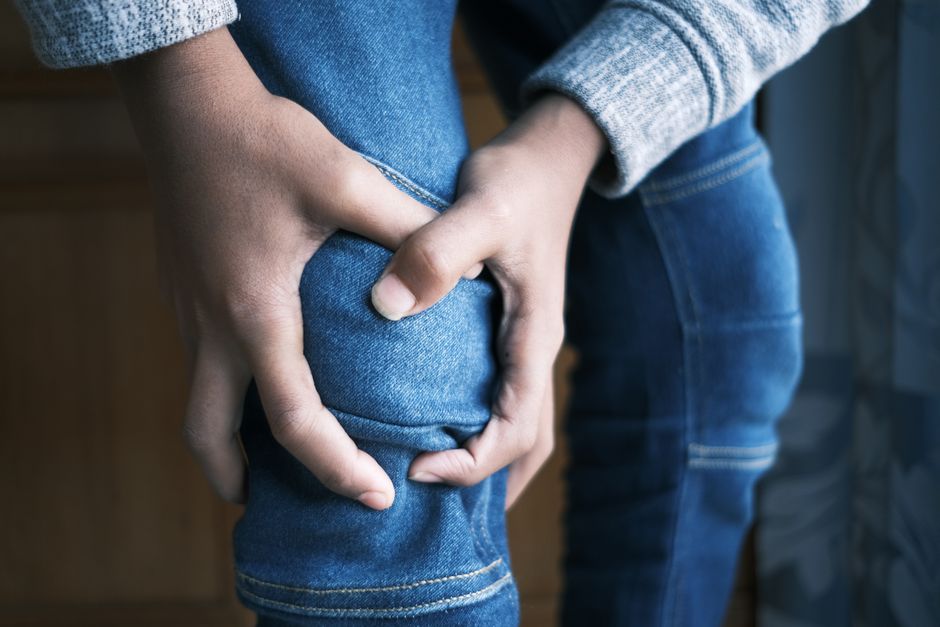
Knee pain is one of the most common reasons adults see a doctor, and most of it does not come from a single injury. It builds over years, usually from osteoarthritis, and the good news is that the same handful of steps help almost everyone: stay active, strengthen the muscles around the joint, manage your weight, and use heat, ice, or pain relievers wisely. None of these is a cure. Together they can meaningfully reduce pain and help you keep moving.
What Usually Causes Knee Joint Pain?
Osteoarthritis is the most common cause in adults over 45. The cartilage that cushions the ends of your bones gradually thins, and the joint can no longer absorb shock the way it once did.
This is not simply wear and tear from use. Research has shifted the understanding of osteoarthritis toward a whole-joint disease involving low-grade inflammation, changes in the joint lining, and altered mechanics. That matters because it means the joint is not “used up.” It still responds to loading, movement, and strengthening.
Other causes look different and need different care:
- Patellofemoral pain — pain around or behind the kneecap, common in younger and middle-aged adults, often worse with stairs or sitting
- Meniscus tears — a catching or locking sensation, sometimes after a twist
- Bursitis — swelling and warmth over the front of the knee
- Referred pain — hip or spine problems that show up as knee pain
Sudden swelling, redness, fever, or a knee that locks or gives way needs prompt medical review. Those signs point away from ordinary osteoarthritis.
How Do You Alleviate Knee Joint Pain Day to Day?
Start with the basics you control. Movement is the single most useful habit, and rest is the most overused mistake.
Prolonged rest weakens the quadriceps, the muscles on the front of your thigh. Weaker quads mean less support for the joint, which usually means more pain with activity. This is why bed rest tends to make knee osteoarthritis worse, not better.
Practical steps that help most people:
- Keep walking. Short, regular walks beat one long walk.
- Use heat for stiffness, especially in the morning.
- Use ice for pain and swelling after activity, for about 15 to 20 minutes.
- Break up long sitting. Stand and move every 30 minutes or so.
- Wear supportive shoes. Avoid flat, thin soles for long distances.
Heat and ice are both widely used and both reasonable. The evidence comparing them is not strong. Most people simply find one works better for them, and that is a fine way to choose.
Which Exercises Actually Help?
Strengthening the muscles around the knee reduces pain and improves function in people with knee osteoarthritis. This is one of the better-supported findings in the field, confirmed across many trials.
The muscles that matter most are the quadriceps, the hamstrings, and the glutes. You do not need a gym. You need consistency.
Exercises commonly used and generally well tolerated:
- Quad sets — sit with the leg straight, press the back of the knee down, hold for a few seconds
- Straight leg raises — lie on your back, keep the knee straight, lift the leg
- Sit-to-stand — rise from a chair without using your hands
- Step-ups — a low step, controlled pace
- Wall sits — hold a partial squat against a wall
Start with what you can do without sharp pain. Mild discomfort during exercise is common and usually settles. Sharp pain, or pain that lingers for hours afterward, means the load was too much. Back off and build more slowly.
A physical therapist can tailor a program to your knee, and for many people this is more effective than any single exercise done alone. If pain is limiting your ability to exercise at all, that is a good reason to get professional guidance early rather than push through.





Does Weight Loss Really Make a Difference?
Yes, and the effect is larger than most people expect. Every pound of body weight puts several pounds of force through the knee during walking, and that load multiplies with stairs and squats.
Losing weight reduces knee pain and improves function in people with osteoarthritis who carry extra weight. This is consistent across studies. The relationship is not linear or dramatic for everyone, but the direction is reliable.
Combining modest weight loss with exercise works better than either alone. This is one of the few areas where the evidence is clear enough to state plainly.
If you are at a healthy weight, this section does not apply to you, and that is worth knowing too. Knee osteoarthritis is not caused by weight alone.
What About Pain Relievers and Other Treatments?
Over-the-counter pain relievers can reduce knee pain and help you stay active. They treat the symptom, not the joint, and they carry real risks with long-term use.
Topical NSAIDs, applied as a gel or cream to the knee, are often recommended first for knee osteoarthritis. They deliver medication close to the joint and generally cause fewer stomach problems than pills. Some people find them as effective as oral versions for knee pain, though responses vary.
Oral NSAIDs like ibuprofen and naproxen work but should be used at the lowest effective dose for the shortest time, especially if you have kidney problems, heart disease, or a history of ulcers. Acetaminophen helps some people with mild pain and is gentler on the stomach, though it does less for inflammation.
Other options include corticosteroid injections for short-term flare relief and hyaluronic acid injections, whose benefit is debated and generally modest at best. Knee replacement is reserved for advanced disease when other measures no longer control pain.
Supplements deserve an honest word. Glucosamine and chondroitin are widely sold for knee pain. Large, well-designed trials have generally not shown meaningful benefit over placebo. Curcumin and omega-3 supplements have some early promising data, but the evidence is not strong enough to recommend them as treatment. If you want to try one, tell your doctor, because supplements can interact with medications.
When Should You See a Doctor?
See a doctor if knee pain is stopping you from doing daily activities, if it has lasted more than a few weeks, or if it is getting worse despite self-care.
Seek care sooner for these signs:
- Sudden severe swelling or a knee that will not bear weight
- Redness, warmth, or fever with the joint
- A knee that locks, catches, or gives way
- Pain following a fall or injury
An X-ray can show osteoarthritis changes, though imaging findings and pain do not always match. Many people with visible arthritis on X-ray have little pain, and some with significant pain have modest imaging changes. Your symptoms guide treatment more than the picture does.
The Bottom Line on Alleviating Knee Pain
There is no single fix for knee joint pain. The realistic goal is management, not cure, and most people can reduce their pain with steady effort over weeks and months rather than days.
The steps that matter most are the ones you can keep doing: move regularly, strengthen your legs, manage your weight if it applies, and use medication and ice or heat as tools rather than solutions. Progress is usually gradual. Expect improvement over weeks, not overnight, and expect some good days and some bad ones along the way.
Frequently Asked Questions
What is the fastest way to relieve knee joint pain?
For a flare-up, rest the knee briefly, apply ice for 15 to 20 minutes, and use a topical or oral pain reliever if appropriate. Fast relief is temporary, and lasting improvement comes from strengthening and staying active.
Is walking good or bad for knee pain?
Walking is generally good for knee osteoarthritis and helps keep the joint and muscles working. Start with short, regular walks and build up gradually rather than pushing through sharp pain.
Do knee braces and compression sleeves help?
Some people get modest relief from a knee sleeve or brace, mainly through warmth, support, and confidence during activity. The evidence for braces is limited, so treat them as a comfort aid rather than a treatment.
Can knee osteoarthritis be reversed?
No, osteoarthritis cannot be reversed, and no supplement or injection has been shown to regrow cartilage in humans. Symptoms can still improve a great deal with exercise, weight management, and appropriate pain care.
