
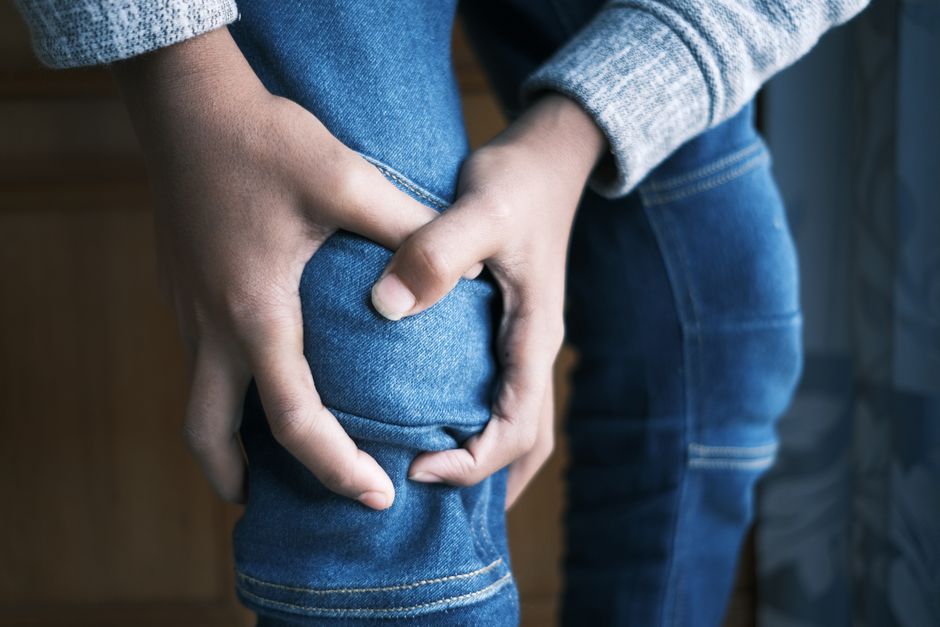
Knee pain has a way of shrinking your world. Stairs become a calculation. Getting out of a car turns into a plan. The good news is that for most people with knee pain — especially the kind that comes on gradually rather than from a sudden injury — the strongest evidence supports a handful of unglamorous things: staying active in the right way, strengthening the muscles around the joint, managing weight where it applies, and using pain relief wisely rather than endlessly. Surgery helps a specific group of people, not everyone. And most supplements sold for knees have weak or absent evidence behind them.
What Is Actually Causing the Pain?
Knee pain is a symptom, not a diagnosis. What’s happening inside the joint determines what will help.
The most common source in adults over 40 is osteoarthritis — the cartilage that cushions the joint gradually wears down, and the joint can become inflamed. This is not simply “wear and tear from age.” Research consistently shows that osteoarthritis involves the whole joint: cartilage, bone, the synovial lining, and the surrounding muscles. That matters because it explains why exercise helps even when cartilage doesn’t grow back.
Other common causes include:
- Patellofemoral pain — pain around or under the kneecap, often worse with stairs, squatting, or sitting for long periods. Common in younger and middle-aged adults.
- Meniscus tears — the shock-absorbing pads between the bones. These can tear from a twist, or degenerate gradually with age.
- Ligament injuries — usually from a specific incident, often in sport.
- Tendon problems — such as patellar tendinopathy, typically linked to repetitive loading.
- Inflammatory arthritis — including rheumatoid arthritis, which tends to affect multiple joints and comes with morning stiffness lasting more than an hour.
Two clarifications worth knowing. First, imaging findings and pain don’t always match. Many people with visible osteoarthritis on an X-ray have no pain, and many with significant pain have modest imaging changes. Second, a swollen, hot, red knee — especially with fever — is a medical emergency. So is a knee that locks or gives way after an injury, or one you cannot bear weight on. Those situations need urgent assessment, not home management.
Does Exercise Really Help Knee Pain?
Yes. Exercise is the single most supported treatment for long-term knee pain from osteoarthritis, and it is also first-line care for patellofemoral pain.
The mechanism is not mysterious. Stronger quadriceps and hamstrings take load off the joint. Movement keeps synovial fluid circulating, which nourishes cartilage and reduces stiffness. And gradually loading a joint appears to reduce the nervous system’s sensitivity to pain over time.
The key word is gradually. The most common mistake is doing too much on a good day and then paying for it for three days. A better approach is a steady, boring, repeatable routine.
What tends to work:
- Quadriceps strengthening — straight leg raises, wall sits, step-ups. These load the muscle without deeply bending the knee.
- Hip strengthening — glute bridges, side-lying leg lifts. Weak hips change how the knee tracks and loads.
- Low-impact aerobic activity — walking, cycling, swimming, or an elliptical. This is for the whole body and for the joint’s health.
- Balance work — standing on one leg, progressing to unstable surfaces.
Some discomfort during exercise is acceptable. Sharp pain, swelling that lasts more than a day, or pain that wakes you at night are signs to back off and get assessed.
One non-obvious point: rest is usually the wrong instinct for chronic knee pain. Short rest during a flare is reasonable. Weeks of inactivity make the joint and the muscles around it worse.
How Much Does Weight Matter for Knee Pain?
Weight matters a great deal for load-bearing joints, and the knee is a load-bearing joint.
When you walk, the force through your knee is several times your body weight. When you go down stairs, it’s higher still. This means that even modest weight loss reduces the load on the knee substantially — more than the number on the scale might suggest.
Weight loss is not relevant for everyone with knee pain. It is relevant for people carrying excess weight, particularly those with osteoarthritis. For that group, losing weight is one of the few interventions with consistent evidence for reducing pain and improving function.
The honest caveat: losing weight is hard, and knee pain makes it harder because movement hurts. This is where working with a physical therapist or a clinician experienced in joint care helps — they can build a plan that starts at a level the knee tolerates.





What About Pain Relievers and Injections?
Medication can reduce pain. It does not change the underlying problem, and it carries its own risks.
Topical NSAIDs — gels and creams containing diclofenac or ibuprofen — are often recommended first for knee osteoarthritis in older adults. They deliver medication near the joint with less systemic absorption than pills. Evidence supports their use, and they carry lower gastrointestinal and cardiovascular risk than oral NSAIDs.
Oral NSAIDs such as ibuprofen and naproxen reduce pain and inflammation. They are not appropriate for everyone. People with kidney disease, stomach ulcers, heart failure, or those on blood thinners should discuss them with a clinician first. Long-term daily use is generally discouraged without medical supervision.
Acetaminophen (paracetamol) is gentler on the stomach but provides modest pain relief for knee osteoarthritis. Evidence suggests it helps some people and does little for others.
Corticosteroid injections reduce inflammation and can provide short-term relief. The relief typically fades over weeks to a few months. Repeated injections are generally limited because of concerns about cartilage effects, though the evidence on this is still evolving.
Hyaluronic acid injections — synthetic joint fluid — have mixed evidence. Some clinical guidelines conditionally recommend them; others do not recommend them. They are widely used in practice, but the trial results are inconsistent enough that no one should expect a reliable benefit.
If you are considering any of these, the conversation to have with your clinician is about your specific risks, not just your pain level.
Do Supplements Like Glucosamine and Turmeric Work?
Most knee supplements have weak evidence. This is the area where marketing runs furthest ahead of the science.
Glucosamine and chondroitin have been studied extensively. The largest trials, including those conducted with NIH funding, did not find meaningful benefit over placebo for knee osteoarthritis pain. Some smaller studies showed modest effects. The overall picture is that if a benefit exists, it is small.
Turmeric (curcumin) has attracted attention because curcumin has anti-inflammatory activity in laboratory studies. Some small human trials suggest possible pain reduction, but the trials vary widely in dose, formulation, and quality. Curcumin is also poorly absorbed, which is why many products include absorption enhancers. The evidence is not strong enough to recommend it as a primary treatment.
Vitamin D is sometimes suggested for knee osteoarthritis. Trials testing vitamin D supplementation for knee pain have generally not shown benefit in people who were not deficient to begin with.
Collagen supplements are heavily marketed for joint health. Human trial evidence is limited and mixed. No large, well-controlled trial has established a clear benefit for knee pain.
A reasonable position: supplements are not a substitute for exercise, weight management, or medical care. If you want to try one, know that you are experimenting, and tell your clinician — some interact with medications.
When Is Surgery the Right Answer?
Surgery helps specific problems. It is not a general fix for knee pain.
Total knee replacement is generally considered for advanced osteoarthritis when pain is severe, function is significantly limited, and other treatments have not provided adequate relief. Most people who undergo it report substantial improvement in pain and function. Recovery takes months, and outcomes vary.
Partial knee replacement may be an option when arthritis is confined to one part of the knee. Eligibility depends on the pattern of joint damage.
Arthroscopic surgery for degenerative meniscus tears in the setting of osteoarthritis has been studied closely. Several well-conducted trials found that outcomes after arthroscopic partial meniscectomy were similar to outcomes after a sham procedure or a structured exercise program in many patients. This does not mean arthroscopy is never appropriate — it means it is not the automatic answer for a degenerative tear.
Meniscus repair (rather than removal) is different. When a tear is in a location with blood supply and the patient is younger, repair can preserve the meniscus and may reduce later arthritis risk.
The honest summary: surgery is a real option for the right patient, and the right patient is determined by the type of problem, the extent of damage, and how much non-surgical care has been tried.
What Daily Habits Actually Help?
Small, consistent habits outperform occasional heroic efforts.
- Keep moving. Even a short daily walk supports joint health. Movement is medicine for knees, within reason.
- Strengthen the legs. Two or three short sessions a week make a measurable difference over months.
- Choose supportive footwear. Cushioned, stable shoes reduce impact. Worn-out shoes do not.
- Use heat before activity and ice after if either helps you. The evidence for both is modest, but they are low-risk and many people find relief.
- Consider a cane or trekking poles if pain affects walking. Using one on the opposite side of the painful knee reduces load through the joint.
- Protect sleep. Poor sleep amplifies pain perception. This is not a knee-specific fix, but it affects how much knee pain you feel.
One clarification: braces and sleeves are widely used, and some people find them helpful. The evidence for most knee braces is limited, and they work best as a temporary aid while you build strength, not as a permanent substitute for it.
Frequently Asked Questions
Can knee pain go away on its own?
Some knee pain, especially from a mild strain or flare, improves within days to weeks with rest and gradual return to activity. Pain that persists beyond a few weeks, or that comes with swelling, locking, or instability, should be evaluated.
Is walking bad for knee arthritis?
No. Walking is generally recommended for knee osteoarthritis and does not accelerate joint damage. If walking causes sharp pain or swelling that lasts, reduce the distance and build up gradually.
What is the best exercise for knee pain?
Strengthening the quadriceps and hips, combined with low-impact aerobic activity, has the strongest evidence. The best exercise is one you can do consistently without triggering a flare.
Should I take glucosamine for knee pain?
The largest trials did not show meaningful benefit over placebo. If you choose to try it, know the evidence is weak and it is not a substitute for exercise or medical care.
