
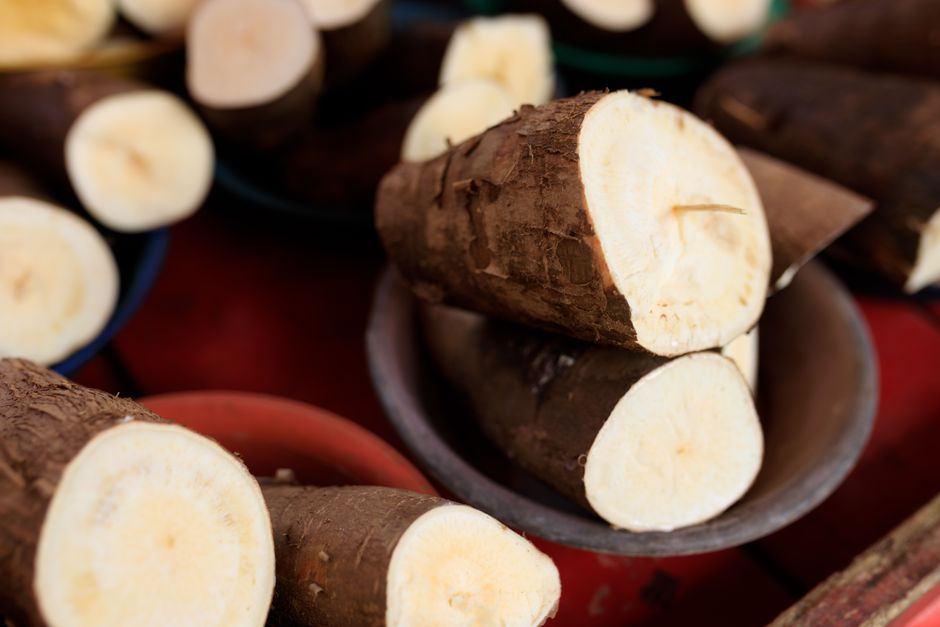
Cassava flour is a fine, mild-tasting powder made from the whole root of the cassava plant after it has been peeled, dried, and ground. It is naturally gluten-free and grain-free, which is why it has become popular with people who avoid wheat or follow paleo-style diets. Nutritionally, it is mostly carbohydrate with very little protein or fat, and it contains some resistant starch that may feed gut bacteria.
What Is Cassava Flour and Where Does It Come From?
Cassava is a woody shrub grown in tropical regions of South America, Africa, and Asia. Its starchy root is a staple food for hundreds of millions of people. The root contains natural compounds called cyanogenic glycosides, which can release cyanide. Traditional processing — peeling, soaking, fermenting, and drying — removes most of these compounds. All commercial cassava flour sold in the US goes through this processing.
The flour itself comes from the whole root, not just the extracted starch. That is the key difference between cassava flour and tapioca flour, also called tapioca starch. Tapioca is made by washing and extracting just the starch, so it is almost pure carbohydrate with very little fiber or other nutrients. Cassava flour keeps more of the root’s fiber and some minerals, though the amounts are still modest.
This distinction matters because the two are often confused. They behave differently in recipes, and they are not nutritionally identical.
What Is the Nutrition Profile of Cassava Flour?
Cassava flour is a concentrated source of carbohydrate. A quarter-cup serving — roughly 30 grams — provides about 110 calories and around 26 grams of carbohydrate, with about 2 grams of fiber. Protein and fat are both very low, at roughly 1 gram and less than half a gram respectively.
Compared with wheat flour, cassava flour has a similar calorie and carbohydrate count per gram. The big difference is protein. Wheat flour contains considerably more protein, and that protein includes gluten. Cassava flour has neither.
| Nutrient (per 30 g) | Cassava Flour | Wheat Flour | Tapioca Starch |
|---|---|---|---|
| Calories | ~110 | ~110 | ~107 |
| Carbohydrate | ~26 g | ~23 g | ~26 g |
| Protein | ~1 g | ~4 g | ~0 g |
| Fiber | ~2 g | ~1 g | ~0 g |
| Gluten | None | Yes | None |
These figures reflect typical values for standard commercial products. Actual numbers vary by brand and how the root was processed.
Cassava flour also contains small amounts of vitamin C, calcium, and potassium, though not enough to make it a meaningful source of any of these. It is not a nutrient-dense food. It is a source of energy, and that is the honest way to describe it.
Is Cassava Flour Gluten-Free and Safe for Celiac Disease?
Yes. Cassava is not related to wheat, barley, or rye, so it contains no gluten. That makes it safe for people with celiac disease or non-celiac gluten sensitivity from a gluten standpoint.
There is a caveat about cross-contamination. Some brands mill cassava flour in facilities that also process wheat. If you have celiac disease, look for a certified gluten-free label. That label means the product meets a defined limit for gluten — currently less than 20 parts per million under FDA rules.
One thing worth knowing: cassava flour is not a one-to-one swap for wheat flour in baking. It lacks gluten, which is the protein network that gives bread its structure and chew. Baked goods made with cassava flour alone tend to be denser and more crumbly. Most recipes blend it with other flours or add binders like eggs, xanthan gum, or psyllium.




What Are the Main Uses of Cassava Flour?
Cassava flour works well in several types of cooking, and poorly in others. Its mild flavor and fine texture make it flexible, but its lack of gluten limits what it can do alone.
- Tortillas and flatbreads. This is where cassava flour shines. It holds together well in thin, pressed doughs without needing much else.
- Pancakes and waffles. It blends smoothly and produces a light texture when combined with eggs.
- Cookies and quick breads. It works in recipes that do not rely on gluten for rise or chew.
- Thickening soups and stews. It behaves much like wheat flour as a thickener.
- Coating for frying. It creates a crisp exterior similar to a light batter.
Yeasted bread is the hardest use. Without gluten, dough cannot trap gas the same way, so loaves made with cassava flour alone tend to be heavy. Blends with other gluten-free flours and added binders work better.
Cassava flour is also used in some regions to make traditional foods like fufu and farofa. These are longstanding staple preparations, not health products.
Does Cassava Flour Have Health Benefits?
The evidence for specific health benefits from cassava flour is thin. Most claims come from its starch composition rather than from studies of the flour itself.
Cassava flour contains resistant starch, a type of carbohydrate that escapes digestion in the small intestine and ferments in the colon. Resistant starch is a real and studied topic. Research suggests it can feed beneficial gut bacteria and may influence blood sugar responses. But the amount in cassava flour varies widely depending on how it was processed, and no large human trials have tested cassava flour specifically for gut health or metabolic outcomes.
What can be said with more confidence is what cassava flour does not contain. It has no gluten, no wheat, and no grains. For someone with celiac disease or a wheat allergy, that is a genuine and meaningful benefit — not because cassava flour is healthier than wheat, but because it is a safe alternative where wheat is not an option.
For everyone else, cassava flour is not a health food. It is a starchy flour with limited protein and fiber. Treating it as a wellness product overstates what the evidence supports.
Does Cassava Flour Raise Blood Sugar?
Cassava flour is high in carbohydrate and low in fiber and protein, two factors that normally slow digestion. That combination suggests it can raise blood sugar relatively quickly, similar to other refined starches.
The exact effect depends on the food it is in and what it is eaten with. A cassava tortilla eaten with beans and vegetables will affect blood sugar differently than the same tortilla eaten alone. Fat, protein, and fiber in the meal all blunt the glucose response.
People with diabetes or prediabetes who use cassava flour should treat it as they would any starchy flour — as a carbohydrate to count, not a free food. There is no reliable evidence that cassava flour is better or worse than wheat flour for blood sugar control. The comparison has not been well studied.
Are There Risks or Downsides to Cassava Flour?
For commercially sold cassava flour, the main risk is not toxicity. Proper processing removes the cyanogenic compounds, and products sold in the US are required to be safe for consumption.
The real downsides are nutritional and practical.
- Low protein. It provides very little protein compared with wheat or nut flours.
- Modest fiber. It has more fiber than tapioca starch but far less than whole grain flours.
- High carbohydrate. It is a starch, and it behaves like one.
- Not a one-to-one swap. Baking with it requires recipe adjustments.
- Cost. It is typically more expensive than wheat flour.
One point worth clarifying: raw, unprocessed cassava root is genuinely dangerous and should never be eaten. The concern about cyanide applies to the raw root, not to properly processed flour. This distinction is often lost in online warnings, which sometimes scare people away from a product that is safe when made correctly.
How Does Cassava Flour Compare to Other Gluten-Free Flours?
Cassava flour sits in the middle of the gluten-free flour range. It is more nutritious than tapioca or white rice flour but less so than almond or chickpea flour.
Almond flour brings fat and protein to the table, which changes both texture and nutrition. Coconut flour is very high in fiber and absorbs a lot of liquid, so it needs different ratios. Chickpea flour adds protein and a distinct flavor. Cassava flour is neutral in taste and behaves more like a standard flour, which is why many people use it as a base and blend others in.
There is no single best gluten-free flour. The right choice depends on what you are making and what nutrients you want the flour to contribute.
Frequently Asked Questions
Is cassava flour the same as tapioca flour?
No, they are different products. Cassava flour is made from the whole dried root, while tapioca flour is made only from the extracted starch.
Is cassava flour healthy?
It is a safe, gluten-free flour, but it is mostly carbohydrate with little protein or fiber. It is best thought of as an alternative to wheat, not as a health food.
Can I use cassava flour instead of wheat flour in baking?
Not as a direct one-to-one swap, because it has no gluten to provide structure. It works best in tortillas, pancakes, and quick breads, or blended with other flours.
Does cassava flour contain cyanide?
Properly processed cassava flour sold commercially is safe and does not contain dangerous levels of cyanide. The risk applies to raw, unprocessed cassava root, which should never be eaten.
