
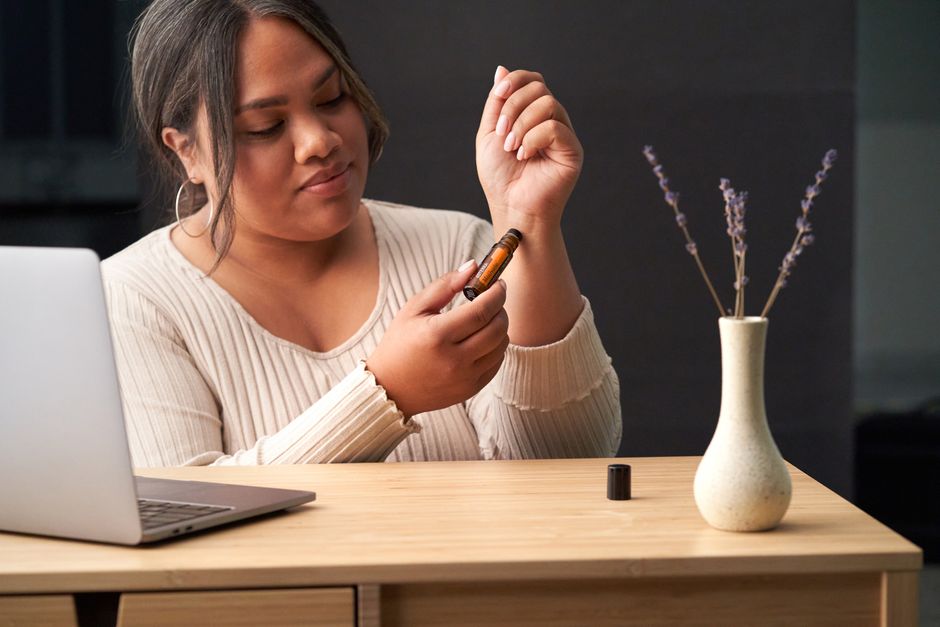
A CBD roll-on is a topical product that combines cannabidiol (CBD) with a rollerball applicator for direct application to the skin. Unlike oils you swallow or vapes you inhale, a roll-on is designed to be absorbed through the skin at a specific spot, like a sore shoulder or an achy knee. People use them for targeted relief from muscle soreness, joint discomfort, and everyday tension. The main benefit is localized application without the systemic effects of ingesting CBD. Side effects are rare but can include mild skin irritation, especially if you have sensitive skin or an allergy to an ingredient in the formula.
How Does a CBD Roll-On Actually Work?
A CBD roll-on works through your skin, not your bloodstream. When you roll the product onto your skin, the CBD and other ingredients penetrate the outer layers. They interact with cannabinoid receptors located in the skin and the tissues just beneath it. This is part of your body’s endocannabinoid system, which helps regulate pain sensation and inflammation.
Because it is applied topically, the CBD does not travel far. It stays mostly where you put it. This is different from swallowing a CBD gummy or holding a tincture under your tongue, where the compound enters your circulation and affects your whole body. With a roll-on, you get focused relief in one area without feeling drowsy or experiencing other whole-body effects.
Most roll-ons also contain other ingredients that contribute to the sensation of relief. Menthol, camphor, and arnica are common additions. These ingredients create a cooling or warming feeling that can distract your brain from the pain signal. That cooling effect is not the CBD working—it is the menthol. But the combination is why many people feel nearly immediate relief.
What Are the Main Uses for a CBD Roll-On?
People primarily use CBD roll-ons for localized muscle and joint discomfort. Common target areas include the neck, shoulders, lower back, knees, and wrists. Athletes often use them after workouts to soothe overworked muscles. Office workers use them for tension in the neck and shoulders from sitting at a desk all day.
Some people use roll-ons for arthritis-related joint pain. The evidence here is limited but promising. A small number of studies have looked at topical CBD for arthritis pain, and results suggest some benefit. However, larger, higher-quality trials are still needed before researchers can make firm conclusions.
Another common use is for general muscle recovery. If you lifted weights, ran a long distance, or spent a day doing heavy yard work, a roll-on can be part of your recovery routine. The massage action of rolling the product onto the skin also helps. Gentle massage has its own pain-relieving effects, so you are getting benefit from the physical action as well as the product itself.
Some people use CBD roll-ons for headaches by applying them to the temples or the back of the neck. There is no strong clinical evidence that this works. But because the product is safe for most people, some find it worth trying.
What Are the Proven Benefits?
Let’s be direct about what the research actually shows. Topical CBD has been studied for several conditions, but the evidence is not equally strong across all of them.
For localized pain and inflammation, some studies suggest benefit. Research published in the Journal of Pain Research and other journals has examined topical CBD for conditions like peripheral neuropathy and arthritis. The results are generally positive, but many studies are small or animal-based. Human trials are growing in number but are still limited.
For skin conditions, the evidence is also emerging. Some research indicates CBD may help with inflammatory skin conditions like eczema and psoriasis. The anti-inflammatory properties of CBD are well documented in laboratory studies. Whether that translates to meaningful skin improvement in humans is still being studied.
For anxiety or sleep, a roll-on is not the right product. Because it does not enter your bloodstream in significant amounts, it will not produce the calming, whole-body effects you might get from an oral CBD product. If your goal is anxiety relief, a roll-on is unlikely to help. This is a common misunderstanding.
The strongest benefit is simply targeted, localized comfort. If you have a specific sore spot, a roll-on lets you treat that spot directly without affecting the rest of your body.





What Are the Possible Side Effects?
Side effects from CBD roll-ons are uncommon but possible. The most frequent issue is skin irritation. This can happen from the CBD itself or, more often, from another ingredient in the formula. Menthol and camphor can cause burning or stinging, especially on sensitive skin. Essential oils like peppermint or citrus can also trigger reactions.
Allergic contact dermatitis is possible. If you have known allergies to any botanical ingredients, check the label carefully. Start by testing a small patch of skin on your inner forearm. Wait 24 hours to see if any redness, itching, or rash develops before applying it to a larger area.
Do not apply a CBD roll-on to broken or damaged skin. If you have an open wound, a fresh scrape, or a healing surgical site, skip that area. The ingredients can cause stinging and may delay healing.
Another consideration is sun sensitivity. Some CBD roll-ons contain citrus oils, which can make your skin more sensitive to sunlight. If you apply the product and then go outside, you could develop a rash or burn more easily. Check the label for photosensitizing ingredients like bergamot or lemon oil.
There is no evidence that topical CBD causes the liver issues or drug interactions that oral CBD might. Because so little enters your bloodstream, the risk of systemic side effects is very low. That said, if you are pregnant, nursing, or taking prescription medications, talk to your doctor before using any CBD product.
How Do You Choose a Quality CBD Roll-On?
The CBD market is not tightly regulated. Product quality varies widely between brands. Knowing how to evaluate a product helps you avoid wasting money on something that does not work.
Look for third-party lab testing. A reputable brand will have its products tested by an independent laboratory. The lab report should show the CBD content and confirm that the product contains no harmful contaminants like heavy metals, pesticides, or solvents. This report should be easy to find on the brand’s website, often through a QR code on the label.
Check the CBD source. Hemp-derived CBD is legal at the federal level in the United States. It should contain less than 0.3% THC, the psychoactive compound in cannabis. This trace amount is not enough to cause a high, even if absorbed through the skin.
Pay attention to the total CBD content. Roll-ons typically contain between 100 mg and 1,000 mg of CBD per bottle. Higher total CBD does not always mean better. What matters is the concentration per application and whether that matches what studies have found effective. Many products do not disclose how much CBD is in a single roll. This makes it hard to know if you are getting a meaningful dose.
Be wary of unrealistic marketing claims. No topical CBD product has been proven to cure arthritis, eliminate chronic pain, or treat serious medical conditions. If a product promises dramatic results, treat that claim with skepticism. The FDA has sent warning letters to companies making unproven medical claims about CBD products.
How Do You Use a CBD Roll-On Correctly?
Using a roll-on is simple, but a few details matter. Start with clean, dry skin. Roll the product directly onto the sore area. Use enough to cover the spot, but you do not need to saturate your skin. A thin, even layer is sufficient.
Gently massage the product into your skin with your fingers or the roller itself. This helps absorption and adds the benefit of massage. Wash your hands after applying, unless you are treating your hands.
How long does it take to work? The cooling or warming ingredients like menthol work almost immediately. The CBD itself takes longer. It can take 15 to 30 minutes for the CBD to penetrate the skin and reach the deeper tissues. The effects can last for several hours, though this varies between products and individuals.
How often can you use it? Most products suggest applying every few hours as needed. Follow the instructions on the specific product you buy. If you experience skin irritation, stop using it and wash the area with mild soap and water.
One important note: a roll-on is a cosmetic and wellness product, not a medication. It is not approved by the FDA to treat any medical condition. If you have chronic or severe pain, see a healthcare provider. A roll-on might complement your care plan, but it should not replace professional medical treatment.
Frequently Asked Questions
How long does a CBD roll-on take to work?
Cooling ingredients like menthol work within minutes, but the CBD itself can take 15 to 30 minutes to absorb into the skin and reach deeper tissues. Effects typically last for a few hours.
Can a CBD roll-on get you high?
No. Hemp-derived CBD products legally contain less than 0.3% THC, which is not enough to cause a high. Additionally, topical application limits absorption into the bloodstream.
Is a CBD roll-on safe to use every day?
For most people, daily use is safe. Skin irritation is the main risk, so start with a small patch test and stop using the product if you notice redness, itching, or a rash.
Can I use a CBD roll-on with my prescription pain medication?
Because very little CBD enters the bloodstream from a topical roll-on, the risk of drug interactions is low. However, talk to your doctor before adding any CBD product to your routine, especially if you take prescription medications.
